Exclusives

BLOG POST
Time to Look at Oakland
While Oakland is by no means an easy place to develop real estate, the often maligned East Bay city of over 400,000 residents may very well be the Bay Area’s best place to embrace much-needed development.

FEATURE
How Self-Driving Cars Can (and Should) Improve Transit
Comments on the proceedings of the Automated Vehicles Symposium (San Francisco, July 14-18, 2014), where participants addressed the many transportation and land use implications of an automated future.
BLOG POST
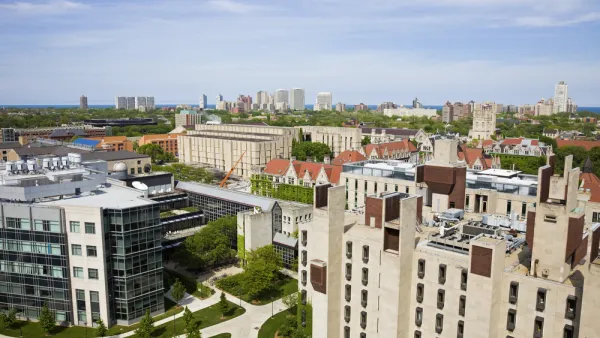
The University and The City: Location and Structure
Institutional structure and culture can matter as much as location to the success and survival of urban universities.

FEATURE
How Civic Engagement Platforms Can Bring Back the Expertise of Urban Planners
The increasing use of online civic engagement platforms offers a chance for planners to improve the planning process—that is, if they take full advantage of the opportunities presented by the new technology to showcase their expertise.

BLOG POST
Manifesto for an Intercultural Urbanism
What are the philosophical and practical commitments of an approach to urban planning that respects cultural differences in ways of being and building?

BLOG POST
Transit-Oriented Cities and Safety: Another Look
Transit-oriented cities are safer than car-dependent cities of comparable size, especially if one considers traffic fatalities in car-dependent cities.

BLOG POST
New Research: Are Women Empowered by New Urbanism?
Charlotte Fagan and Dan Trudeau (Mcalester college) study two New Urbanist neighborhoods in Minneapolis to understand the ways in which New Urbanism impacts the empowerment of women.
BLOG POST
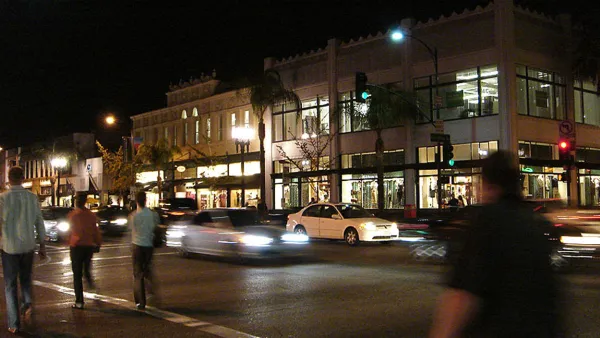
More Great Research Quantifying Smart Growth Benefits
New research can help planners understand how specific decisions will affect transport activity (how and how much people travel), and their ultimate economic, social, and environmental impacts.

BLOG POST
Why Foreign Money is Irrelevant to Increasing Density
While concern over foreign investment in the local real estate market is perfectly valid, the concern is irrelevant to the reasons and need to increase density and the supply of housing.

FEATURE
Thriving in the New Zombie Future: Business as Usual Planning for the Zombie Apocalypse
A satirical post welcomes the metaphorical zombie state experienced by humans in the modern built environment as the path of least resistance for a literal, future zombie state.
BLOG POST
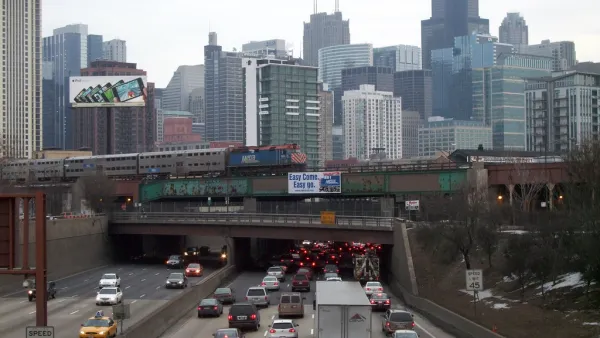
Transit, Density, and Congestion
The most transit-oriented metro areas often have lower levels of traffic congestion than one might expect based on their size.

BLOG POST
The Least Popular Posts of 2014
Through the first six months of 2014, some Planetizen posts proved less than enticing to our readers. Instead of dwelling on that distinction as ignominious, let's consider how these neglected few might provide insight into the planning discussion.
BLOG POST
What Makes a 'Farmers' Market?'
What constitutes a farmers' market, rather than an outdoor or public market?

BLOG POST
Land Use Planning Crucial for Mitigating Pipeline Hazards
Open Access to Anna Osland's Article, "Using Planning to Mitigate Hazards from Hazardous Liquid and Natural Gas Transmission Pipelines." Link here: http://goo.gl/bDYGJg. Osland finds land use planning is overlooked in N.C. pipeline networks.
FEATURE
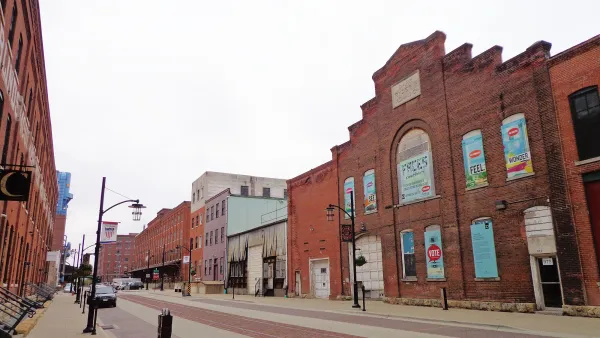
This Dubuque, Iowa Master Plan Is a Rust Belt Victory
The Historic Millwork District Master Plan, approved in 2009, provides exemplary solutions in historic preservation, parking requirements, and environmental standards, all now rewarding the city of Dubuque, Iowa with economic development.

BLOG POST
Affordable, Mid-Term, Housing for All
A proposal to limit the amount of time low-income families can live in affordable housing.

BLOG POST
Olmsted Redux
Adrian Benepe was recently announced as the recipient of the 2014 Olmsted Medal. Like it or not, the well-deserved and appropriate recognition is one more in the seemingly endless list of honors for the transformation of New York's urban parks.

BLOG POST
Parks for Pedestrians: No Easy Matter
A heavily wooded park requires investments in maps and trails to be truly pedestrian-friendly.
BLOG POST
Planning Education: Made in China?
A high school field trip in China that is hard to imagine in the United States.

BLOG POST
A 'Mottainai' Neighborhood: Little Tokyo Embodies the EcoDistrict Model
Little Tokyo in Los Angeles was selected to be part of the EcoDistrict Target City program. Global Green is excited to be part of this collaborative effort to promote neighborhood scale sustainability and further the concept of "Mottainai."
Harvard University Graduate School of Design
KFH Group Inc.
Greater Baltimore Committee
The Architects Foundation
University of Cincinnati Online
The Pocatello Development Authority
The Urban Renewal Agency of the City of Pocatello

FREE Course: Walkable City 1: Why Walkability?
After describing his path towards focusing on walkability as the essence of good planning, Jeff Speck marches through his five principal reasons for making more walkable places.
Reinventing Malls: Planning Alchemy—Turning Gray Fields Into Gold
The course focuses on the opportunities and imperatives that shape reinvention of mall sites.