Exclusives

BLOG POST
Don't Miss the Middle: The Critical Role of Moderate-Priced Housing to Affordability
To increase affordability communities should support moderate-priced housing development. This increases housing options for middle-income households, and for lower-income through filtering, as households move from low- to moderate-priced units.

FEATURE
The Top Urban Planning Books of 2019
The decade wraps up with another engaging crop of highly readable and recommendable books on the subject of urban planning. There's a lot to learn, on many related subjects, among this year's top planning books.

FEATURE
It's Organic! The End of Conjecture and the Science Ahead
The history of inquiry into the "organic" nature of cities has revealed findings that inform the practice of urban planning.
BLOG POST
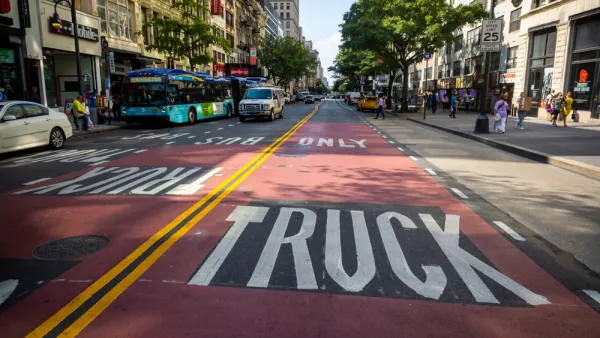
NYC Leads the Way (Sort of)
Evaluating New York City's new law designed to facilitate bus, pedestrian, and bike travel.

FEATURE
Planning and Teaching in Southern California
Elizabeth Gallardo is a planning associate with the city of Los Angeles, working as part of an ambitious effort to update the city's numerous community plans while also teaching planning courses at a nearby university.
BLOG POST
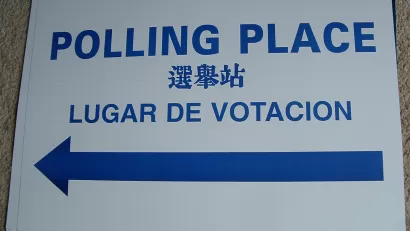
Election 2019: Planning and Development Related Results Roundup
Many states and cities around the country voted on November 5, 2019 to decide matters related to the future of the built environment.

BLOG POST
Generative Codes Yield Better Plans
Ngoc Hong Nguyen of the University of Danang writes about a recent article he authored in the Journal of Planning Education and Research

PLANOPEDIA
What Is Transit Oriented Development?
Transportation and land use are deeply connected, but decades of planning and development policy ignored the consequences of only paying attention to one side of the equation. Transit oriented development takes a more holistic approach.

BLOG POST
A Theory of Gentrification—And Where It Goes Wrong
Does gentrification always follow massive disinvestment?
BLOG POST
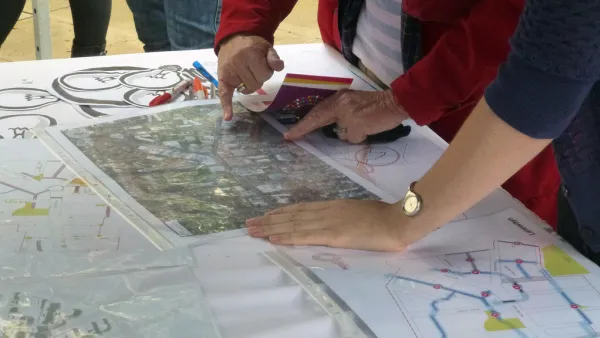
Are Urban Planning Jobs Safe From Automation?
A dive into the concepts and methodologies producing current academic research into the effect of automation of jobs in the urban planning field.

FEATURE
Engaging, Then Planning, for Equity
The interdisciplinary work of the Kounkuey Design Initiative, led by executive director Chelina Odbert, and deeply committed to the homegrown potential of neighborhoods and communities.

FEATURE
Leadership in Urban Planning, After Two Successful Stints as a Planning Director
Peter Park is the director of Peter J. Park, LLC and a former planning director of Denver and Milwaukee. In this interview, Park shares insights from a career of leadership in though and action in the field of urban planning.
BLOG POST
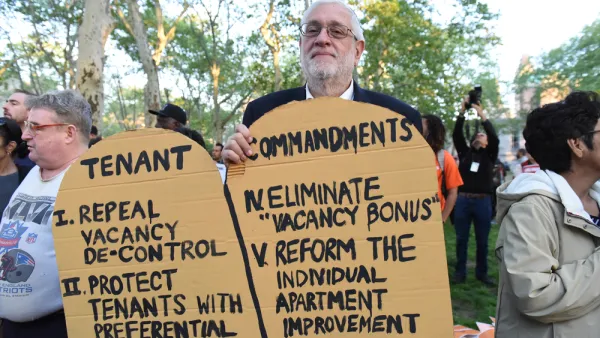
Why the Poor Cannot Move: It's Not Just the (Official) Rent
A discussion of the book Evicted, and in particular its suggestion that rent in poor neighborhoods is not much lower than the rent in middle-class areas.

BLOG POST
What Can Planners Learn from Online Reviews? Examining Reviews of Los Angeles Rail Stations
Eun Jin Shin of Sungkyunkwan University, Seoul, South Korea, writes about a recent article she authored in the Journal of Planning Education and Research.

BLOG POST
Smart Growth and Vehicle Travel Reductions
Many jurisdictions have vehicle travel reduction targets. Integrated Smart Growth policies can help achieve these and other planning goals.

FEATURE
Revisiting the Resilience Metric—How Does it Relate to Sustainable Development?
An investigation of how resilience relates to sustainability, and how an understanding of that relationship informs more effective development investments.

FEATURE
Three Studies That Show Density Doesn't Determine Car Travel
Thirty years after a seminal study attempted to connect increased density with decreased automobile use, several new studies are raising doubts about that central assumption of contemporary planning.

BLOG POST
6 Ways Robots Are Changing City Planning and Development
Of course artificial intelligence has applications relevant to the practice of city planning.


BLOG POST
Stop Giving Away Valuable Public Assets! A Fiduciary Obligation for Road and Parking Pricing
Cities significantly underprice their roads and parking facilities, forcing local taxpayers to subsidize out-of-town motorists. Municipal officials have an obligation to better manage these valuable public resources.
Harvard University Graduate School of Design
KFH Group Inc.
Greater Baltimore Committee
The Architects Foundation
University of Cincinnati Online
The Pocatello Development Authority
The Urban Renewal Agency of the City of Pocatello

FREE Course: Walkable City 1: Why Walkability?
After describing his path towards focusing on walkability as the essence of good planning, Jeff Speck marches through his five principal reasons for making more walkable places.
Reinventing Malls: Planning Alchemy—Turning Gray Fields Into Gold
The course focuses on the opportunities and imperatives that shape reinvention of mall sites.