Frequent Planetizen contributor Charles R. Wolfe reflects on reconciling global forces and local context in cities across three continents.


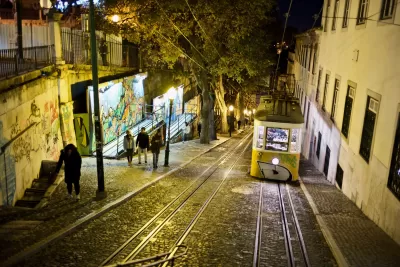
Since September, I have worked in, or visited, 18 cities in Europe, Australia, and the United States, listening throughout for common messages of harmony or discord. I have been waiting for modern Sirens of the Odyssey to divert me, with some divine melody of urbanism or common thread to make sense of it all, to wed, for instance, Brisbane with Cleveland, or Lisbon and Cairns.
Instead, I see cities united in a search for context, and how to wed old-world identity with the global forces of change.
With each visit, consultancy, book talk or class lecture, it's been uncanny to watch nearly every city struggle to integrate the challenges of globalism with a vernacular, even unique history. The menu of wants is never-ending: technology hubs, light rail, bike paths, upscale housing, "smart city" dashboards and data, variations in height and scale. And then there's jobs, housing, incubators, data, lifestyle, tourism, and more!
In this seemingly uniform climb toward the Green Light of Gatsby, the quest for context is understandable. The undeniable human response of nostalgia is a symptom of city-dwellers everywhere, whether in the new, old, or war-torn urban worlds.
I was well-familiar with the downside of creative class urbanity, and perhaps its most contemporary extreme in the post-Amazon Seattle. It's my hometown, so I've watched Seattle closely, including the "be careful what you wish for" admonition to bidders seeking Amazon's coveted "HQ2" (second, co-equal headquarters) award.
"You think you can shape Amazon?" asked Timothy Egan in the New York Times on October 20. "Not a chance. It will shape you. Well before Amazon disrupted books, music, television, furniture — everything — it disrupted Seattle."
Try taking this story around the world, where often, an apparent angst for economic preservation and success wrestles with lofty identities of place that pre-date Seattle's identity by hundreds, if not thousands of years.
For other cities, in search of pride and prosperity, their classical positions in history now seem oddly reshuffled, more relegated to tourist guides than I had remembered, and nudged aside by generic issues from elsewhere—or perhaps, everywhere. The empire once based in seafaring Lisbon, an American rust-belt city, Sydney's penal colony roots—all appear more as artifacts of history, merging with the ubiquitous needs of jobs, capital, and the data engines that feed the global economy and make "uniqueness" a less relevant word.
In Portugal, reporters engaged me with questions, with intense voices trying to bound the undefinable. During one interview following presentation of my book, Seeing the Better City, I fielded scattershot, anxious inquiries that seemed to never end. "What is a better city? What is a good city? When is a good city a smart city? Can a smart city be a good city without technology? Can a smart city have no technology?"
In another interview, a reporter from a municipal television station asked me whether her city was "ready to be a smart city." Amid castles and the stuff of legends, innocence seemed lost.
When I left Seattle in September, the fastest-growing big city in the United States wrestled with the now well-documented consequences of becoming a creative class champion of the educated—a dramatic uptick in homelessness and dramatic rise in property values. When I tell this story elsewhere, the response ranges from indifference to wonderment, because concerns—from mere survival to successful adaptation to global trends—subsume stories about the pace of change or my hometown's loss of soul.
Amid my search for harmony—and discord—I am sometimes buoyed by approaches that mix generic trends with a vernacular past. Citizen engagement is evolving everywhere, through conventional, face-to-face methods, social media, or new approaches to co-creation. Two examples follow.
First, in Melbourne, Australia, I met with members of CoCreate Cremorne, a neighborhood-based small-business group advocating to retain the special character of a tightly connected city neighborhood slated for adaptation to technology businesses. Well-organized volunteers have built an advocacy effort around the goals of neighborhood members: "streets as places, adding greenery, quality art, residents and businesses mixing and common spaces to work/meet/play outside, with free WiFi."
Then, earlier this month in Guarda, Portugal, I met municipal leaders who hope for new jobs, to offset exodus to larger cities such as Lisbon. Alongside technology company representatives, I participated in a municipally-sponsored "smart city" conference—attended by residents, students, and city elected officials and staff—and discussed my book's methods of urban exploration for everyone, based on the human visual sense.
In response to my panel colleagues who instead touted smart city monitoring applications and data-gathering tools, an animated municipal employee pushed back. "You can't forget our history, our geography and our culture in favor of approaches meant for everywhere," he said.
Suddenly, and perhaps ironically, as the American from Seattle, I impulsively took the microphone before the others could respond. "You are right," I said, and tried my best to explain the role of context—and the fusion of old and new—in a rapidly changing world.
Seattle and Internationally-based author, consultant and attorney Chuck Wolfe spent the fall in multiple engagements in several Australian, American and European cities, including teaching and research as a guest of KTH University’s Centre for the Future of Places in Stockholm, where he will continue as a part time Visiting Scholar next year.

Could an ‘Urban Innovation Lab’ Spur Downtown Revitalization?
In his fifth article for GeekWire, Chuck Wolfe asks whether an onsite “living lab” could spur more entrepreneurship and impact downtown regeneration in Seattle.
North America's 10 Smartest Cities
A year after he unveiled his list of North America's top "Smart Cities" based on a new metric meant to bring clarity and measurability to the discussion, Boyd Cohen is back with a refined methodology and a new ranking.
Ranking North America's Smartest Cities
For those of you who've been anxiously waiting since Boyd Cohen published his list of Europe's smartest cities last month...wait no longer, North America's top 10 smartest cities have been revealed.

Planetizen Federal Action Tracker
A weekly monitor of how Trump’s orders and actions are impacting planners and planning in America.

Northwest rail fans eager for Sept. 30 debut of Amtrak’s Airo fleet
Get ready for that new train smell and more seats. But they won’t go faster or run more frequently on the Cascades route in Washington and Oregon.
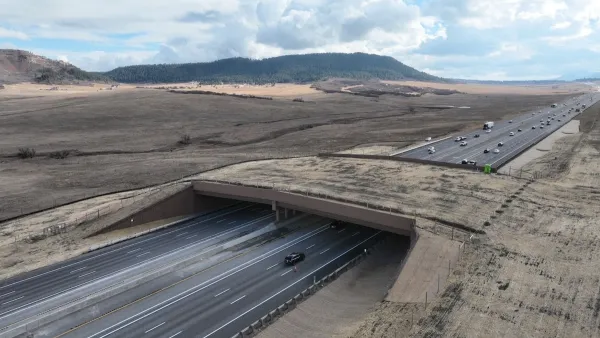
Record-breaking wildlife overpass in Colorado brings 91% reduction in animal collisions
Prior to the overpass, vehicles were hitting one deer per day on Colorado’s Interstate 25.

Detroit to transform waterfront with $2.2 billion investment
Developers will convert about 18 acres of unused parking lot space into civic spaces.

‘Going backwards:’ Baltimore mayor, students rally against state's transit funding plan
Maryland's proposed six-year plan provides no funding for Baltimore’s BMORE bus program and reduces its road maintenance funding.

Trump wants to cancel nearly 98% of funding for HUD housing support program
Multiple housing groups are suing the administration in an effort to preserve the funding.

FREE Course: Walkable City 1: Why Walkability?
After describing his path towards focusing on walkability as the essence of good planning, Jeff Speck marches through his five principal reasons for making more walkable places.
Reinventing Malls: Planning Alchemy—Turning Gray Fields Into Gold
The course focuses on the opportunities and imperatives that shape reinvention of mall sites.

City of Thousand Oaks
City of Wisconsin Rapids
Harvard University Graduate School of Design
The Architects Foundation
University of Cincinnati Online
Northern Illinois Transit Authority (NITA)
The Pocatello Development Authority
The Urban Renewal Agency of the City of Pocatello

