World
Global issues, U.N., etc.
'Better Growth, Better Climate'—Guidance For Resource-Efficient Economic Development
New report by the Global Commission on the Economy and Climate describes specific actions which can strengthen economic performance and reduce climate change risks. A key strategy is to build better, more productive cities.
Why Placemaking Matters: What's in it for Me?
What's your elevator pitch on why placemaking matters? Here's a couple rounded up by Hazel Borys, and some numbers that help refine their message.
The Option of Sensing the City
In his second Huffington Post article on "place-decoding," Chuck Wolfe argues for considered attention to enhancing people's abilities to discern the city around them.
Report Illuminates Weak Efforts to Reduce Carbon Intensity
According to the most recent PricewaterhouseCoopers "Low Carbon Economy Index," the planet's current carbon intensity will see a 7.2 degree Fahrenheit increase by 2050.
Friday Eye Candy: Behold the 'Emojiopolis'
If you're not familiar with the world of emojis, bravo for holding out against the widely adopted trend. But now that (most) people have adopted pictographs for communication, could the shift in communication produce new kinds of landscapes?
You’ve Got Lemons: What Now?
A timeless marker of community has emerged as a source of conflict: the lemonade stand is being called an "illegal business." Scott Doyon discusses how getting to know — and support! — your neighbor can be an issue of survival.
Great Literature and the Value of Thinking While Walking
An article in The New Yorker examines the many benefits granted the life of the mind through the act of walking.
Learning to 'Place-Decode' the Elements of Urbanism
Chuck Wolfe champions the role of France's attachment to place as a laboratory for decoding the essential elements of urbanism.
Friday Eye Candy: Social Media and the Beauty of Transit
Jenni Avins shares a collection of videos created on Instagram's new Hyperlapse app that capture the beauty of transportation from every corner of the world.
Elevated Cycletracks: Future Urban Staple or Glitzy Dream Project?
With London's proposed SkyCycle and Copenhagen's successful Cykelslangen, are elevated cycletracks a viable transportation solution?
A Massive List of Tools for Digital Public Engagement
Here are 50 tools for online engagement. These digital platforms can help local government consult, collaborate with, and empower citizens in planning decisions.
Local Climate Change Response Prevailing Over Federal Action
With national action tackling climate change remaining weak, regional and local municipalities are taking substantive actions to address the oncoming severe affects of climate change.
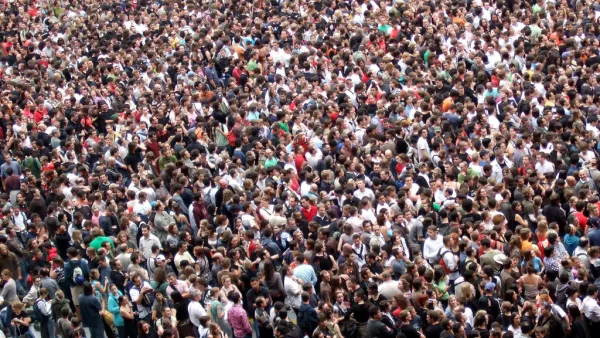
What a Megacity with 107 Million People Looks Like—via SimCity
Writing for Motherboard, Derek Mead details what it took for a particularly ambitious SimCity player to build a city of 100 million people.
Plan Maps the Best (and Worst) of Future Road Construction
A new study published in the journal Nature maps out a plan for the development of roads around the world—where roads should be avoided due to their environmental costs, and where they can be built to maximize their potential benefit to humanity.
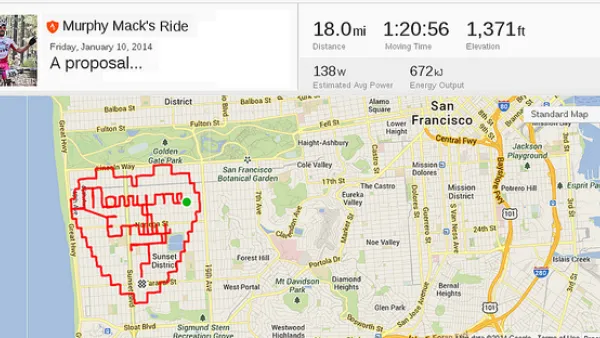
The Power of Public-Private Partnerships: Mobile Phone Apps and Municipalities
Private, crowdsourced mobile phone applications addressing urban mobility collect troves of data on how cities flow. So how can municipalities tap into these databases to accurately understand the movement of their citizens?
U.S. Street Safety Compares Poorly to Other Developed Countries
A new report from the International Transportation Forum (ITF) shows America's shortcomings on street safety compared to its peer nations.
New York City Does In Fact Sleep
Brian Wilt, a data scientist at Jawbone, the company behind many fitness trackers, aggregated sleeping patterns of people across the world to see how people's sleeping cycles compare.
Interpreting the 'Timeless and Time-Bound' in Cities
In his latest essay on interpretation of the urban environment, Chuck Wolfe suggests that if we take away context clues cities become matrices -- with blank cells to complete -- where each of us personalizes how space meets time.
Nine Women Leading the Public Interest Design Field
Rennie Jones of Architizer highlights nine women pioneering a variety of successful and poignant public interest design projects around the world.
Lean Urbanism: A Century-Old Practice?
A short case study in Lean Urbanism, compliments of Victoria Beach, Manitoba.

FREE Course: Walkable City 1: Why Walkability?
After describing his path towards focusing on walkability as the essence of good planning, Jeff Speck marches through his five principal reasons for making more walkable places.
Reinventing Malls: Planning Alchemy—Turning Gray Fields Into Gold
The course focuses on the opportunities and imperatives that shape reinvention of mall sites.

Eagle County Government
Harvard University Graduate School of Design
Nashville Planning Department
The Architects Foundation
University of Cincinnati Online
The Pocatello Development Authority
The Urban Renewal Agency of the City of Pocatello
Journal of the American Planning Association