United States
Master Planning is Back; Thank an Architect
In a feature article and provocative editorial, The Architect's Newspaper seeks to examine the lead role that architects are playing in 'laying out the future of cities'.
What is Poverty? Accounting for the True Expense of City Life
At $23,550, the federal poverty line is a blunt instrument used to measure the nuances of affordability. A tool provided by the Economic Policy Institute shows how much more a family needs to make for a modicum of security in cities across the U.S.
What is the Purpose of Planning?
After several years spent facing strong professional headwinds, former APA president Mitchell Silver is encouraged to see planners revitalizing the profession by embracing their roots.
Reputation Renewal: Reconsidering America's Master Builders
Over the last several years, successive books and exhibitions have sought to paint America's midcentury master builders in a new light, by focusing on their accomplishments. What can we learn from the 'post-war planning titans'?
Has President Obama Turned the Corner on Climate Change?
Analysts have noted a change in the president on climate change in his second term. Call it a "message shift". Rather than addressing it in terms of the need for clean energy and renewables, he now speaks directly to the perils of climate change.
1968 Inverted: Why the 'Back-to-the-City' Movement is 'White Flight' in Reverse
Calling 'white infill' the new 'white flight', Richey Piiparinen argues that urban thinkers need to consider whether the back-to-the-city trend is exacerbating inequity and segregation.

From Peak Car to Peak Parking?
Fewer cars on the road, less driving, why not fewer parking spots? Cities like D.C., L.A., Denver, Philadelphia are responding by reducing or eliminating parking minimums, while Portland, which had already eliminated them, are bringing them back.
Call Off the 'Peak Car' Celebrations
Planners and environmentalists have applauded the seven-year decline in America's auto ownership levels with understandable enthusiasm. But around the world, automobile production has never been higher.
Teaching Urban Lessons from Rural Landscapes
Chuck Wolfe's photoshoot in the Palouse region of southeastern Washington State shows the timeless issues of human settlement, from agrarian to urban.
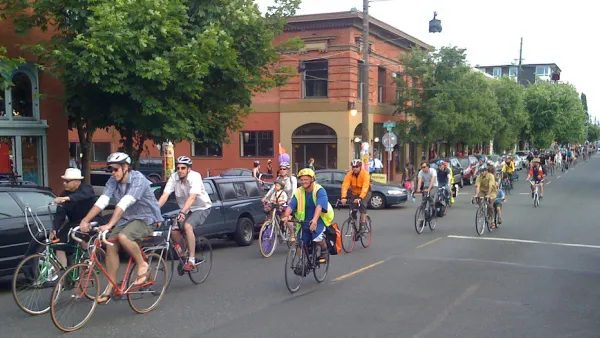
How Did Portland Become North America's Bicycling Capital?
In retrospect, it may seem like Portland’s biking boom was inevitable. But not too long ago the city was eclipsed by other Pac NW cities for share of bicycle commuters. What happened between 2002-2008 to kick-start the city’s bike craze?
Quebec Rail Disaster Revives Oil Pipeline vs. Crude-By-Rail Debate
In a scene reminiscent of the Denzel Washington movie "Unstoppable", but without the heroic ending, an unmanned, 72-car oil train traveled 7 miles to Lac-Mégantic, pop. 6,000, where it derailed, setting off a fireball downtown. 5 fatalities so far.
Cargo Bikes Go Mainstream
Spotted on the front page of Saturday's WSJ is a picture of a Yuba Mundo longtail cargo bike, directing readers to Tom Vanderbilt's feature article of the "Off Guard" section describing the many types of cargo bikes. Main cargo is kids and groceries.
Familiarity Fostered on Foot Breeds Social Movements
A new study suggests that density, mixed-use neighborhoods, short city blocks, and, crucially, walkability foment political and social activism, reports Richard Florida.
Studying the Psychology of Sacred Green Spaces
Over 20 years, the TKF Foundation has funded the creation of dozens of “green refuges from the stresses of modern life”. With $4.5 million in funding for six new projects, they’re out to prove the physical and psychological benefits of such spaces.
America's Overlooked Demographic Superstar: Sunshine
Hopefully you were able to enjoy some summer sun on this Fourth of July. If you're among the many Americans who helped propel population growth in the country's warmer states over the last century, you likely did.
Will America Take the Lead on Climate Change?
Mark Landler reviews the recent efforts of the Obama administration to make headway on climate change through executive order, diplomacy and economic incentive.
The Who, Where, and How Many of America’s Working Artists
A new study published by the National Endowment for the Arts profiles America's 2 million professional artists (including architects), with information on artist salaries, a breakdown of occupations, and the cities with the most working artists.
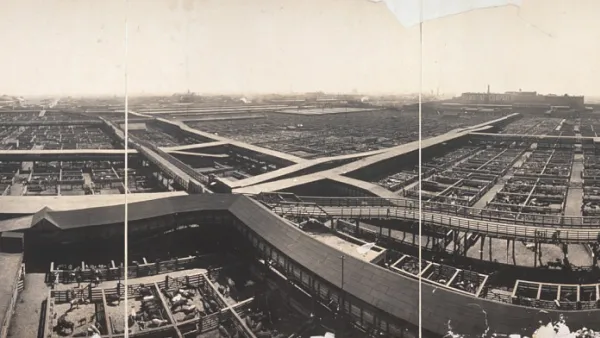
Stunning Images from America's Urban Past
Independence Day is a day to reflect on America's history; and with many of the activities associated with the holiday (parades, fireworks) set on urban stages, it's the perfect occasion to enjoy some amazing images of the country's urban past.
Outgoing DOT Head Shares His Vision of the Future of Transportation in America
On Tuesday, Anthony Foxx was sworn in as America's 17th transportation secretary. But before he could take over the keys to the department, outspoken DOT head Ray LaHood spoke with Sommer Mathis about the future of transport in America.
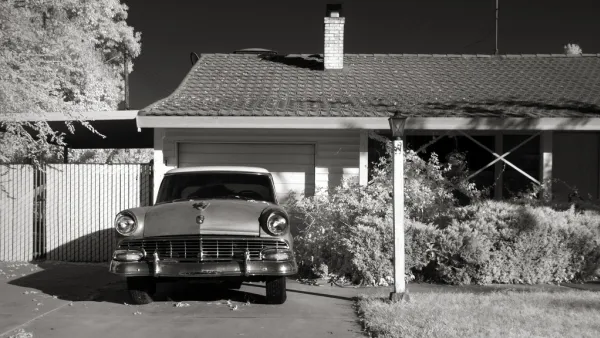
Why 'Leave it to Beaver' Neighborhoods are Ripe for Renewal
The nation has a huge quantity of postwar housing that can be made more walkable and appealing to new generations of residents. Robert Steuteville examines what makes them good candidates and notes some examples of successful retrofits.

FREE Course: Walkable City 1: Why Walkability?
After describing his path towards focusing on walkability as the essence of good planning, Jeff Speck marches through his five principal reasons for making more walkable places.
Reinventing Malls: Planning Alchemy—Turning Gray Fields Into Gold
The course focuses on the opportunities and imperatives that shape reinvention of mall sites.

One Hundred Miles
County of Mendocino
planning NEXT
The Architects Foundation
University of Cincinnati Online
Montrose County
Northern Illinois Transit Authority (NITA)
The Pocatello Development Authority









