United States
Extreme Weather Could Replace Climate Change as Focus of Federal Agency
A bill sponsored by Rep. Jim Bridenstine (R-Okla.) whose state has suffered the ravages of recurrent tornadoes would direct the National Oceanic and Atmospheric Administration to research predicting extreme weather events in lieu of climate change.
Metro Areas Dominate National Population Growth
New Census data describes the country’s movement toward large metropolitan areas. Following the recent population growth in cities like Houston and New York, nearly one in three Americans reside in the country’s ten most populated cities.
How Cities Prohibit Annoyances
The 5,000 local ordinances that prohibit “annoyances” often focus on the fraught intersections of the public and private. And it’s probably no surprise that public employees often seek legal protections from annoying (or annoyed) citizens.
The Car-Free Share, and Hail, Their Rides
Ben Adler considers the availability of car-sharing and cab services in maintaining a car-free population.

The Place for Bike Lanes
Initial attempts at making city streets more encouraging to cyclists have often been marred by poor design.
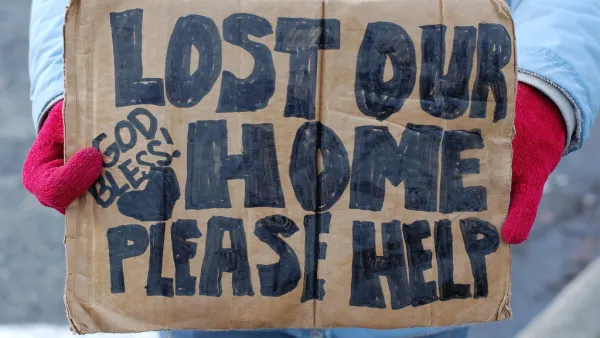
Which Cities Segregate Poverty Most Completely?
For the second installment in a five-part series on economic segregation in U.S. metros, Richard Florida examines the cities where poverty stays most hidden from "everyone else."
The State of Preservation Policy in L.A. County: Not Great (with Some Exceptions)
The Los Angeles Times reports on the Los Angeles Conservancy's 2014 Preservation Report Card, which "grades" each of L.A. County's local governments on their preservation programs (or lack thereof).
Mapping the Health of America’s Counties
The Robert Wood Johnson Foundation, in partnership with the University of Wisconsin Population Health Institute, this week released the annual County Health Rankings. The rankings aim to inspire healthy community action.
Is this Closure? Bank of America Settles with FHFA for $9.3 Billion
The Federal Housing Finance Agency (FHFA) announced a $9.3 billion settlement with Bank of America following a 2011 suit tied to the bank’s role in selling faulty mortgage-backed securities to Fannie Mae and Freddie Mac.
Energy Economics: Europe Pays Steap Price For Opposing Fracking
When it comes to fracking, much dialog is about energy vs. environment. Not this one. NPR reports on the economic consequences of Europe's rejection of fracking. Many European companies are setting up shop in the U.S. where energy may cost 75% less.
The Most Dangerous Small Towns in America
Where are the most dangerous—and least populated—places to live in America? Surprisingly, none are on the west coast.
Graphic Reveals Cardinal Orientation of Street Grids
Seth Kadish says he was born with an innate sense of direction. As such, he appreciates street grids oriented to cardinal directions. The phenomena interested him enough to create a graphic that visualizes the orientation of 12 urban areas.
Commuter Taxes: An Untapped Revenue Source?
For all those cities that double population during the work day, here's a revenue thought to consider. But why restrict it to in-bound commuters? What about residents who commute-out of the city? Is the commuter tax a legitimate revenue source?
What Do Urban Trends Mean for Banks?
A recent article describes the context of urbanization around the country before examining the implications of the trend for the decisions made by bankers—i.e., where and how to invest—especially given the realities of the post-recession economy.
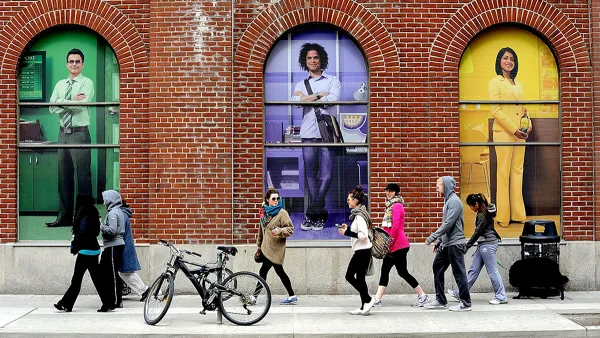
The Technology of Walkability
A recent article explores the promise—and potential pitfalls—of new technology to support the growing popularity of urban pedestrianism.
The Mercados Project: Lessons for the Revival of Markets
Historically, central markets served as grand social and commercial hubs for U.S. cities. A period of 20th century decline interrupted the evolution of markets, but creative and diverse examples have precipitated a recovery around the country.
How Utilities Fail to Predict the Economic Effects of Environmental Regulation
A familiar refrain: the EPA proposes new regulation of energy production, and the utility industry responds that new requirements will increase costs. The Center for American Progress recently looked back at how clairvoyant those claims proved to be.
Report: New Techniques and Technology for Monitoring Active Transportation
The growing popularity of active transportation requires planners and advocates to better survey how, where, and when people are biking and walking. A new study by the Transportation Research Board shares the cutting edge of survey techniques.
More Criticism of Transit Record Claims
A pair of articles pushes back on a recent study that claims public transit use in the United States is reaching record levels.
Are Environmentalists Digging Their Own Fracking Hole in Opposing Natural Gas Exports?
In a pair of articles, The Hill's energy and environment blogger Timothy Cara looks at political efforts to increase natural gas exports to Europe on account of Russia's annexation of Crimea, part of Ukraine, and environmental groups opposed to it.

FREE Course: Walkable City 1: Why Walkability?
After describing his path towards focusing on walkability as the essence of good planning, Jeff Speck marches through his five principal reasons for making more walkable places.
Reinventing Malls: Planning Alchemy—Turning Gray Fields Into Gold
The course focuses on the opportunities and imperatives that shape reinvention of mall sites.

One Hundred Miles
County of Mendocino
planning NEXT
The Architects Foundation
University of Cincinnati Online
Montrose County
Northern Illinois Transit Authority (NITA)
The Pocatello Development Authority









