A patchwork of isolated water crises in communities throughout the western United States adds up to one intricately woven story: 'we’ve reached peak water in the American west.'


"It is no surprise, of course, that the western United States is dry," writes Peter Gleick. "The entire history of the West can be told (and has been, in great books like Cadillac Desert [Reisner] and Rivers of Empire [Worster] and The Great Thirst [Hundley]) in large part through the story of the hydrology of the West, the role of the federal and state governments in developing water infrastructure, the evidence of droughts and floods on the land, and the politics of water allocations and use."
"But the story of water in the West is also being told, every day, in the growing crisis facing communities, watersheds, ecosystems, and economies. This isn’t a crisis of for tomorrow. It is a crisis today. What is, perhaps, a surprise, is that it has taken this long for the entire crazy quilt of western water management and use to finally unravel. But it is now unraveling."
Gleick makes note of the many crises that indicate a drying West and outlines some of the steps we'll have to take to confront the problem.
Read the full story: Peak Water in the American West

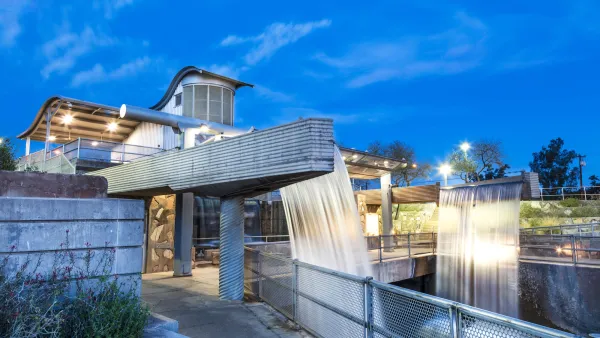
Phoenix and Tucson create emergency water reserve, anticipating Colorado River cuts
The Secure Water Arizona Program will allow participating cities to use a reserve of water or make agreements to buy it from other jurisdictions.
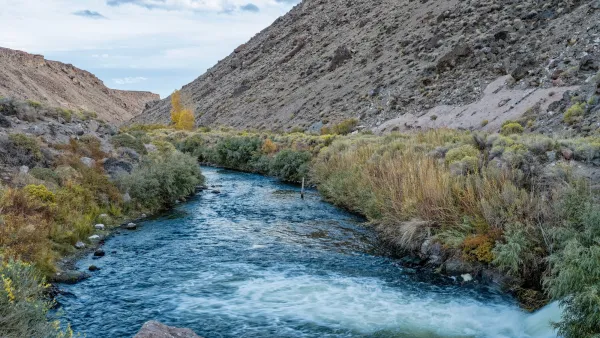
California is Out of Drought for First Time in 25 Years
The state’s reservoirs are reaching capacity for the first time in decades, but more rain could prompt flooding in downstream communities.
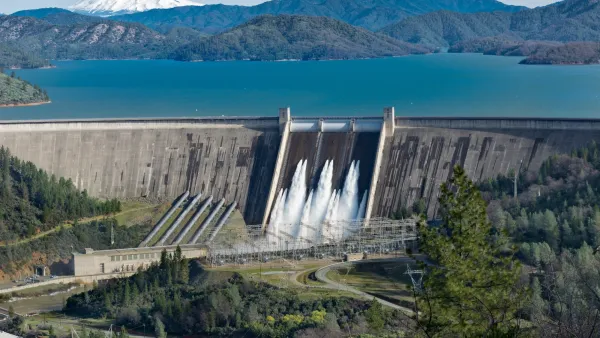
California’s Largest Reservoir Rose to 77% Capacity After Recent Rains
Almost all of the state’s reservoirs are nearing capacity after significant storms passed across the state.

Planetizen Federal Action Tracker
A weekly monitor of how Trump’s orders and actions are impacting planners and planning in America.

Amtrak, CN end decades-long dispute with eight-year agreement
The new operating agreement establishes an updated framework for the companies to work together, including processes to resolve disputes.

Judges permit Denver to divert 77,000 acre feet from the Colorado River for reservoir expansion
Overuse and climate change have caused the Colorado River’s water levels to plummet.

Maryland local governments examine if they should have more power to raise property taxes
Maryland’s housing market is out of reach for the majority of moderate-income residents.

Northwest rail fans eager for Sept. 30 debut of Amtrak’s Airo fleet
Get ready for that new train smell and more seats. But they won’t go faster or run more frequently on the Cascades route in Washington and Oregon.

NYC DOT wants faster, more permanent street upgrades
The city is examining ways to build more concrete infrastructure without getting entangled in 'decades-long' projects.

FREE Course: Walkable City 1: Why Walkability?
After describing his path towards focusing on walkability as the essence of good planning, Jeff Speck marches through his five principal reasons for making more walkable places.
Reinventing Malls: Planning Alchemy—Turning Gray Fields Into Gold
The course focuses on the opportunities and imperatives that shape reinvention of mall sites.

Harvard University Graduate School of Design
KFH Group Inc.
Greater Baltimore Committee
The Architects Foundation
University of Cincinnati Online
The Pocatello Development Authority
The Urban Renewal Agency of the City of Pocatello