Ornamental grass—the kinds of grass that line medians and roadsides but never serves for recreation—is a vanishing amenity in a drought-stricken West.


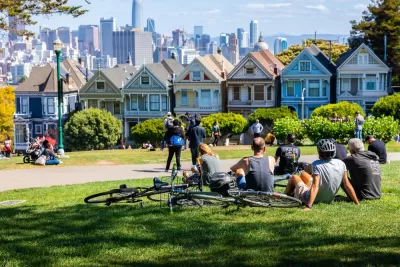
California legislators approved a bill, AB 1572 (Friedman), to ban the use of drinking water for ornamental grass—also known non-functional turf—grass never used for walking or recreation.
Ian James breaks the news of the approved legislation in. paywalled article for the Los Angeles Times, putting the scale of ornamental grass in perspective for Southern California readers:
Grass covers an estimated 218,000 acres in the Metropolitan Water District of Southern California’s six-county area. Nearly a quarter of that, or up to 51,000 acres, is categorized as “nonfunctional” turf — the sort of grass that fills spaces along roads and sidewalks, in front of businesses, and around parking lots.
Also:
This unused grass covers an area roughly 12 times the size of Griffith Park. By eliminating this grass and replacing it with landscaping that fits Southern California’s arid climate, the district estimates the region could reduce total water use by nearly 10%.
The bill cleared the state legislature with a 28-10 vote by the California State Senate, and now heads to the desk of Gov. Gavin Newsom for a signature.
A few cities and states in the southwest have taken steps to restrict the use of specific water supplies for ornamental and other types of grass, including Las Vegas, Tucson, Castle Rock, Aurora, and the state of Nevada. Many of these new water restrictions only apply to new developments, however.
FULL STORY: California is moving to outlaw watering some grass that’s purely decorative

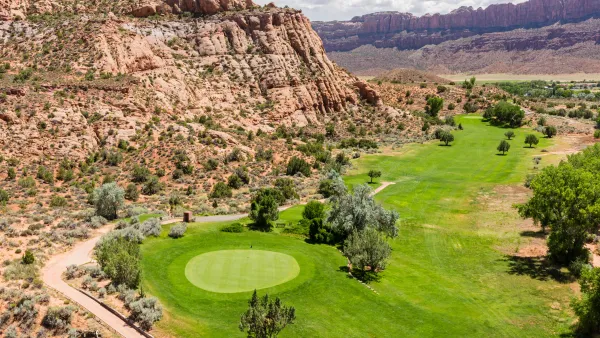
A Reckoning for Southwestern Golf Courses
Amid a growing water crisis, more cities are cracking down on ornamental uses of grass and golf course greens.

Ramping Up Recycled Wastewater
States like Colorado and water suppliers in parts of Southern California are expanding the use of recycled wastewater to protect dwindling drinking water supplies.
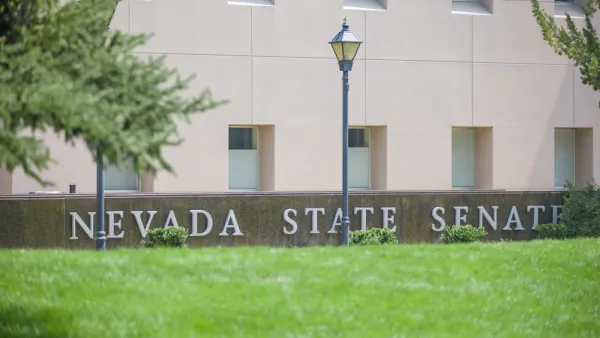
Nevada Bans the Use of Colorado River Water for Ornamental Grass
AB 356 could be "the most aggressive municipal water conservation measure that's been taken in the western United States."

The state-sanctioned urbicide of Austin
People don’t kill cities. Freeways do.

US to reduce Colorado River water deliveries to Mexico
A new Colorado Treaty amendment reduces Mexico’s Colorado River water allocation by 250,000 acre feet.

New Jersey’s second-largest city bans standalone data centers
Jersey City will continue to allow co-location facilities, such as those meant for research institutions that store their own data.

Amtrak not solely to blame for New Jersey commuter rail's unreliability, report finds
A new study from the Garden State Initiative found that NJ Transit’s budget grew 20% across a 4 year period, but reliability declined significantly over the same period.

EPA erases limits on planet-warming pollution from power plants
Under Monday’s plan, power plants would still have some limits on how much mercury, arsenic and other contaminants they can emit.

Phoenix announces new on-demand transit service, more frequent RAPID buses
Both new services will launch in October, and are part of Phoenix's Project Effective Access Solutions for Easing Congestion.

FREE Course: Walkable City 1: Why Walkability?
After describing his path towards focusing on walkability as the essence of good planning, Jeff Speck marches through his five principal reasons for making more walkable places.
Reinventing Malls: Planning Alchemy—Turning Gray Fields Into Gold
The course focuses on the opportunities and imperatives that shape reinvention of mall sites.

Eagle County Government
Harvard University Graduate School of Design
Nashville Planning Department
The Architects Foundation
University of Cincinnati Online
The Pocatello Development Authority
The Urban Renewal Agency of the City of Pocatello
Journal of the American Planning Association