Slow bicycling groups and events allow people to socialize, exercise, and never worry about being left behind, reports Jennifer Levitz.


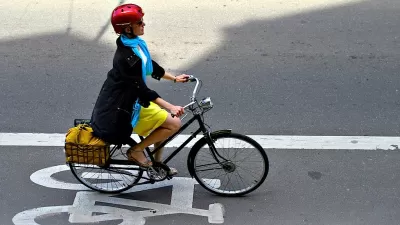
"Participants say slower riding is a backlash to today's hard-core fitness world, brimming with boot camps and mud runs. Molly Peterson, a 46-year-old librarian in Fairhope, Ala., said people in her tennis league were cursing and throwing rackets. 'It can be pretty ugly,' she says.
In 2011, she launched the Slow Bicycle Society on the Eastern Shore, an Alabama club with 100 members and a mission statement: 'No Spandex needed!' In Tennessee, the Murfreesboro Slow Ride Cyclists, which formed two months ago, calls itself 'a never-get-left-behind fun bicycling group' with 'baskets encouraged.'
'We're mostly focused on ringing our bells and waving at kids and just cruising around and chatting with the person closest to you in line,' says Sarah Murray, a 40-year-old manager for the city of Chicago who founded the Slow Bicycle Society in Chicago in 2009 and has watched membership grow to 300 from 15 people. She rides a three-speed upright."
Read the full story: These Bikers Race for Last Place

CicLAvia Rides into South Los Angeles
CicLAvia, the Los Angeles open streets event, heads to South Los Angeles for the first time today. Sahra Sulaiman explains the communities preparedness leading up to this historic event.
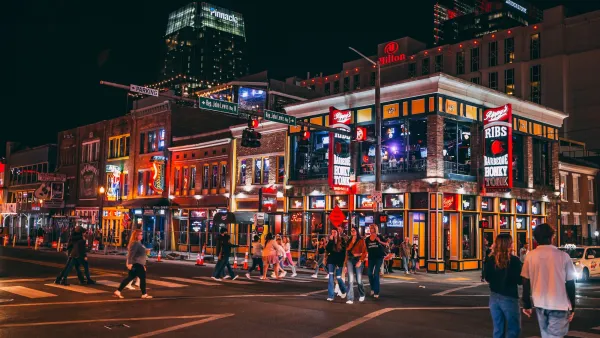
Tennessee DOT weighs making Nashville's Broadway car-free — sometimes
After a crash that killed one person and injured several others, state and city officials are in talks to consider options for closing the popular thoroughfare to cars during certain events.
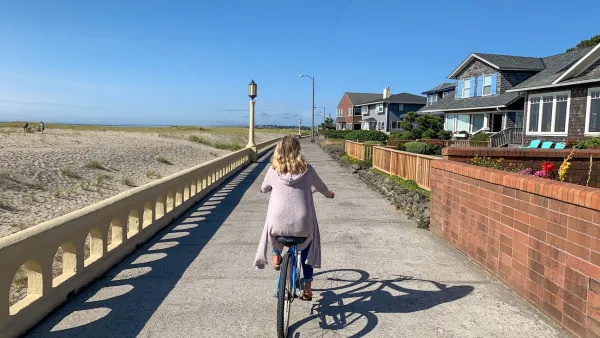
Oregon updates coastal bike map for the first time in a decade
The printed guide helps cyclists navigate the coastal region where cellular service can be unpredictable.

Planetizen Federal Action Tracker
A weekly monitor of how Trump’s orders and actions are impacting planners and planning in America.

‘Going backwards:’ Baltimore mayor, students rally against state's transit funding plan
Maryland's proposed six-year plan provides no funding for Baltimore’s BMORE bus program and reduces its road maintenance funding.

Detroit to transform waterfront with $2.2 billion investment
Developers will convert about 18 acres of unused parking lot space into civic spaces.

U.S.-Iran war may have ‘devastating’ impact on cost to warm homes
Vermont and Maine residents may see a 76% increase in the cost of warming their homes this winter.

Senate bill would ‘overhaul’ environmental permitting laws
Under the proposed act, government agencies would also not be able to suspend or rescind permits after granting them.

Exemption applications for NYC’s pied-à-terre tax see 55% success rate
The city sent nearly 40% of its initial pied-à-terre tax warnings erroneously.

FREE Course: Walkable City 1: Why Walkability?
After describing his path towards focusing on walkability as the essence of good planning, Jeff Speck marches through his five principal reasons for making more walkable places.
Reinventing Malls: Planning Alchemy—Turning Gray Fields Into Gold
The course focuses on the opportunities and imperatives that shape reinvention of mall sites.

One Hundred Miles
County of Mendocino
planning NEXT
The Architects Foundation
University of Cincinnati Online
Montrose County
Northern Illinois Transit Authority (NITA)
The Pocatello Development Authority