United States

Sources: Trump Administration Considering an Attack on Disparate Impact
The Supreme Court upheld the disparate impact doctrine at the heart of fair housing rules, along with many other anti-discrimination policies, in 2015. Still, the Trump administration is looking for ways to undermine disparate impact.

Census Bureau Finally Has a New Director
The U.S. Census Bureau had been without an approved director since May 2017. The Senate unanimously approved Steven Dillingham to the position with about a year to spare before the 2020 Census begins.

Opinion: Close National Parks During the Shutdown
The consequences of allowing the public free access to national parks without any supervision or maintenance operations are to great a risk, according to a former director of the National Park Service.

Fighting Climate Change With an Income Tax
There's been a lot of talk about the Green New Deal, but not that much is known about it. Rep. Alexandria Ocasio-Cortez (D-N.Y.), who is promoting it, explained the program on 60 Minutes on January 6.

Birds of Passage: Quantifying Jacobs's Gloom
While the debate continues unabated on the influence of the physical and land use characteristics of a city on crime, a critical aspect is left out: resident transience. Jacobs took notice and feared its negative influence. Was she right?

D.C. Metro Allows Bikes At All Hours
The agency hopes that allowing more bikes on trains will boost ridership for both.
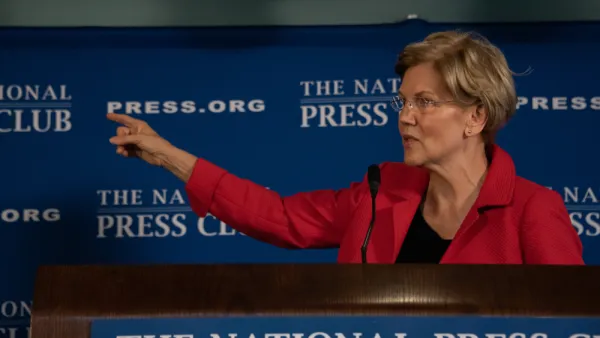
Democratic Presidential Contenders May Elevate Housing Policy
Housing measures fared well in the 2018 election, and it's likely that Democratic contenders for the presidency in 2020 have taken notice and will boost those issues in their campaigns.

Assessing Feasibility Studies for Inclusionary Zoning
Cities use the studies to inform decisions about inclusionary housing programs. But a closer look shows that there is great variation in the methods and metrics, with no one correct approach for every situation.

Wisconsin Law Could Delay Major Highway Projects
A plan to save money on highway megaprojects is likely to backfire, experts warn.

Meeting the Challenge of Feeding 10 Billion People Sustainably in 2050
With world population to grow by about 2 billion by 2050, and with more people eating higher on the food chain as nations develop economically, can world agriculture reduce its carbon footprint? A new World Resources Institute report shows how.

Master Plan Strives for a 'Seamless' Chattahoochee River for the Atlanta Region
A comprehensive study to revitalize the Atlanta regional waterfront, dubbed the Chattahoochee RiverLands project, is now underway.


EPA Targets Co-Benefits in Rulemaking—Public Health to Suffer
The Environmental Protection Agency proposed a critical change in the cost-benefit analysis used in the mercury rule that applies to coal-fired power plants. By eliminating the principle of co-benefits, public health impacts would be severe.

Seattle Releases RFP for Lid I-5 Study
The plan to top I-5 in Seattle with a cap park—what writer Natalie Bicknell calls "the most ambitious effort in our region"—is moving ahead with a $1.5 million feasibility study.
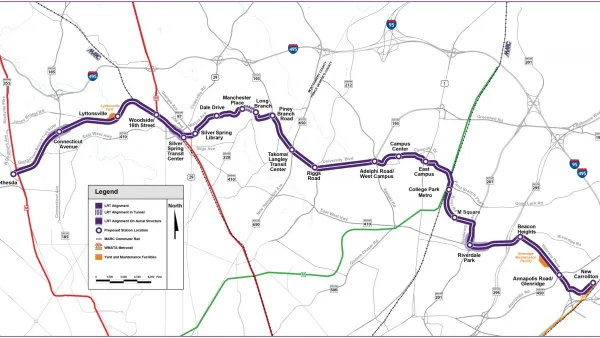
Transit Oriented Development Planning Funding Awarded to 20 Agencies
The Maryland Department of Transportation was the big winner in the Federal Transit Administration's Transit-Oriented Development Pilot Planning Program, with $2 million in grant funding.

The Data-Driven Plan to Cool Down Dallas
Dallas's resiliency plan analyzed the best ways to combat heat in every neighborhood.

Positive Train Control Deadline: Rail Systems Go 4 for 41
A decade after Congress set a deadline for rail systems to implement positive train control, only 4 rail systems were able to get the job done on time.

Democrats Take Steps to Address Climate Change in 116th Congress
Speaker-designate Nancy Pelosi has selected Rep. Nancy Castor (D-Fla.) to chair the new Select Committee on the Climate Crisis. Two bills that could advance in the House: the Green New Deal and a carbon tax-and-dividend bill, H.R. 7173.

San Francisco-ization, a City's Biggest Nightmare
Cities spend a lot of time and energy pointing to examples of what they don’t want to become.

A Look Back on What Ryan Zinke Is Leaving Behind
Zinke’s tenure at the Interior Department was not lengthy, but the damage he inflicted will be long-lasting.

FREE Course: Walkable City 1: Why Walkability?
After describing his path towards focusing on walkability as the essence of good planning, Jeff Speck marches through his five principal reasons for making more walkable places.
Reinventing Malls: Planning Alchemy—Turning Gray Fields Into Gold
The course focuses on the opportunities and imperatives that shape reinvention of mall sites.

One Hundred Miles
County of Mendocino
planning NEXT
The Architects Foundation
University of Cincinnati Online
Montrose County
Northern Illinois Transit Authority (NITA)
The Pocatello Development Authority









