Ford hit a goal to reduce carbon emissions *from its manufacturing process* eight years ahead of schedule.



"Ford Motor Co. says it has met a self-imposed goal of slashing manufacturing-related emissions eight years ahead of schedule," reports Michael Martinez. "The company in 2010 pledged to cut carbon dioxide emissions from its carmaking processes by 30 percent within 15 years."
The company chose to measure the amount of carbon emissions it had eliminated from its manufacturing process in terms of driving:
Ford announced the achievement as part of its 2017-18 Sustainability Report, saying it reduced global manufacturing CO2 emissions by more than 3.4 million metric tons from 2010 to 2017. That's equivalent to greenhouse-gas emissions from more than 728,000 passenger vehicles driven for one year, it said.
Measures that helped the company achieve its goals include LED lighting and changing the lubricant for a machining tool.
FULL STORY: Ford hits carbon emissions reduction goal 8 years early


How the ‘Big Beautiful Bill’ Impacts Transportation
Five ways the bill negatively impacts U.S. transportation policy.
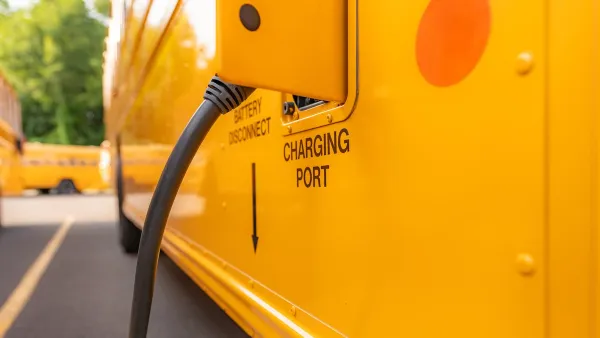
Pittsburgh Rolls Out Electric School Buses
Pittsburgh Public Schools has launched its first electric school buses, with plans to fully electrify its fleet over the next 14 months, aiming to create a cleaner, more sustainable transportation system supported by new charging infrastructure.

EPA Terminates $116 Million in Grants for Reducing Emissions from Construction Materials
C-MORE grants were earmarked for industry trade groups and universities.

The state-sanctioned urbicide of Austin
People don’t kill cities. Freeways do.

US to reduce Colorado River water deliveries to Mexico
A new Colorado Treaty amendment reduces Mexico’s Colorado River water allocation by 250,000 acre feet.

New Jersey’s second-largest city bans standalone data centers
Jersey City will continue to allow co-location facilities, such as those meant for research institutions that store their own data.

Amtrak not solely to blame for New Jersey commuter rail's unreliability, report finds
A new study from the Garden State Initiative found that NJ Transit’s budget grew 20% across a 4 year period, but reliability declined significantly over the same period.

EPA erases limits on planet-warming pollution from power plants
Under Monday’s plan, power plants would still have some limits on how much mercury, arsenic and other contaminants they can emit.

Phoenix announces new on-demand transit service, more frequent RAPID buses
Both new services will launch in October, and are part of Phoenix's Project Effective Access Solutions for Easing Congestion.

FREE Course: Walkable City 1: Why Walkability?
After describing his path towards focusing on walkability as the essence of good planning, Jeff Speck marches through his five principal reasons for making more walkable places.
Reinventing Malls: Planning Alchemy—Turning Gray Fields Into Gold
The course focuses on the opportunities and imperatives that shape reinvention of mall sites.

Eagle County Government
Harvard University Graduate School of Design
Nashville Planning Department
The Architects Foundation
University of Cincinnati Online
The Pocatello Development Authority
The Urban Renewal Agency of the City of Pocatello
Journal of the American Planning Association