Technology
The Danger in Transportation Fantasizing
We hear a lot about the next leap forward in transportation, whether it be Elon Musk's Hyperloop or Tel Aviv's floating pods. But in focusing on the latest fantasy, are we harming our ability to address the problems of the present?
The Positive Energy Potential of Suburban Sprawl
What if most cars were electrics, most electricity was generated locally, and new development was required to have solar? Would this paradigm make sprawl more energy sustainable than compact growth? A new paper argues yes.
Can this Vending Machine Solve the Bike Share Helmet Harangue?
Mexico City, Melbourne, and Vancouver are just some of the cities that have struggled to get citywide bike-sharing systems off the ground due to local laws mandating the use of bike helmets. A new helmet vending machine could help break the impasse.
Driverless Cars Steer Us Away From a Carless Future
Discussions over the potential benefits and drawbacks of driverless cars seemingly overlook one important question, says Allison Arieff: "[W]hy continue to design and plan for a car-based society?"

How Can Techies and Planners Work Together to Create Better Cities?
As Director of Public Policy at Airbnb, Molly Turner has noticed she's the only planner in attendance at the Bay Area's myriad hackathons and conferences. As tech increasingly addresses urban issues, is it doomed to repeat planning's past mistakes?
MTA Studies Millennials to Meet Their Transit Needs
When it comes to meeting the transit needs of millennials, real time information about train arrivals is as important as the transit itself. This is one of the key findings of a New York MTA survey conducted to inform strategies for the future.
Should Electric Cars Get Free Parking?
Ideally, the best way to encourage sales of non-polluting electric vehicles would be to price carbon emissions. But if that isn't possible, why not reward EV owners with perks such as free parking; or would that be a distortionary incentive?
Mapping Slums to Shape Them
A mapping effort led by a group of cartographers called the Spatial Collective is helping to make visible what it's like to live in the Nairobi slum of Mathare. By giving form to the informal settlement, its problems are being made evident.
How Should Industry be Integrated Into the Urban Fabric?
Are we on the brink of a third industrial revolution? Guest 'PlaceShaker' Scott Bernstein thinks maybe, and looks to past successes for key patterns and ideas for injecting walkability into areas with industrial or 'special' uses.
Big Solar: It's Green vs. Green
No form of energy production comes without controversy, including solar, despite it being renewable. In advance of the world's largest solar thermal plant opening in Calif's Mojave Desert, KQED's Lauren Sommer shows both sides of the green debate.
Will Car-Sharing Apps Unclutter L.A.'s Roadways?
Thanks to mobile technology, Los Angelenos no longer have to choose between driving their own cars and paying expensive cab fares after a night out on the town.
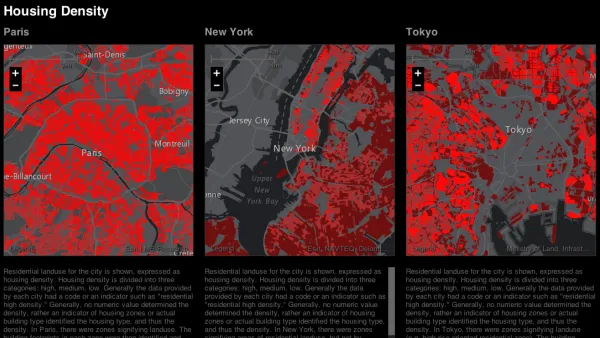
New Tool Facilitates Stunning City Comparisons
The creator of the TED conference has teamed up with Esri to develop an innovative interactive exhibit and online mapping tool to compare 16 global cities along 16 data points, including: population density, open space, and traffic.
6 Promising New Apps for Design Professionals
'Forget clipboards and cameras," says Heidi Moore. She spotlights six new apps (and five 'tried-and-tested' ones) that can solve your measuring, note-taking, and networking needs on your phone.
Nation's First VMT Fee Bill Passed By Oregon Legislature
If Gov. John Kitzhaber signs SB 810, as expected, Oregon will create a voluntary program for up to 5,000 motorists who will pay 1.5-cents for every mile they drive instead of the 30-cent state fuel excise tax.
Landmark Ruling Liberates California GIS Data
The California Supreme Court has ruled in favor of the Sierra Club's quest to have publicly held GIS data made available for a nominal fee under the California Public Records Act.
The Great Repurposing: Envisioning the City of Driverless Cars
With driverless cars poised to appear in the not-too-distant future, planners and engineers are beginning to envision the effect on the urban landscape and the spaces within cars themselves. Nick Bilton shares some of the predictions.
Is the Civic Hackathon Trend Sustainable?
As more governments embrace civic hackathons as a way to tap enthusiastic young software developers quickly and cheaply, a backlash to these "app-developing marathons" is growing along with them. Does their local focus doom them to irrelevance?

Mapping Interest in All Things Zombie
The three geographers behind the Floating Sheep blog have created a world map of Internet references to zombies.
The Top Architecture Instagrammers
Looking for some design inspiration? The editors of ArchDaily have put together a list if the 25 top feeds to follow on Instagram.
Infrastructural Tourism Takes Off
Shannon Mattern examines how media scholars and environmental artists are working to reveal the material and immaterial infrastructures that shape our lives, from the Interstate to the Internet.

FREE Course: Walkable City 1: Why Walkability?
After describing his path towards focusing on walkability as the essence of good planning, Jeff Speck marches through his five principal reasons for making more walkable places.
Reinventing Malls: Planning Alchemy—Turning Gray Fields Into Gold
The course focuses on the opportunities and imperatives that shape reinvention of mall sites.

City of Rosemead
Rutgers University, Edward J. Bloustein School of Planning and Public Policy
One Hundred Miles
University of Michigan School for Environment and Sustainability (SEAS)
Hunter College, City University of New York (CUNY)
The Architects Foundation
City of Cambridge
Montrose County
The Pocatello Development Authority









