Intersections
Slot-Based Design Could Eliminate Traffic Lights
An MIT study determined that traffic lights, and their inefficiencies, could be eliminated if all vehicles were equipped to regulate their speed and "batch" together as they approach intersections.
Demystifying the Turning Radius and its Critical Importance to Street Safety
A MinnPost article explains the importance of a properly tuned turning radius while getting to the bottom of a controversial decision to remove pedestrian and bike infrastructure.
America's Second Protected Intersection Now Open
The first protected intersection opened in August in Davis, Calif., a university town with the nation's highest percentage of bike commuters. Salt Lake City's new protected intersection is explained on NPR's "Here & Now" report with audio and videos.
Controversy Emerges Over Chicago's Polka Dot Intersection
Local residents are upset with the effects of the placemaking installment in Chicago, opened this spring—namely slower traffic and a polka dot color scheme. An article in DNAinfo points out that slowing traffic was kind of the point.
Op-Ed: Los Angeles Walkability Needs More Crosswalks
Although Los Angeles isn't famous for its walking culture, many neighborhoods are actually quite suited for it. That is, if streets could be made friendlier to the pedestrians they currently repel.
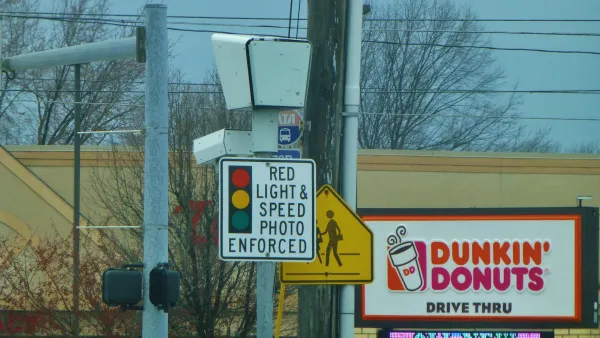
To Protect Pedestrians, Keep the Cameras
Active Transportation Alliance, a Chicago pedestrian advocacy group, urges Mayor Rahm Emanuel to improve red light cameras rather than remove them. Despite complaints from drivers, well-advertised cameras can reduce pedestrian fatalities.
On the Benefits of Traffic Signal Removal
Certain intersections stand to gain from losing their traffic lights. According to this study, cities can save money and improve safety by uninstalling signals in low-traffic zones.
'Lincoln Hub': A Polka Dot Makeover for Chicago Intersection
The intersection of Lincoln Ave, Southport Avenue, and Wellington Avenue in the South Lakeview neighborhood of Chicago is in the process of a major upgrade in pedestrian-friendly placemaking.
The Potential Downside of Railroad Electrification—for Motorists
Electrification of the Caltrain will be great for train riders, the environment, air quality, and public health, but it might worsen traffic congestion between San Jose and San Francisco by increasing the frequency of commuter trains.
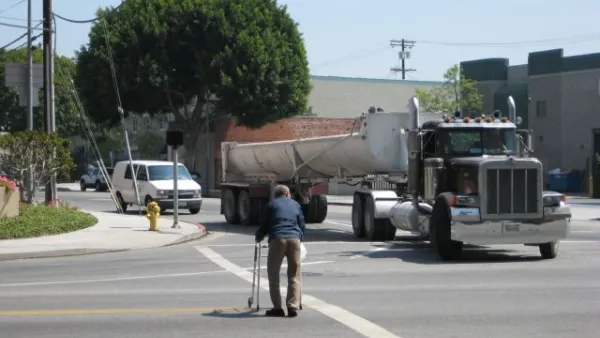
Intersection Designs that Prioritize Pedestrian Safety
Following the idea that pedestrian safety takes its cues from planners, Rachel Dovey's article on pedestrian safety lists six intersection designs that "actually prioritize pedestrians."
Nashville's New Bike-Friendly Bonafides: Bike Boxes
Bike boxes, a European import, may not have received as much attention other novel bike facilities such as protected bike lanes, but they are spreading. Nashville's first bike box accompanies a road diet and buffered bike lanes.
Outreach Delays New Diverging Diamond Intersection in Colorado
The diverging diamond interchange system planned for an exit off Interstate 70 in Grand Junction, west of Denver in Colorado, has been delayed so officials can educate the public about the new traffic pattern.
The Innovative Intersection Designs That Could Make Our Roads Safer
Not usually regarded for their outside the box thinking, transportation engineers have nevertheless come up with some radical ideas for improving the flow of traffic and reducing the potential for collisions at busy intersections.
All it Takes is a Little Paint
Alyse Nelson says that when it comes to placemaking, sometimes all you need is some brightly-colored paint.
The Importance of Corners
Chuck Wolfe focuses on the role of the urban corner, terming it "the central place of urban life".
Superstreets To The Rescue
Randal O'Toole points to a thesis paper that proposes a new approach to traffic flow at major intersections.
Inside L.A.'s High-Tech Traffic Control System
Streetfilms goes behind the scenes at Los Angeles' Automated Traffic Surveillance and Control office, which monitors and actively controls L.A.'s signalized intersections.

FREE Course: Walkable City 1: Why Walkability?
After describing his path towards focusing on walkability as the essence of good planning, Jeff Speck marches through his five principal reasons for making more walkable places.
Reinventing Malls: Planning Alchemy—Turning Gray Fields Into Gold
The course focuses on the opportunities and imperatives that shape reinvention of mall sites.

City of Rosemead
Rutgers University, Edward J. Bloustein School of Planning and Public Policy
One Hundred Miles
Hunter College, City University of New York (CUNY)
The Architects Foundation
University of Cincinnati Online
City of Cambridge
Montrose County
The Pocatello Development Authority









