The diverging diamond interchange system planned for an exit off Interstate 70 in Grand Junction, west of Denver in Colorado, has been delayed so officials can educate the public about the new traffic pattern.


Grand Junction officials had hoped to open a new diverging diamond configuration for Exit 26 on Interstate 70 on December 17, but those plans have been pushed until this spring so transit officials can go to greater lengths to educate the public about the new traffic pattern, which attempts to limit left turns and the deadly "T-Bone" accidents that are common in such intersections.
Grand Junction's engineering manager Trent Prall is quoted in the article: “We thought that opening it during the winter season and in the middle of the holiday season was not the best opportunity for success for the project.”
The article by Monte Wall also describes the function of the innovative intersection system: “The configuration is unique because it eliminates traditional left-hand turns by crossing lanes and shifting drivers to the left side of the road…Designers say this gives drivers direct access to a left-hand interstate on-ramp without waiting at a traffic signal.” The interchange configuration has benefits in safety and capacity.
Read the full story: Western Slope "diverging diamond" on-ramp delayed to better ready drivers

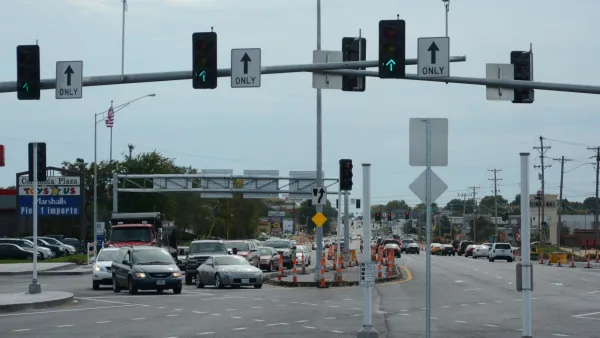
On the Rise of the Diverging Diamond Interchange
Its design can appear baffling at first, but the DDI presents drivers with far fewer opportunities to collide with each other than traditional four-way intersections.

Philadelphia lawmakers fight to save 'Chinatown Stitch' from Trump cuts
The freeway cap project, approved and funded under the Biden administration, is now in jeopardy after the federal government rescinded all but $8 million in funding.
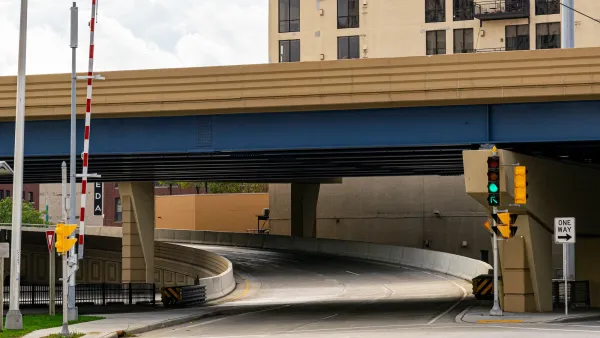
Milwaukee mayor abandons highway removal plan
Mayor Johnson spoke in opposition to a proposed plan to turn part of I-794 into an at-grade boulevard, expressing concerns about traffic.

Planetizen Federal Action Tracker
A weekly monitor of how Trump’s orders and actions are impacting planners and planning in America.

‘Going backwards:’ Baltimore mayor, students rally against state's transit funding plan
Maryland's proposed six-year plan provides no funding for Baltimore’s BMORE bus program and reduces its road maintenance funding.

Detroit to transform waterfront with $2.2 billion investment
Developers will convert about 18 acres of unused parking lot space into civic spaces.

U.S.-Iran war may have ‘devastating’ impact on cost to warm homes
Vermont and Maine residents may see a 76% increase in the cost of warming their homes this winter.

Senate bill would ‘overhaul’ environmental permitting laws
Under the proposed act, government agencies would also not be able to suspend or rescind permits after granting them.

Exemption applications for NYC’s pied-à-terre tax see 55% success rate
The city sent nearly 40% of its initial pied-à-terre tax warnings erroneously.

FREE Course: Walkable City 1: Why Walkability?
After describing his path towards focusing on walkability as the essence of good planning, Jeff Speck marches through his five principal reasons for making more walkable places.
Reinventing Malls: Planning Alchemy—Turning Gray Fields Into Gold
The course focuses on the opportunities and imperatives that shape reinvention of mall sites.

One Hundred Miles
County of Mendocino
planning NEXT
The Architects Foundation
University of Cincinnati Online
Montrose County
Northern Illinois Transit Authority (NITA)
The Pocatello Development Authority