Infill Development
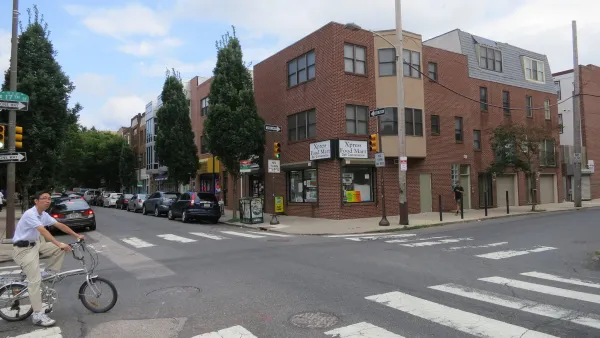
AIA: Demand for High-Density Development Is Down
For the first time in four years, a quarterly survey indicates “market saturation in urban areas.”
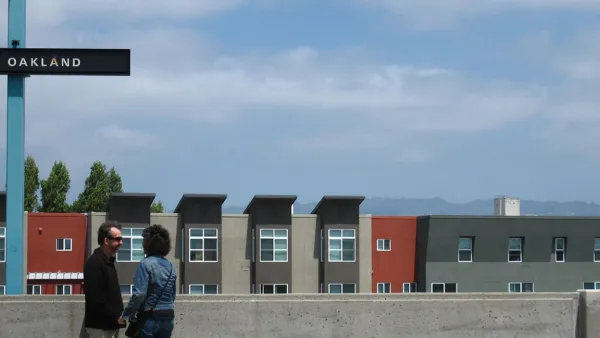
Mapping All the Transit Corridors Targeted for Upzoning Under California's SB 827
SB 827, announced last week by California State Senator Scott Wiener, would revoke density maximums, parking minimums, and set permissive height limits along transit corridors all over the state.

Aggressive New 'Housing-First Policy' Proposed in California State Legislature
California State Senator Scott Wiener has established himself as one of the most ardent supporters of pro-housing policy in the state. His announcement this morning continued the theme.

Portland to Consider New Residential Infill Regulations
The city of Portland's new residential infill ordinance would reduce the number of 1:1 demolitions—which often convert older, affordable homes into expensive McMansions.
ADUs Are Having a Moment
Granny flats, mother-in-law units, accessory dwelling units (ADUs), or secondary units—whatever you call them, more and more cities, regions, and states are making it easier to deliver subtle density in the backyard.

Making Sense of San Antonio's Infill Development Plans
San Antonio is changing, and the city's land use regulations aren't living up to the desires of the city's communities, according to one local architect and planner.

How Not to Solve a Housing Crisis
More trouble in River City, as Portland and Oregon struggle with rising housing costs and come up with a puzzling solution.
Infill Comes to Atlanta's Single-Family Neighborhoods
The Atlanta metropolitan area is facing an estimated 2.5 million new residents by 2040. Some current residents are surprised at some of the neighborhoods accommodating that growth.
When Environmental Goals Collide
Using the movie titled "When Worlds Collide" as a metaphor, environmental attorney Richard Opper describes how environmental regulations can get in their own way to defeat density and infill development—and NIMBYs are not just residents.
Infill Development is Key to Meeting California's Emission Reduction Law
If California is going to meet the new, steep emissions reductions required by a law passed last September, one of the most effective strategies will be to promote infill housing, according to a new report from University of California at Berkeley.

A Proposed Legislative Solution to California's Out-Migration Epidemic
The Sacramento Bee follows-up a revealing report on lower income workers leaving California due largely to exorbitant housing costs with an editorial endorsing legislation by Sen. Scott Wiener, D-San Francisco to address the source of the problem.

Boston Development Has a Famous Opponent: The Red Sox
Management from the Boston Red Sox has taken an interest in the planning process by opposing a nearby high-rise development.

Report: Portland's Proposed Residential Infill Policies Could Slow Infill Development
Portland is expecting 123,000 new households in the city by 2035, so it's proposed a new residential infill policy to accommodate all those people. A new report argues, however, that the policy could have a chilling effect on infill development.

The Genesis of a Medium-Sized City's Affordable Housing Strategy
Bradenton, a medium-sized city on the Gulf Coast of Florida, offers a case study in affordable housing policy.
Residential Infill Regulations Designed to Slow the Advance of McMansions
The city of Portland, Oregon is considering new regulations to limit the kinds of homes that can be built in existing neighborhoods.

Urban Growth Boundaries Gone Awry: Protection Without Infill
Joe Mathews of Zócalo Public Square views with a great deal of skepticism the urban growth boundaries the voters of Ventura County adjacent to Los Angeles County have enacted since 1995 due to the lack of infill. Another measure is on the ballot.

Dual Moratoriums Push Back on Infill Density in Denver
The Denver City Council approved two separate moratoriums on building types that are adding infill density to neighborhoods in the city.
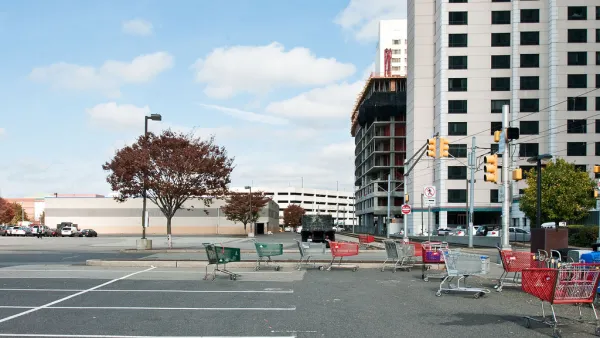
Making the Case for Mixed-Use, Walkable Development: #BuildHereNow
A new social media-fueled engagement effort is shedding light on the policies that make it hard to build walkable, mixed-use infill in communities around the country.

NIMBYs at Center of California's Housing Shortage
Sacramento Bee's political columnist, Dan Walters, writes that NIMBYs are among the main reasons for the state's chronic housing crisis, and one of their main tools is the California Environmental Quality Act, which must be reformed by politicians.

Ranking Cities By Infill Developments
A list of the cities doing the most to build infill development, courtesy of Infill Score.

FREE Course: Walkable City 1: Why Walkability?
After describing his path towards focusing on walkability as the essence of good planning, Jeff Speck marches through his five principal reasons for making more walkable places.
Reinventing Malls: Planning Alchemy—Turning Gray Fields Into Gold
The course focuses on the opportunities and imperatives that shape reinvention of mall sites.

Eagle County Government
Harvard University Graduate School of Design
Nashville Planning Department
The Architects Foundation
University of Cincinnati Online
The Pocatello Development Authority
The Urban Renewal Agency of the City of Pocatello
Journal of the American Planning Association