SB 827, announced last week by California State Senator Scott Wiener, would revoke density maximums, parking minimums, and set permissive height limits along transit corridors all over the state.


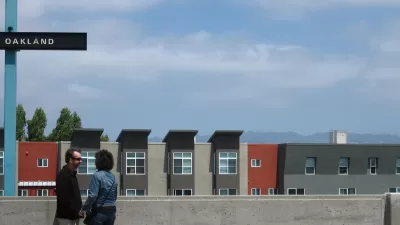
Sasha Aickin, former CTO of Redfin, spent the weekend mapping out the footprint of SB 827, proposed by California State Senator Scott Wiener last week. The informal mapping exercise, not official or sanctioned by Senator Wiener, provides a visualization of the broad reach of the proposed bill. In a written post that accompanies the new map, Aickin says "[n]early all of San Francisco would be set for upzoning to 85/55 foot heights, as would significant portions of Los Angeles, Long Beach, San Diego, Oakland, Berkeley, and Sacramento. More surpising [sic] to me, though, is the impact on smaller cities like Bakersfield, Santa Cruz, and San Bernardino, which also have a large amount of 85/55 foot upzoning."
Wiener agrees with the assessment of many on social media over the past week that the new bill represents an aggressive approach to the state's housing affordability crisis.
The bill is part of a package of bills designed as a "housing-first" policy for the state of California that would follow up on previous bills approved in 2017. Planetizen covered the new bills when Senator Wiener announced the package earlier this month.
FULL STORY: What would SB 827 really look like?


Aggressive New 'Housing-First Policy' Proposed in California State Legislature
California State Senator Scott Wiener has established himself as one of the most ardent supporters of pro-housing policy in the state. His announcement this morning continued the theme.
Interactive Mapping Tool Illustrates the Impact of California's Big Housing Bill
University of California, Berkeley researchers have mapped the impact of SB 50, a bill that would allow new density around train stations and bus stops in cities all over the state of California.

Amendments Proposed for California's Landmark Pro-Housing Development Legislation
Amendments are circulating for one of the most-closely watched, and passionately debated, pieces of housing legislation in the country.

Planetizen Federal Action Tracker
A weekly monitor of how Trump’s orders and actions are impacting planners and planning in America.

The state-sanctioned urbicide of Austin
People don’t kill cities. Freeways do.

US to reduce Colorado River water deliveries to Mexico
A new Colorado Treaty amendment reduces Mexico’s Colorado River water allocation by 250,000 acre feet.

5 New England states march closer to 800 megawatt wind energy project
Securing federal approval for the project may be complicated under the Trump administration, which has historically been hostile towards domestic wind power.

Baltimore to break ground on $50 million Transit Priority Project
The project will bring faster bus trips, safer streets and better bike connections to Baltimore.

Airbnb launches $250 million 'last-dollar financing' housing accelerator, makes first investment in Austin
The company will put $6.4 million towards affordable housing development in Texas’ capital.

FREE Course: Walkable City 1: Why Walkability?
After describing his path towards focusing on walkability as the essence of good planning, Jeff Speck marches through his five principal reasons for making more walkable places.
Reinventing Malls: Planning Alchemy—Turning Gray Fields Into Gold
The course focuses on the opportunities and imperatives that shape reinvention of mall sites.

Eagle County Government
Harvard University Graduate School of Design
Nashville Planning Department
The Architects Foundation
University of Cincinnati Online
The Pocatello Development Authority
The Urban Renewal Agency of the City of Pocatello
Journal of the American Planning Association