The Denver City Council approved two separate moratoriums on building types that are adding infill density to neighborhoods in the city.



"Denver City Council put the brakes on new apartment developments that do not include parking," according to an article by Dave Young. The moratorium is one of two that respond to pressure from local activists, with the full support of the Denver City Council, to infill development.
The example examined by Young deals with a 17-unit micro apartment building that will replace a house on South Pearl Street, located about two blocks from a popular sushi restaurant.
Councilmember Jolon Clark is quoted in the article, claiming that there are plans for 100 units, among some 13 projects, around the city without parking. Councilmember Clark argues that the new developments are a case of unintended consequences. The idea behind a mixed-use exemption for small lots back, approved in 2010, "was to encourage re-use of older, run-down structures for new home or commercial projects."
The article lacks a counter-point on the subject of parking requirements. Also lacking is any discussion of the two bus lines and a light-rail station located within a half-mile of the sushi restaurant in question on South Peal Street.
An earlier article by Jon Murray details the City Council votes that paved the way for the moratorium. With two unanimous votes "the council approved a moratorium for about seven months that will prevent developers of larger projects from taking advantage of the city’s small-lot parking exemption," and another moratorium that "will stop developers for at least the next year from filing new plans for modern sideways row homes with “garden courts” between the buildings that are too narrow."
Murray explains the intended consequences of the moratoriums: to counter "the tensions caused by rising density in older neighborhoods…"
Now the city's Community Planning and Development Department will have to go back to the drawing board for amendments to both the slot-home ordinance and the small lot parking exemption.
Read the full story: Denver City Council OKs moratoriums on small-lot parking exemption, some garden-court row homes

Study: Eliminating Parking Requirements Would Boost Denver Housing by 12.5%
Denver and other Colorado cities have recently reduced or eliminate parking requirements, paving the way to more affordable housing development.
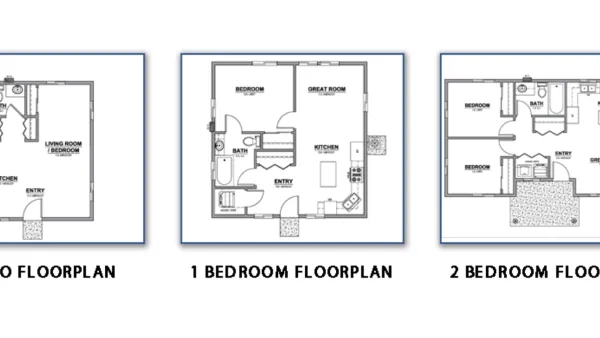
Denver Struggling to Unlock the Potential of Accessory Dwelling Units
Why doesn’t Denver build more ADUs? It’s complicated.

Denver Affordable Housing Program Moves Forward
A proposal to reduce parking requirements near transit and encourage higher-density affordable housing development received Planning Board approval, but community concerns about affordability and displacement remain.

Desperate measures: Advocates weigh draining Lake Powell to fill Colorado River
Draining the reservoir could reduce evaporation losses by a couple hundred thousand acre-feet.

Eastern Nebraska is running out of electricity
Data centers and electrification are straining eastern Nebraska’s grid, throttling economic development.

Move over, LA: St. Louis gears up for Olympics, invests millions in downtown redevelopment
The Missouri city will host the 2028 Olympic soccer group stage and knockout matches.

Mass. votes against statewide minimum lot size for single-family homes
Over 2 million residents voted on Question 7; it was decided by just over 30,000 votes.

Maryland’s $15 billion bridge project gains key approval
The Maryland Transit Authority said the project will create over 60,000 jobs and add $23 billion to the local economy.

‘No clear next steps’ for Chicago's permanent festival grounds
Eleventh Ward Ald. Nicole Lee has suggested Soldier Field as a possible location for the permanent event space.

FREE Course: Walkable City 1: Why Walkability?
After describing his path towards focusing on walkability as the essence of good planning, Jeff Speck marches through his five principal reasons for making more walkable places.
Reinventing Malls: Planning Alchemy—Turning Gray Fields Into Gold
The course focuses on the opportunities and imperatives that shape reinvention of mall sites.

City of Rosemead
Rutgers University, Edward J. Bloustein School of Planning and Public Policy
One Hundred Miles
University of Michigan School for Environment and Sustainability (SEAS)
Hunter College, City University of New York (CUNY)
The Architects Foundation
City of Cambridge
Montrose County
The Pocatello Development Authority