Infill Development
Anchorage Tweaks Land Use Regulations for More Infill Development
The Anchorage Assembly has updated its land use regulations to allow taller apartments and spur redevelopment and infill in neighborhoods near major transit corridors and the employment centers of Downtown and Midtown.
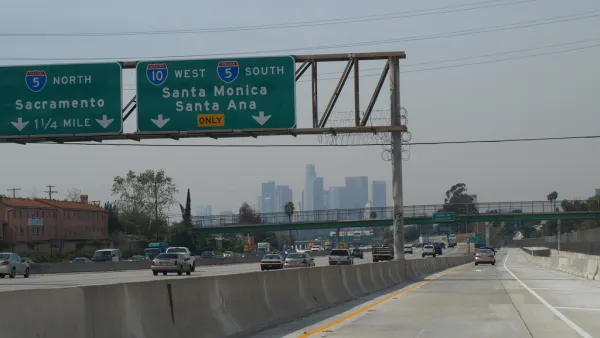
Next Steps for the City of Freeways
It is difficult to imagine a time when Los Angeles' freeways symbolized access, efficiency, and modernity. Now that the city's love affair with freeways is nearly spent, what future do we envision for them?
A Systems Approach to Planning and Urban Revitalization in Edmonton, Canada
The city of Edmonton’s comprehensive planning strategies aim for an "innovation ecosystem" that can compete with cities yet to be built.
U.S. EPA Provides Guidance for Infill Development in Distressed Communities
Not every city is benefitting from downtown revitalization in the same way, so the U.S. EPA has released a new report offering strategies for in fill development in "distressed" communities.
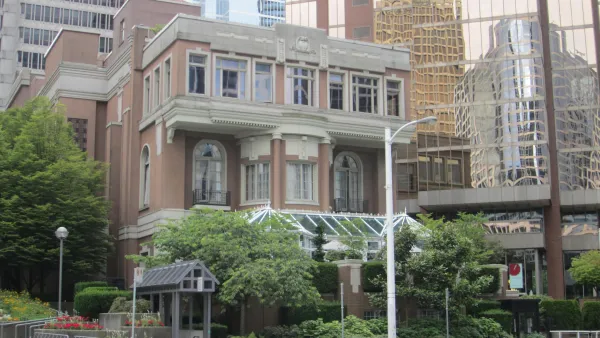
Not All Preservationists Are NIMBYs
In the quest for density and infill, preservationists often stand beside those who want static cities. But both preservation and density can be ideologies, and thoughtful land use demands a nuanced middle ground.
Boise Finding Infill Solutions
An article by Sven Borg for the Idaho Statesmen introduces the concept of infill while also detailing some of the challenges facing a wave of development in Downtown Boise.
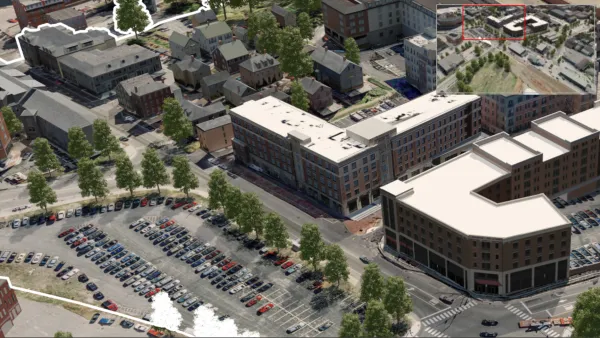
A Small Town's Game-Changing Approach to Mapping
Portsmoth, New Hampshire has created textured, 3D maps of its historic district to help illustrate development impacts during the approval process.
A Case Study of San Francisco's Evolution—at 10th and Mission
San Francisco Chronicle Architecture Critic John King dives into the economic and planning dynamics behind the remarkable transformation of 10th and Mission in San Francisco.
Infill Approved for St. Louis' Forest Park Southeast
The Forest Park Southeast neighborhood in St. Louis, including an area known as The Grove, is taking a careful approach to infill development on city-owned lots in light of recent investment and demand.
Examining the Merits of St. Louis’ Infill Boom
The central corridor of St. Louis has a host of development projects in the pipeline. With a celebration of the rebirth of the city has also come questions about the new developments’ adherence to faux-historic brick architecture.
Infill Proposal in Phoenix Raises Gentrification Concerns
Bucking tradition amidst arguably the most thorough example of sprawl in the country, a Phoenix developer is investing in Grant Park—a Latino neighborhood adjacent to downtown.
As CA Turns to Infill, L.A.'s Largest Undeveloped Area Fills Up
Robbie Whelan reports that the last remaining unbuilt parcel in L.A.'s 1,000-acre Playa Vista development has been sold to Brookfield Homes, reflecting a turn by developers away from the exurbs and towards densifying urban cores.
Is CEQA Really to Blame for Preventing Infill Development?
According to new figures from California's Annual Planning Survey, the state's environmental law is low on the list of barriers to infill development, writes Ethan Elkind.
Rooftop Farm Company Expands Into Brooklyn Industrial Park
Rich Calder reports on Brooklyn's newest urban-garden-in-an-industrial-park, and the environmental benefits it will offer.
The Future of Development in D.C.
Steven Pearlstein reads the tea leaves to predict the future development patterns in Washington, D.C. and finds that all signs point inwards to the city center and its closer-in suburbs.
Why Infill Development May Be Bad for Your Health
A new study has created unexpected tensions between public health advocates and smart-growth-oriented urban planners.
Rivalry Brews Between Parking Reformers, Affordable Housing Advocates
Bill to lower parking requirements in transit-oriented districts in California faces opposition from housing advocates who don't want a parking density-bonus provision to be undermined.
Infill Development Becoming Mainstream
Renaissance Homes, a Portland builder, is attempting to revitalize its business by transitioning from suburban, large-scale development to multiple infill projects.
Density in the Backyard
Vancouver is working to incorporate more density in traditional single-family neighborhoods by allowing additional dwellings in the backyard, adjacent to alleys.
Targeted, Hyper-Dense Neighborhoods Can Reduce Emissions
Alex Steffen presents the idea that by focusing development into "hyperdense" communities you create a host of benefits that reduce climate change by reducing trips.

FREE Course: Walkable City 1: Why Walkability?
After describing his path towards focusing on walkability as the essence of good planning, Jeff Speck marches through his five principal reasons for making more walkable places.
Reinventing Malls: Planning Alchemy—Turning Gray Fields Into Gold
The course focuses on the opportunities and imperatives that shape reinvention of mall sites.

Eagle County Government
Harvard University Graduate School of Design
Nashville Planning Department
The Architects Foundation
University of Cincinnati Online
The Pocatello Development Authority
The Urban Renewal Agency of the City of Pocatello
Journal of the American Planning Association