Rich Calder reports on Brooklyn's newest urban-garden-in-an-industrial-park, and the environmental benefits it will offer.


Queens-based organic farm company Brooklyn Grange has unveiled plans to make the Brooklyn Navy Yard home to its newest project – "a 45,000-square-foot rooftop farm to supply local restaurants, shops and foodies with fresh, organic produce," Calder writes.
Decommissioned in 1966, the shipyard now operates as an industrial park, where its 275 businesses (such as the Kings County Distillery) will have access to the fruits and vegetables grown just overhead. Brooklyn Grange also intends to host a weekly farmer's market outside the gates. "We were looking to be creative, and we found a perfect use for this underutilized roof," said Andrew Kimball of the Brooklyn Navy Yard Development Corp.
"The project is being funded with a $592,730 grant in start-up costs by the city's Department of Environmental Protection," explains Calder, "because the farm is expected to soak up enough rain to keep more than 1 million gallons of sewage out of the East River per year."
FULL STORY: Rooftop farm for B’klyn Navy yard

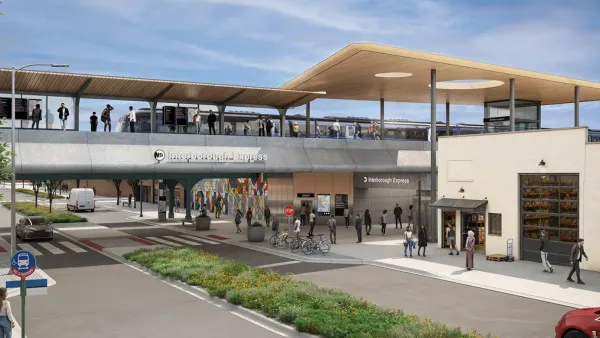
NYC releases new renderings for $5.5 billion Interborough Express
The slated stations will have a modern look, enhanced lighting and improved audio announcements.
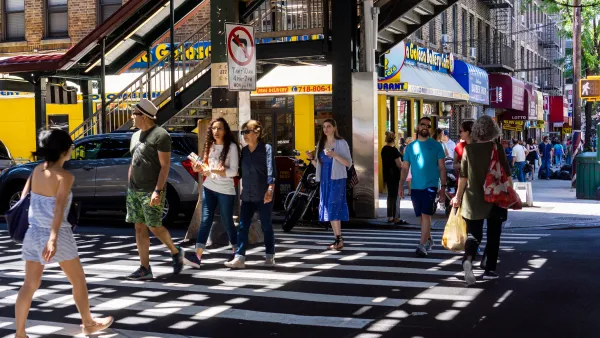
NYC needs 700,000 new homes to resolve housing crisis, report states
The report gave every neighborhood a non-binding development target.
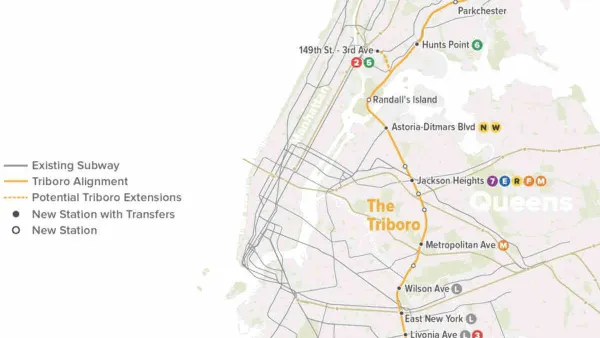
The Triboro Line Has New Life as the 'Interborough Express'
A proposed transit line that would connect three New York City boroughs not named Manhattan has new, powerful political support.

Planetizen Federal Action Tracker
A weekly monitor of how Trump’s orders and actions are impacting planners and planning in America.

The state-sanctioned urbicide of Austin
People don’t kill cities. Freeways do.

US to reduce Colorado River water deliveries to Mexico
A new Colorado Treaty amendment reduces Mexico’s Colorado River water allocation by 250,000 acre feet.

5 New England states march closer to 800 megawatt wind energy project
Securing federal approval for the project may be complicated under the Trump administration, which has historically been hostile towards domestic wind power.

Baltimore to break ground on $50 million Transit Priority Project
The project will bring faster bus trips, safer streets and better bike connections to Baltimore.

Airbnb launches $250 million 'last-dollar financing' housing accelerator, makes first investment in Austin
The company will put $6.4 million towards affordable housing development in Texas’ capital.

FREE Course: Walkable City 1: Why Walkability?
After describing his path towards focusing on walkability as the essence of good planning, Jeff Speck marches through his five principal reasons for making more walkable places.
Reinventing Malls: Planning Alchemy—Turning Gray Fields Into Gold
The course focuses on the opportunities and imperatives that shape reinvention of mall sites.

Eagle County Government
Harvard University Graduate School of Design
Nashville Planning Department
The Architects Foundation
University of Cincinnati Online
The Pocatello Development Authority
The Urban Renewal Agency of the City of Pocatello
Journal of the American Planning Association