The Anchorage Assembly has updated its land use regulations to allow taller apartments and spur redevelopment and infill in neighborhoods near major transit corridors and the employment centers of Downtown and Midtown.


"How Anchorage will look and feel decades from now is one of the core themes of the city’s new land use regulations, adopted in early 2013 after a decade long rewrite process," reports Devin Kelly.
"Since then, the Anchorage Assembly has made only minor changes to the new regulations. But a package of proposed amendments coming before the Assembly Tuesday represent more significant policy updates, designed to allow taller apartments and spur redevelopment and infill in neighborhoods near major transit corridors and the employment centers of downtown and Midtown."
"The changes, which affect building standards for new apartments, townhouses and condos, come after complaints from developers and architects that the rewritten land use regulations, which took effect Jan. 1, are too burdensome and expensive. City planners also say they unearthed problems while reviewing projects under the rewritten regulations."
Read the full story: Proposed tweaks to Anchorage land use regulations draw praise and concern
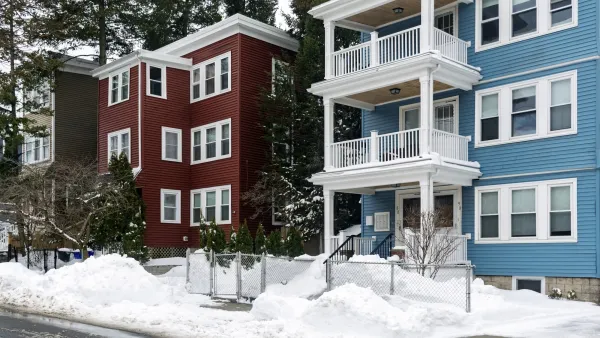
Boston's 'sliver lots' could yield over 1,500 affordable homes
The city has identified over 500 vacant parcels suitable for infill housing.

Vancouver Set to Adopt Game-changing Citywide Development Plan
To comply with new provincial law, Vancouver will adopt a new city plan aimed at guiding development for the next three decades.
Seattle Adopts a New Growth Plan, but Major Zoning Battles are Just Beginning
Approving the comprehensive plan update is just the first step in rewriting the city’s zoning code to accommodate more density and affordable housing.

Planetizen Federal Action Tracker
A weekly monitor of how Trump’s orders and actions are impacting planners and planning in America.

Eastern Nebraska is running out of electricity
Data centers and electrification are straining eastern Nebraska’s grid, throttling economic development.

Move over, LA: St. Louis gears up for Olympics, invests millions in downtown redevelopment
The Missouri city will host the 2028 Olympic soccer group stage and knockout matches.

Dallas releases zoning code overhaul to officials
The drafted overhaul is over 400 pages long.

NYC renovations for dangerous, ‘mercilessly crammed’ street delayed until 2027
Construction was supposed to begin this fall.

San Diego’s Midway Rising project gets greenlight from city council
The project looks to become the largest affordable housing development in California's history.

FREE Course: Walkable City 1: Why Walkability?
After describing his path towards focusing on walkability as the essence of good planning, Jeff Speck marches through his five principal reasons for making more walkable places.
Reinventing Malls: Planning Alchemy—Turning Gray Fields Into Gold
The course focuses on the opportunities and imperatives that shape reinvention of mall sites.

City of Rosemead
Rutgers University, Edward J. Bloustein School of Planning and Public Policy
One Hundred Miles
University of Michigan School for Environment and Sustainability (SEAS)
Hunter College, City University of New York (CUNY)
The Architects Foundation
City of Cambridge
The Pocatello Development Authority
The Urban Renewal Agency of the City of Pocatello