San Francisco Chronicle Architecture Critic John King dives into the economic and planning dynamics behind the remarkable transformation of 10th and Mission in San Francisco.


John King writes about a specific corner of San Francisco emblematic of the fundamental nature of the city's recent changes. According to King, "if one spot in the city convinces me that these changes run deeper than the usual cycles of boom and bust, it’s the corner of 10th and Mission streets."
"Here, at an intersection where the only real sign of life for decades was the procession of highway-bound automobiles, construction crews are at work on two squat housing towers that together will hold 325 residential units. Already to the north is NEMA, where a daunting 754 apartments opened a year ago and rental prices for a studio apartment start at $3,255."
One cause identified for the revitalization of 10th and Mission is the location of Twitter, which is now located at 10th and market. King notes, however, that affordable housing policies also had a hand in the overhaul of the intersection. "The spark that brought the corner to life wasn’t Twitter, or NEMA, but a gilt-edged project in another part of town: Lumina, a pair of luxury condominium towers now rising at the base of Rincon Hill. That project includes a requirement for 163 units of affordable condominiums, and developer Tishman Speyer approached TNDC about the 10th and Mission site."
Read the full story: 10th and Mission an intersection at crossroads of S.F. revival

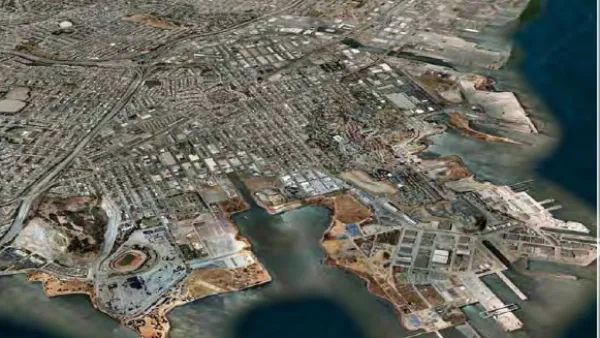
S.F. Bay Area Megaprojects Not Coming to Fruition
Plans for numerous large-scale developments in the region mean thousands of housing units should be on the way, but constant delays and setbacks have left projects nowhere near completion.
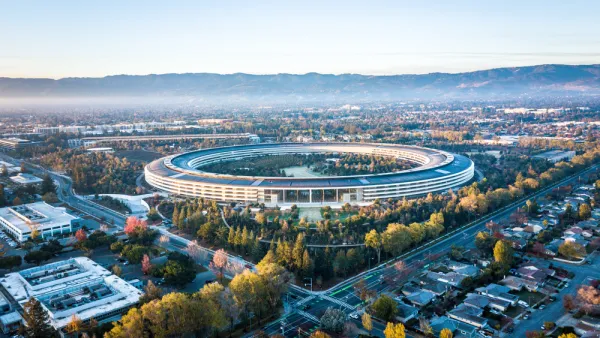
Why Big Tech Billions Won't Dent California's Housing Crisis
New multibillion-dollar affordable housing commitments from leading tech firms may build out thousands of units, but that's nothing next to California's gargantuan housing shortage.
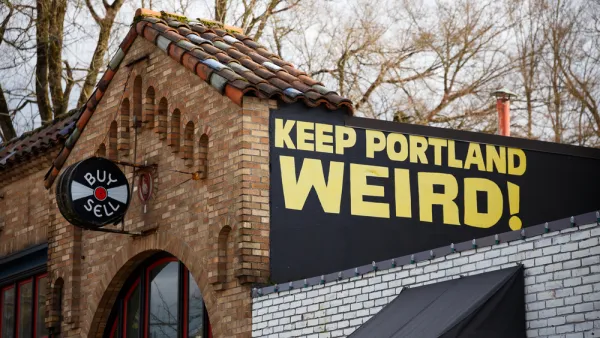
Is Portland the Next San Francisco?
Now that tech companies have "discovered" Portland, Oregon, longtime residents question whether the progressive city has done enough to protect them from displacement. Sound familiar?

Planetizen Federal Action Tracker
A weekly monitor of how Trump’s orders and actions are impacting planners and planning in America.

‘Going backwards:’ Baltimore mayor, students rally against state's transit funding plan
Maryland's proposed six-year plan provides no funding for Baltimore’s BMORE bus program and reduces its road maintenance funding.

Detroit to transform waterfront with $2.2 billion investment
Developers will convert about 18 acres of unused parking lot space into civic spaces.

NYC’s landfills will soon overflow — expanding them invites health risks
In as little as 16 years, New York City will have to find new places to dump its trash.

This Boston neighborhood is filling its roads with obstacles — intentionally
Somerville is embracing ‘extreme street makeovers’ to make its roads safer for pedestrians and cyclists.

Planned $2 billion courthouse in MA sparks tension with local government
Springfield owns an essential piece of the land developers intend to build on, and some city officials do not want to see the project come to fruition.

FREE Course: Walkable City 1: Why Walkability?
After describing his path towards focusing on walkability as the essence of good planning, Jeff Speck marches through his five principal reasons for making more walkable places.
Reinventing Malls: Planning Alchemy—Turning Gray Fields Into Gold
The course focuses on the opportunities and imperatives that shape reinvention of mall sites.

City of Thousand Oaks
City of Wisconsin Rapids
Harvard University Graduate School of Design
The Architects Foundation
University of Cincinnati Online
Northern Illinois Transit Authority (NITA)
The Pocatello Development Authority
The Urban Renewal Agency of the City of Pocatello