The central corridor of St. Louis has a host of development projects in the pipeline. With a celebration of the rebirth of the city has also come questions about the new developments’ adherence to faux-historic brick architecture.


Alex Ihnen writes of the “boom” in St. Louis’ central corridor. “From a $1B medical center expansion, new Mercedes dealership, and retail to the coming IKEA, the area is hot.”
The article also includes images for the eight residential and mixed-use projects that have been recently completed, are under construction, or are currently proposed.
Ihnen also provides an assessment of the design quality of the new boom: “St. Louis certainly has an aesthetic, book-ended by warehouses such as the former Ford Motor Company building, now West End Lofts, and the single-family brick home. However, new infill doesn’t seem to speak to either, or anything in between, particularly well.”
Read the full story: Eight Central Corridor Infill Projects and the Design of a New St. Louis
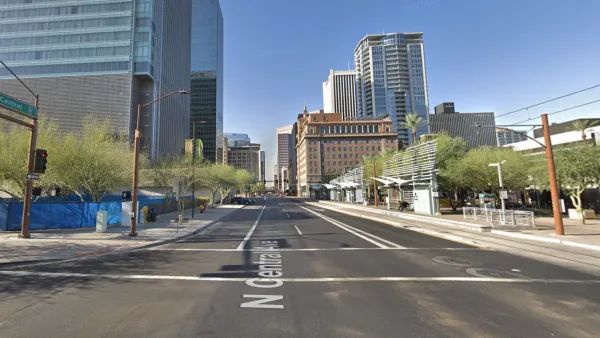
Big Mixed-Use Development Coming to Downtown Phoenix Transit Center
Developers have proposed a large mixed-use project for one of the best development opportunities in Downtown Phoenix.
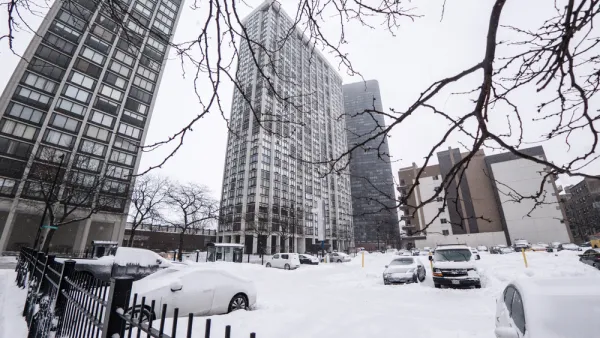
Surface Parking Lots Making Way for Higher Uses
Are the urban revival and the future of mobility already rendering parking lots obsolete? Chicago provides a case study of a new generation of skyscrapers rising were cars once parked.
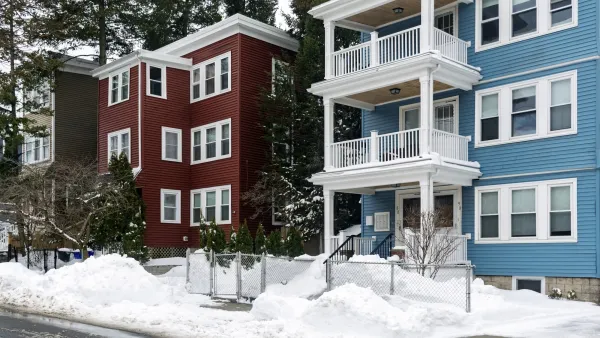
Boston's 'sliver lots' could yield over 1,500 affordable homes
The city has identified over 500 vacant parcels suitable for infill housing.

Planetizen Federal Action Tracker
A weekly monitor of how Trump’s orders and actions are impacting planners and planning in America.

California plans to bury El Niño’s downpour
If the state plays its cards right, it may be able to store a billion acre-feet of El Niño’s water in aquifers.

Desperate measures: Advocates weigh draining Lake Powell to fill Colorado River
Draining the reservoir could reduce evaporation losses by a couple hundred thousand acre-feet.

Housing is the top priority of Seattle’s sole new councilmember
Jenks campaigned on building 1,000 new units of affordable housing.

New tax cuts may slash $1.5 billion in funding for Miami transit, public parks
Amendment 3 will save Miami-Dade homeowners $2,700 in 2028.

Arizona, Wisconsin, Pennsylvania hope to finally advance climate goals post-midterms
The three states have spent years under Republican or divided control.

FREE Course: Walkable City 1: Why Walkability?
After describing his path towards focusing on walkability as the essence of good planning, Jeff Speck marches through his five principal reasons for making more walkable places.
Reinventing Malls: Planning Alchemy—Turning Gray Fields Into Gold
The course focuses on the opportunities and imperatives that shape reinvention of mall sites.

City of Rosemead
Rutgers University, Edward J. Bloustein School of Planning and Public Policy
One Hundred Miles
University of Michigan School for Environment and Sustainability (SEAS)
Hunter College, City University of New York (CUNY)
The Architects Foundation
City of Cambridge
Montrose County
The Pocatello Development Authority