An article by Sven Borg for the Idaho Statesmen introduces the concept of infill while also detailing some of the challenges facing a wave of development in Downtown Boise.


"Infill is popular at City Hall in large part because it fits the broader mission of reducing people's reliance on cars," writes Sven Borg. "Boise's comprehensive plan identifies dozens of intersections throughout the city that planners deemed 'activity center nodes,' or places where a variety of housing types and commercial uses are easy to get to."
Borg's coverage includes details on a few specific infill projects of recent years to describe some of the challenges facing the city's infill goals. One challenge is the opposition of neighbors and, sometimes, preservationists. The other challenge is a lack of expertise on the part of local developers: "Most of Boise's developers have little or no experience mixing commercial and residential space in a cohesive, dense design. They'd rather focus on Downtown office buildings or put together suburban housing subdivisions."
Despite the challenges, the article portrays Boise as a welcoming environment for development, especially as compared to cities in California.
Read the full story: In Boise, development turns to filling in gaps


Ground-Level Grocery Stores Proliferate in Boston
Being able to get groceries without a car can be a big draw in walkable, mixed use neighborhoods. Many Boston grocers and developers are taking that to heart.
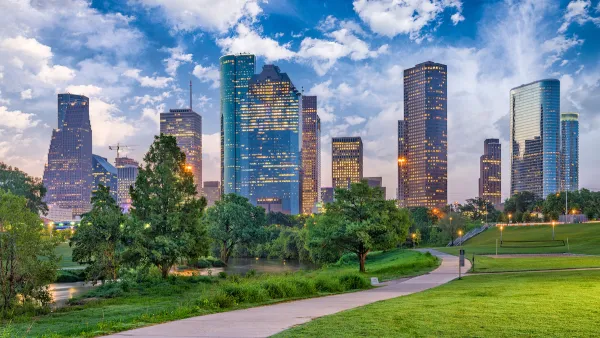
Promoting Infill Development for a Denser Houston
An advocacy group is calling for ‘sustainable, vertical’ mixed-use urbanism in the famously sprawling city.
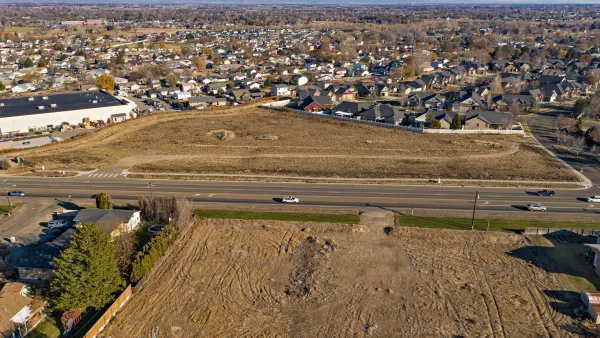
Boise Approves First Zoning Code Update in 60 Years
A comprehensive update of the city’s zoning code aimed at making housing more affordable and promoting sustainable growth received unanimous support from the city council.

Planetizen Federal Action Tracker
A weekly monitor of how Trump’s orders and actions are impacting planners and planning in America.

Amtrak, CN end decades-long dispute with eight-year agreement
The new operating agreement establishes an updated framework for the companies to work together, including processes to resolve disputes.

Judges permit Denver to divert 77,000 acre feet from the Colorado River for reservoir expansion
Overuse and climate change have caused the Colorado River’s water levels to plummet.

Idaho may see an 18% drop in federal surface transit funding — the largest estimated cut in the US
Transit systems in rural communities are much more reliant on federal funding to provide their services.

How ‘post-disaster gentrification’ alters neighborhoods after natural calamities
After hurricanes, fires or other calamities, the original residents of a community are often replaced by younger, wealthier residents.

Maryland local governments examine if they should have more power to raise property taxes
Maryland’s housing market is out of reach for the majority of moderate-income residents.

FREE Course: Walkable City 1: Why Walkability?
After describing his path towards focusing on walkability as the essence of good planning, Jeff Speck marches through his five principal reasons for making more walkable places.
Reinventing Malls: Planning Alchemy—Turning Gray Fields Into Gold
The course focuses on the opportunities and imperatives that shape reinvention of mall sites.

Harvard University Graduate School of Design
KFH Group Inc.
Greater Baltimore Committee
The Architects Foundation
University of Cincinnati Online
The Pocatello Development Authority
The Urban Renewal Agency of the City of Pocatello