Fracking
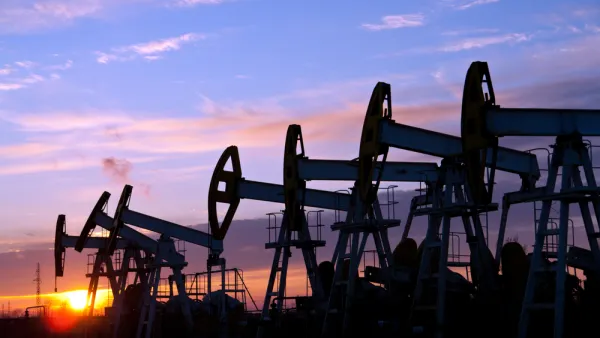
Report Details Strategies for Energy States to Weather Booms and Busts
Some states relied more on the most recent energy boom than others, and some prepared more for the inevitable bust. A report by the Brookings Institution recommends actions for energy states to build resilience in the face of boom and bust cycles.
Methane Emissions Replace CO2 Emissions— Is This Progress?
For the first time, electricity generated from burning natural gas will surpass coal, largely due to fracking of shale. While that means that carbon dioxide emissions will continue to drop, it also means that methane emissions will increase.
Would Bernie Sanders Delay the Obama Climate Initiative?
Watching Wednesday's Democratic debate between Hillary Clinton and Sen. Bernie Sanders, I was startled to hear Clinton claim that Sanders said he would delay Obama's Clean Power Plan rule. PolitiFact investigated, though the result wasn't clear-cut.
North Dakota's Oil Boom Falters
As oil prices dip to around $30 a barrel, fears are setting in that North Dakota's oil fields have been overdeveloped. If the current boom goes bust, these towns might find themselves nearly empty.
Oklahoma-Style Earthquakes Now Affecting California
Disposal of wastewater from fracking has long been associated with earthquakes in Oklahoma as well as Ohio and Texas. A new study shows they were likely the cause of a swarm of quakes in 2005 in the capital of oil in California, Kern County.
Iowa Caucus Results: Cruz wins, Ethanol Mandate Loses
The only major candidate, Democrat or Republican, to call for an end to the contentious ethanol mandate won the Republican caucus, clearly beating Donald Trump. That could doom what many even in Iowa, among even some farmers, call a boondoggle.
Planners Feeling Tension Between Disruption And Convention
Cultural changes and 'disruptions' created by the 'sharing' economy are challenging planners just as they're challenging their own competitors. Bill Fulton assesses the brave new world that might liberate planners—or befuddle them.
EPA Proposes Rule to Reduce Methane Emissions from New Oil and Gas Wells
On the heels of President Obama's Clean Power Plan rule that reduces carbon dioxide emissions from power plants, the new rule focuses on the other major greenhouse gas, methane, and rather than coal, it is focused on oil and gas drilling.
S&P Report: Man-Made Earthquakes Are Bad for Credit
The credit rating agency Standard & Poor's released a report that raises the threat level on the trend of earthquakes in areas around Oklahoma and Texas.
Harvard Report: Fracking Yields Equity Gains for American Workforce
A new Harvard Business School report lays the economic and equity case for fracking—through direct and indirect job creation, America's middle class is reaping substantial wage gains and reduced energy costs. Renewables are also discussed.
EPA Study: Fracking No Threat to Groundwater
According to a new EPA draft assessment, fracking has not caused pollution of drinking water, though concerns are raised. The report has yet to be reviewed by the Science Advisory Board and is now receiving public comment.
How the Coal Industry Collapsed
The writing is on the wall for what's left of the coal industry.
Fracking Permits Temporarily Halted in North Carolina
Natural gas drilling was recently approved in North Carolina, but new operations are now on hold until the state Supreme Court resolves an issue about the process for appointing environmental review positions.
First-Ever Federal Fracking Rules Issued by Interior Department
Despite only applying to Federal lands where a small amount of fracking takes place, energy companies are strongly opposed, perhaps fearing that states without fracking rules could adopt them, which is one of the goals of the Interior Department.
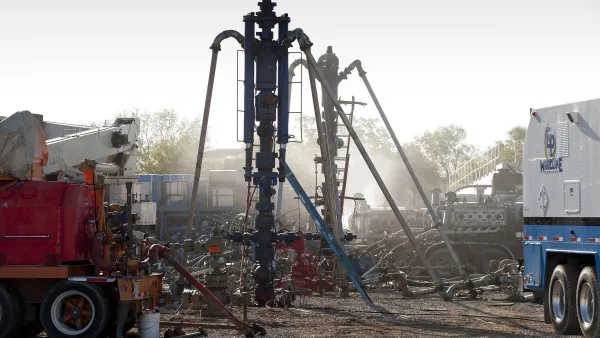
New York Towns Consider Secession, Cite Fracking Ban
Concerned about their economic fate, several upstate New York towns have expressed interest in joining Pennsylvania instead.
Can the Growing Risk of Human-Made Earthquakes Be Managed?
A new study aims to broaden the understanding of an increasing number of human-caused earthquakes. Fracking might not be entirely to blame.
OPEC Sees U.S. Motorists as Their Ally
An IEA report suggests that oil prices have bottomed-out, are now on the rebound, and that demand for OPEC's oil will start rising next year. OPEC predicts that U.S. oil consumption will increase after years of decline, thanks to U.S. motorists.
Midwest Earthquakes Are Redrawing the Risk Map
Setting aside the debate about fracking's responsibility for swarms of earthquakes in states like Kansas, Texas, and Oklahoma, seismic experts are recognizing a need to rethink building safety.
New Methane Emission Regulations Aim for 45 Percent Reduction by 2025
President Barack Obama hopes to add to his "climate legacy" by having the EPA adopt the nation's first regulations to reduce methane emissions, the second most prevalent greenhouse gas emission after carbon dioxide, but far more powerful.
North Texas Plagued by Earthquakes—the New Normal?
The earth has been moving all week in North Texas. An editorial by The Dallas Morning News calls on the state's new governor to show leadership, even at risk of upsetting the oil industry, to find out more about the causes of the seismic activity.

FREE Course: Walkable City 1: Why Walkability?
After describing his path towards focusing on walkability as the essence of good planning, Jeff Speck marches through his five principal reasons for making more walkable places.
Reinventing Malls: Planning Alchemy—Turning Gray Fields Into Gold
The course focuses on the opportunities and imperatives that shape reinvention of mall sites.

City of Rosemead
Rutgers University, Edward J. Bloustein School of Planning and Public Policy
One Hundred Miles
Hunter College, City University of New York (CUNY)
The Architects Foundation
University of Cincinnati Online
City of Cambridge
Montrose County
The Pocatello Development Authority









