Chicago
Early Reviews Are In: Chicago's New Transit App Makes it Easy to Pay the Fare
The Ventra app hits the streets—or the tracks, perhaps—this week. Steven Vance of Streetsblog Chicago has already tested the new tool.
Chicago Tribune Finds Faults With City's Speed Camera Program
A special investigation by the Chicago Tribune finds inconsistencies and errors with the city's "'Children's Safety Zone" initiative, which places speed camera near schools and parks.
Explained: Bus-On-Shoulder Service
Allowing buses to drive on the shoulder of highways when traffic slows has been shown to increase ridership, thus proving an important point: people will ride transit when it's a reasonable option.
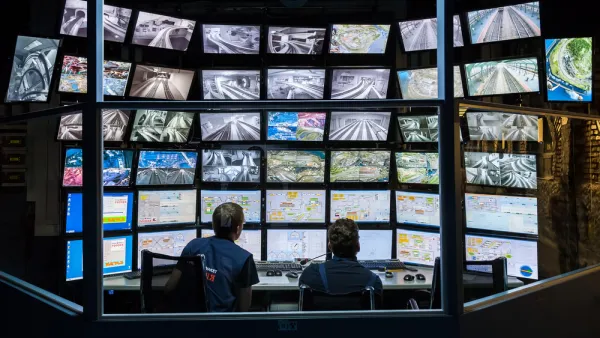
Technologies for Understanding Cities
Researchers are examining technologies that can aid in understanding many aspects of our cities, from how citizens interact in plan making, where residents use social media, and how to understand our changing communities.
Editorial: Chicago's Lakefront Deserves Better than the Lucas Museum
To say that the Chicago Tribune editorial board is not a fan of George Lucas's proposal to build a museum along Lake Michigan would be putting it mildly.
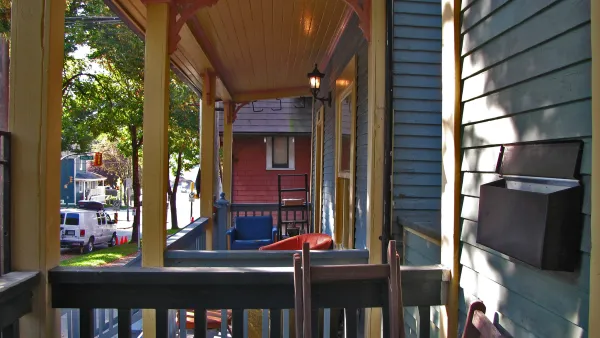
New Urbanism Earning New Fans in One Chicago Neighborhood
With statistics showing that fewer than half of Americans know their neighbors, bringing neighborliness to neighborhoods remains a challenge for urban planners.
Change Is Coming to Wrigleyville (Other Than Playoff Baseball)
The Wrigleyville neighborhood of Chicago will have a national audience this week for the first time since 2003. The neighborhood has changed, and is poised for even more change.
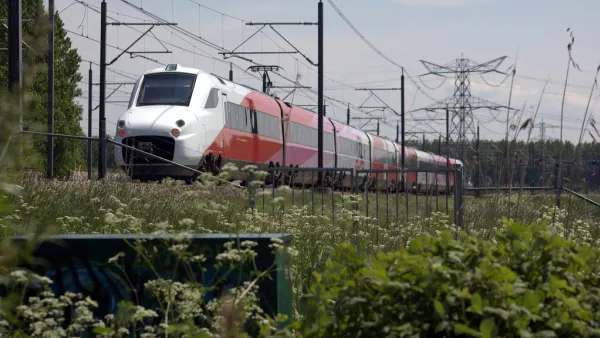
Transit Use Thrives on Destination Density
If jobs, services, and other urban amenities are concentrated downtown, suburbanites can use transit to get there quickly without a car. Job sprawl makes transit useless outside central districts.
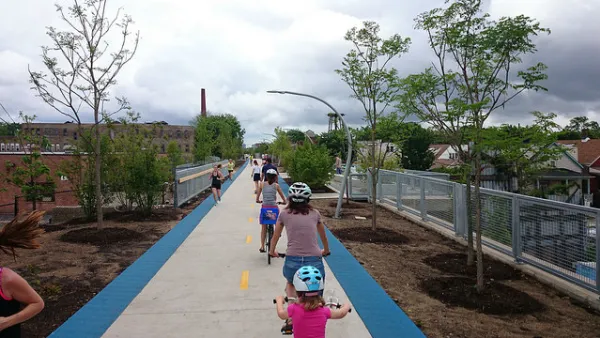
Substance, Style, and the Success of the 606
The Bloomingdale Trail, the star attraction of the 606 in Chicago, has been compared to NYC's High Line. But with its restrained design and focus on high-use activity, it is nothing like it, and, in certain ways, it's even better.
Chicago Rule Change Encourages Affordable Housing
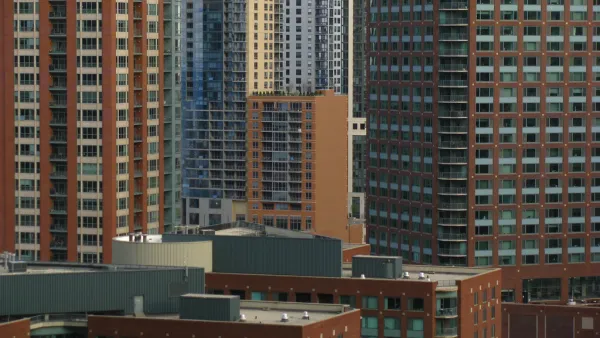
This month, changes to Chicago's Affordable Requirements Ordinance (ARO) will go into effect, raising the in-lieu fees developers must pay to opt out of building affordable units downtown.
Chicago Approves Big Expansion of TOD Ordinance
Ten times more land in Chicago is now designated for transit oriented development—affording new development reduced parking requirements, density bonuses for affordable housing, and new strength for the city's Pedestrian Street design regulations.
Chicago's Food Carts Now Street Legal
An estimated 1,500 food carts were operating in the city of Chicago—mostly outside the law. The Chicago City Council this week passed a law that allows legitimate operations.
The Outsized Benefits of Transforming Parking Lots to TOD
Chicago's sale of three city-owned parking lots demonstrates how selling underused land for the purposes of transit-oriented development can benefit people and government.
Meet Chicago's New Northerly Island Open Space
Chicago gains a new open space today, located on an island on Lake Michigan just across from Soldier Field and Burnham Harbor.
Chicago Infill Rail Stations Showing Outsized Benefits in Ridership, TOD
An analysis of infill transit stations built since 2012 along "L" routes in Chicago shows clear increases in ridership and transit oriented development.
A Central Hub for Open Data
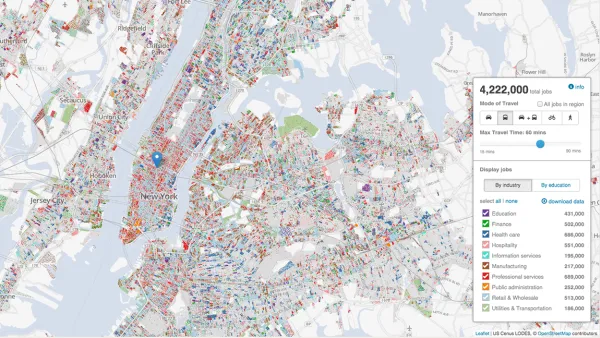
Designed by researchers at the University of Chicago, the Plenario platform gathers all available open data for a specific area. Then it presents the data in an easy-to-use format.
The Case For and Against Red Light Cameras
Eric Jaffe of CityLab looks at what went wrong with what should have been a clear way to employ technology to reduce crashes and save lives, and what can be done to stem the tide of cities removing red light cameras.
Gentrification Concerns Raised Around 'The 606' Trail in Chicago
When an exciting and popular addition to the public realm becomes available, like it did in Chicago earlier this year with The 606 trail, concerns about gentrification and displacement are sure to follow.

A Decade of Walkable Strides in Transit Innovation
A new Transit Center report shows what it takes to enact change.
Proposed Chicago TOD Ordinance: Increase Density, Eliminate Parking Requirements
Mayor Rahm Emanuel announced an update of the city's 2013 transit oriented development ordinance. The new version of the ordinance would have a sweeping effect on the land uses around transit stations in Chicago.

FREE Course: Walkable City 1: Why Walkability?
After describing his path towards focusing on walkability as the essence of good planning, Jeff Speck marches through his five principal reasons for making more walkable places.
Reinventing Malls: Planning Alchemy—Turning Gray Fields Into Gold
The course focuses on the opportunities and imperatives that shape reinvention of mall sites.

City of Rosemead
Rutgers University, Edward J. Bloustein School of Planning and Public Policy
One Hundred Miles
University of Michigan School for Environment and Sustainability (SEAS)
Hunter College, City University of New York (CUNY)
The Architects Foundation
City of Cambridge
Montrose County
The Pocatello Development Authority









