The Ventra app hits the streets—or the tracks, perhaps—this week. Steven Vance of Streetsblog Chicago has already tested the new tool.


Steven Vance provides a positive assessment of the new Ventra app, which he says will make it easier for Metra riders to pay fares—whether they are grizzled transit veterans or casual riders.
"The best thing about the app is that it allows you to buy tickets and passes via your smartphone," writes Vance. "That means no waiting in line at a ticket booth, using an ill-designed ticket vending machine, or paying a surcharge on board. That’s a big plus if you’re rushing to catch a train and don’t have time to buy a ticket at the station."
Vance's had early access to the app as a member of the user testing group. His hopes for the new app: that the ease of payment reduces at least one barrier to transit use, and gets more people onboard. Vance also provides a play-by-play of a test run he gave the app on "a Metra excursion" to the South Deering neighborhood.
Read the full story: The New Ventra App Will Make Metra Easier to Ride For Millions of People
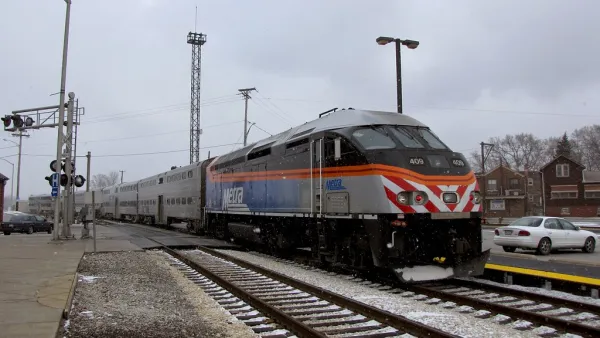
Opinion: Improved Commuter Rail Services Would Better Serve Chicago’s South Side Residents
The city’s South Side residents need more transit options, but an extension of the Chicago Transit Authority’s Red Line would be a costly and less effective alternative.
Advocating for Reduced Transit Fairs for Low-Income Riders in Chicago
A new report by the Active Transportation Alliance builds the case for reduced transit fares on all three transit systems in the Chicago region.
Three Ways Mobile Transit Payments Will Change How We Move in Cities
One idea for how to make transit better is rolling out in cities across the country: mobile payment of fares on smartphones.

Desperate measures: Advocates weigh draining Lake Powell to fill Colorado River
Draining the reservoir could reduce evaporation losses by a couple hundred thousand acre-feet.

Eastern Nebraska is running out of electricity
Data centers and electrification are straining eastern Nebraska’s grid, throttling economic development.

Malls are becoming the midtowns of the future
Mall and office park redevelopments are a generational opportunity to create new nodes of urbanity.

NYC breaks ground on anti-flooding infrastructure project
New York City's new system will reduce stormwater flows to local sewers by 90%.

One Kentucky town’s secret to affordable housing
The Smoketown Community Land Trust has already built seven affordable homes for community members.

Houston gains petal-shaped cooling infrastructure to make streets more ‘delightful’
The city has installed the pavilions along 15 blocks in Houston.

FREE Course: Walkable City 1: Why Walkability?
After describing his path towards focusing on walkability as the essence of good planning, Jeff Speck marches through his five principal reasons for making more walkable places.
Reinventing Malls: Planning Alchemy—Turning Gray Fields Into Gold
The course focuses on the opportunities and imperatives that shape reinvention of mall sites.

City of Rosemead
Rutgers University, Edward J. Bloustein School of Planning and Public Policy
One Hundred Miles
University of Michigan School for Environment and Sustainability (SEAS)
Hunter College, City University of New York (CUNY)
The Architects Foundation
City of Cambridge
Montrose County
The Pocatello Development Authority