Social / Demographics
California First: Carbon Fees Used to Fund Affordable, Transit-Oriented Housing
On June 29, the California Strategic Growth Council awarded $121.9 million in Greenhouse Gas Reduction Funds to help build 28 affordable housing developments on major transit lines. Funding originates from proceeds of the cap-and-trade market.

The Tragedy of San Bernardino
The focal point of California's vast Inland Empire, the suburban city of San Bernardino was brought to its knees by the Great Recession. Its civic bankruptcy and its emergence as a suburban slum is perhaps America's most tragic story of urban sprawl.

How to Keep Young Families from Fleeing to the Suburbs
Millennials are loving their center cities these days, with their lofts and bars and yoga studios. But what happens when Millennials start to have families and don't quite fit, physically or culturally, into city life anymore?

Op-Ed on the Tedium of Seeking the 'Next Brooklyn'
Aspiring-to-be-hip cities across the county tout themselves as the "next Brooklyn." Ben Adler argues not only the Brooklyn is a lousy model for revitalization but also that hipster-led gentrification does not lead to overall prosperity.

A New Take on the Gentrification of San Francisco
The latest installment of a series titled "Field Notes from Gentrified Places," written by Vinson Cunningham, focuses on the city of San Francisco.
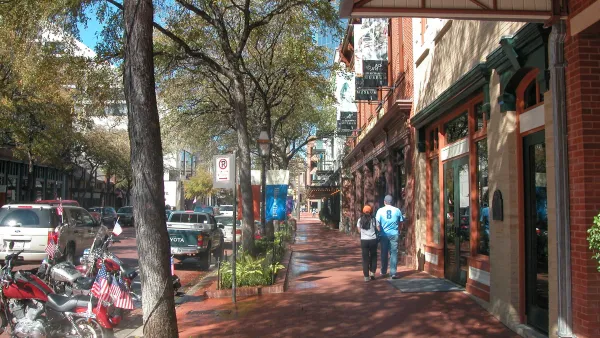
Fort Worth Wants Residents to Live Longer
The Texas city is the largest municipality so far to sign onto the Blue Zones Project, an initiative for improving longevity. In a nutshell, Blue Zones wants to make healthy choices the easy ones.
Latest FHWA Data Shows Vehicle Miles Traveled Continue to Increase
Those who thought peak VMT was in the rear view mirror will be disappointed in new data from the Federal Highway Administration.
Pope Goes Global: Let's Talk Local
Pope Francis, sticking to his job description, is out to save the world and all its creatures. Maybe we can help in our own little universes, where we can influence planning and design that makes for swell places and for reduced contributions to GHG.
Hospitals Scaling Up Along With Houston's Population
Houston's status as one of the fastest growing metropolitan areas in the country has not gone unnoticed by the healthcare industry.
Pittsburgh's Plan to Promote Diversity and In-Migration
Seemingly on the rebound after a 55-year decline in population, Pittsburgh is ready to move into a new era as an attractive destination for immigrants and a diverse population of residents.
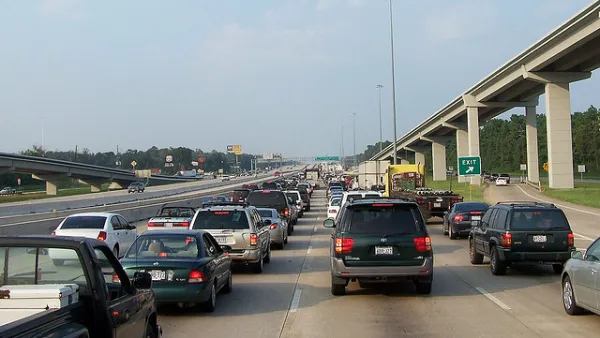
Houston Rethinks Mass Transit
For decades, Houston has experienced car-oriented development, giving little attention to other forms of transportation. In recent years, however, rapid population growth and increase in traffic congestion has the city revisiting alternate options
A Case Study in Planning for Inclusion and Affordability
New federal programs are enabling planning processes that deliver positive outcomes for a broader scope of the population. Seattle provides an example of how federal money is supporting the success of inclusive planning processes.
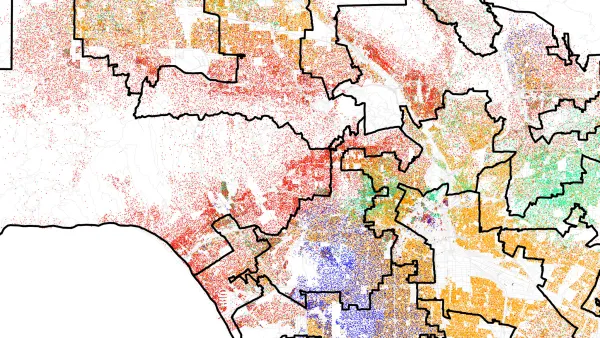
Diverse on Paper, Segregated in Reality
Many places are statistically diverse, but their inhabits can be worlds apart. A local perspective (and finer data) is needed to fully appreciate how different races and classes inhabit a neighborhood.
Support for Walmart Grows Nationally
Opposition to Walmart is now holding at just 50 percent, when people are asked how they would feel if a Walmart was proposed "in your community." Support for Walmart is up 16 percentage points since 2006.
Paterson: A Postindustrial Portrait
Once a major industrial hub, Paterson, NJ has experienced urban decline since the end of World War II. But the city is rich with history and opportunities for revival. The article chronicles how the city can avail these opportunities through design.
San Antonio Outpaces Austin in Millennial Growth
The question remains whether San Antonio can back up the population of young people moving to the city with desirable multi-family housing.
Urban Institute Report: Peak Homeownership Reached Nine Years Ago
Homeownership peaked at 67.3% in 2006. The Urban Institute forecasts its decline to the year 2030. Emily Badger of The Washington Post Wonkblog writes on the report released this month that evaluates homeownership rates among different demographics.
Latest Hotbed of High Speed Rail Opposition: San Fernando Valley
Opposition, followed by legal action to the California High-Speed Rail project began in Northern California, spread to the Central Valley, and now has hit southern California, particularly in the San Fernando Valley of Los Angeles County.
Mo' Money, Mo' Problems: Community Edition
Do we ever reach a point as a community wherein our problems are behind us? Sorry, but no. If anything, it gets more complicated.
Michigan House Road Funding Plan B Would Rob Peter to Pay Paul
Now that voters have decisively rejected a sales tax measure that would have also hiked the gas tax, House representatives have proposed eliminating the state's Earned Income Tax Credit that benefits the working poor to help pay for roads.

FREE Course: Walkable City 1: Why Walkability?
After describing his path towards focusing on walkability as the essence of good planning, Jeff Speck marches through his five principal reasons for making more walkable places.
Reinventing Malls: Planning Alchemy—Turning Gray Fields Into Gold
The course focuses on the opportunities and imperatives that shape reinvention of mall sites.

City of Charlotte
City of Rosemead
Rutgers University, Edward J. Bloustein School of Planning and Public Policy
University of Michigan School for Environment and Sustainability (SEAS)
Hunter College, City University of New York (CUNY)
The Architects Foundation
University District Partnership









