The new program would allow short-term use of vacant properties, and provide new incubation capabilities to small, start-up businesses.


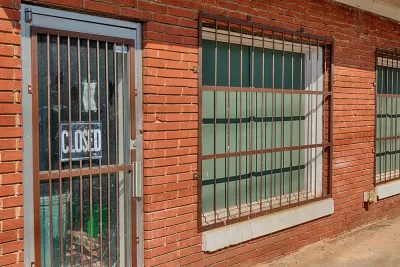
"Chicago is on the verge of implementing a novel way of enlivening streetscapes," according to an article by Elizabeth Blasius.
"To combat the spread of vacant storefronts across the city and particularly in economically-challenged neighborhoods, a proposed ordinance would let entrepreneurs test pop-up concepts in empty spaces for anywhere from only five days to a full year."
According to a press release from the Chicago Department of Business Affairs and Consumer Protection (BACP), the City Council will consider an ordinance that creates a licensing system "to allow for the operation of short-term 'pop-up' stores, including restaurants."
"If approved by City Council, the new license will provide the option of a 5-, 30-, 90-, 180-, or 365-day license, depending on their business activity, all at a very low cost and without an on-site inspection," adds the press release. "In fact, the user license is not tied to a location, so the holder can 'roam' during the length of the license and operate all around the city."
The article by Blasius provides more insight about the potential impact the program could have on communities around the city.
FULL STORY: Chicago proposes experiment with pop-up urbanism

Land Bank Trends in 2018
An economic development professional shares three key takeaways from a recent conference focused on land baking practices.
Chicago Puts Thousands of Vacant Lots on the Market for $1
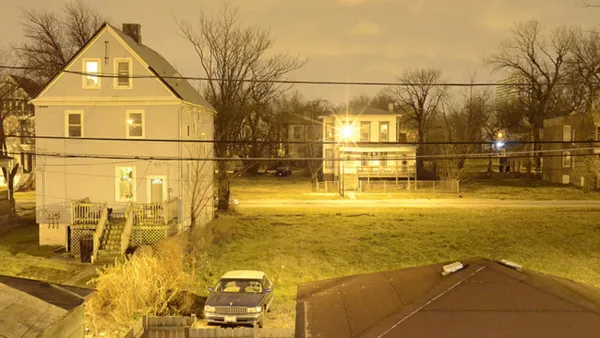
Chicago continues to lose population from parts of the city, so vacant properties are multiplying. The city's "Large Lots" program aims to return vacant properties back to control by residents of the neighborhoods.
More $1 Vacant Lots for Sale in Chicago
With some 20,000 vacant lots located around the city, Chicago is expanding the Large Lots Program that allows property owners to buy nearby lots for $1.

Planetizen Federal Action Tracker
A weekly monitor of how Trump’s orders and actions are impacting planners and planning in America.

The state-sanctioned urbicide of Austin
People don’t kill cities. Freeways do.

US to reduce Colorado River water deliveries to Mexico
A new Colorado Treaty amendment reduces Mexico’s Colorado River water allocation by 250,000 acre feet.

5 New England states march closer to 800 megawatt wind energy project
Securing federal approval for the project may be complicated under the Trump administration, which has historically been hostile towards domestic wind power.

Baltimore to break ground on $50 million Transit Priority Project
The project will bring faster bus trips, safer streets and better bike connections to Baltimore.

Airbnb launches $250 million 'last-dollar financing' housing accelerator, makes first investment in Austin
The company will put $6.4 million towards affordable housing development in Texas’ capital.

FREE Course: Walkable City 1: Why Walkability?
After describing his path towards focusing on walkability as the essence of good planning, Jeff Speck marches through his five principal reasons for making more walkable places.
Reinventing Malls: Planning Alchemy—Turning Gray Fields Into Gold
The course focuses on the opportunities and imperatives that shape reinvention of mall sites.

Eagle County Government
Harvard University Graduate School of Design
Nashville Planning Department
The Architects Foundation
University of Cincinnati Online
The Pocatello Development Authority
The Urban Renewal Agency of the City of Pocatello
Journal of the American Planning Association