Transit advocates aren't happy after a promised sales tax levy vote to raise revenue for the Cincinnati Metro transit system was nixed from the fall ballot.


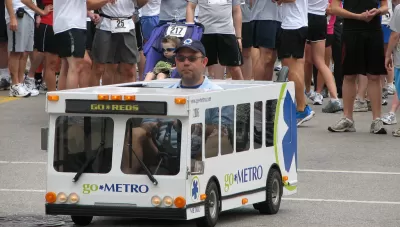
The Board of Trustees of the Southwest Ohio Regional Transit Authority (SORTA) voted last week not to place a countywide sales tax levy on the ballot this fall to fund the Cincinnati Metro system, according to an article by Hannah Sperling.
After the vote, Board Chair Kreg Keesee said SORTA will likely have to raise fares and cut service for the Metro system as a result, but the board could not reach consensus on a levy for the fall ballot. "I do not believe that the current environment provides a clear path to victory at the polls even if consensus had been reached," wrote Keesee in a statement quoted by Sperling in the article.
The fallout from the decision has hit transit advocates hard. A follow up article by Sperling says the board received a tongue lashing the day after the decision. Better Bus Coalition President Cam Hardy told the board they should delete their mission statement, which targets 20 million rides a year by 2021, according to Sperling.
Also expressing disappointment in the decision is Neil Kelly, an opinion contributor writing for the Cincinnati Enquirer, who says, "without a robust Metro system, I am screwed."
To many of you reading this, Metro may seem like a burden to your wallets every year. But to me, Metro means freedom and independence. That's why I was excited to advocate to anybody that would listen to vote for a Metro tax levy to give me even more freedom.
Now, to be blunt, to call me disappointed and disheartened in the SORTA Board is an understatement. I don't care about political realities. I don't care about internal polls. And I don't care that Metro, as Hoffmeister quipped, doesn't "have a Fiona to help us pass this."
I care about rate increases. I care about cuts to routes. I care about the sustainability of my reliable transportation to work. I care about my freedom.
Read the full story: Cincinnati Metro: No bus levy vote this fall. Service cuts, fare increases likely.

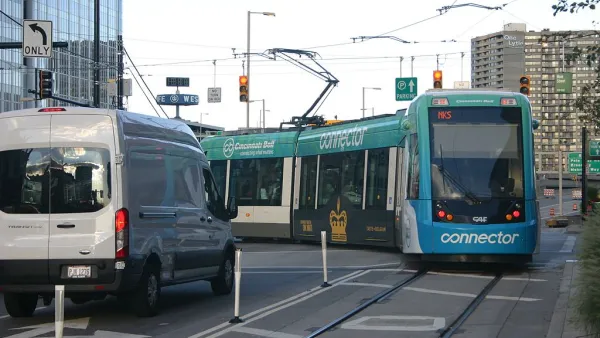
Management Divorce for the Cincinnati Streetcar
Efforts to bolster support for a countywide sales tax levy in Hamilton County, Ohio, are pushing the city to fire SORTA as the manager of the troubled Cincinnati Bell Connector.
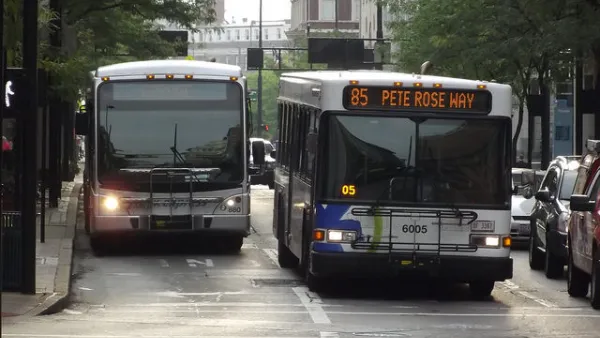
Bolstering the Case for Public Transit Investment by Connecting the Dots to Infrastructure
The Southwest Ohio Regional Transit Authority wants funding to revamp its bus system, but convincing voters of a tax's necessity will require bigger thinking.
Swapping One Tax for Another to Fund Bus Improvements
Cincinnati area voters might get a chance to decide the future of transit funding in the city of Cincinnati and the county of Hamilton.

Planetizen Federal Action Tracker
A weekly monitor of how Trump’s orders and actions are impacting planners and planning in America.

California plans to bury El Niño’s downpour
If the state plays its cards right, it may be able to store a billion acre-feet of El Niño’s water in aquifers.

Desperate measures: Advocates weigh draining Lake Powell to fill Colorado River
Draining the reservoir could reduce evaporation losses by a couple hundred thousand acre-feet.

California city breaks ground on transit connector
The project includes three mobility hubs and a pedestrian bridge.

After public outcry, Massachusetts city releases housing development tracker
Cambridge’s tracker currently shows 250 housing projects in various stages of development.

40 years after approval, Chicago breaks ground on new park
The park honors Jean Baptiste Point du Sable, the city’s first permanent non-native settler.

FREE Course: Walkable City 1: Why Walkability?
After describing his path towards focusing on walkability as the essence of good planning, Jeff Speck marches through his five principal reasons for making more walkable places.
Reinventing Malls: Planning Alchemy—Turning Gray Fields Into Gold
The course focuses on the opportunities and imperatives that shape reinvention of mall sites.

City of Rosemead
Rutgers University, Edward J. Bloustein School of Planning and Public Policy
One Hundred Miles
Hunter College, City University of New York (CUNY)
The Architects Foundation
University of Cincinnati Online
City of Cambridge
Montrose County
The Pocatello Development Authority