Funded studies of the hyperloop concept are underway in the Midwest.


"Officials from Virgin Hyperloop One and the Mid-Ohio Regional Planning Commission are in Pittsburgh this week to brief local officials on the progress of plans to send people and freight from Pittsburgh to Chicago in 48 minutes in low-pressure tubes," reports Ed Blazina.
"The planning commission awarded two contracts last month, one to AECOM to study the feasibility of installing a hyperloop to connect the two cities by way of Columbus and the second to WSP USA for a preliminary environmental impact study," adds Blazina. The Mid-Ohio project is one of ten proposed routes moving selected by Virgin Hyperloop One to explore the potential of the technology. It is the only proposed route to launch both feasibility and environmental studies.
According to Dan Katz, the company’s director of global public policy and North American Projects, quoted in the story, Virgin Hyperloop One expects a system in Mumbai to launch the first commercial operation of a hyperloop system, sometime next decade. "But it is important to have other projects ready once the Mumbai system is operational," Katz told Blazina.
The Mid-Ohio Regional Planning Commission expects the feasibility study to last a year, with the environmental study taking a year. "Once the studies are done, the next step would be to determine the cost — for construction and for travelers — and the availability of funding," according to Blazina. "The commission is convinced the technology will work, but it’s an open question whether it can be delivered at an affordable price for riders."
Not everyone shares the Mid-Ohio Regional Planning Commission's confidence.
Read the full story: Planners tout Pittsburgh-to Chicago hyperloop to local officials
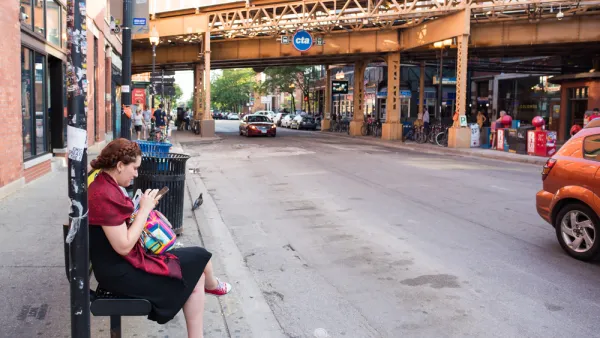
One Big Step Forward, One Small Step Back for Chicago Red Line Extension
A big approval and a significant delay—but otherwise 2020 has been a positive year for plans to extend the Chicago Transit Authority's Red Line by 5.6 miles to the south.
Red Line Extension to Chicago's Far South Side Making Steady Progress
A transit extension envisioned since the 1950s is this year making steady, tangible progress in the Windy City.
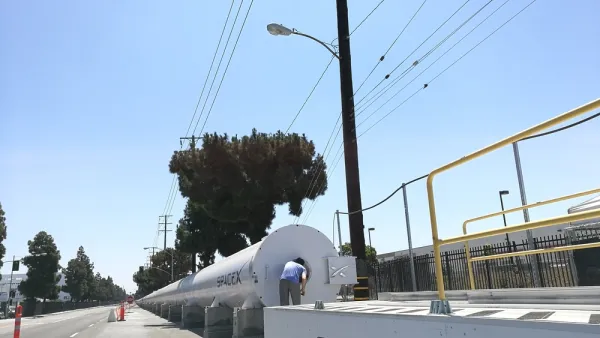
Chicago-Cleveland Hyperloop Estimated at $29.8 Billion
A feasibility analysis published today estimates costs and benefits for the still-unproven Hyperloop technology, as envisioned for a route connecting Cleveland and Chicago.

Desperate measures: Advocates weigh draining Lake Powell to fill Colorado River
Draining the reservoir could reduce evaporation losses by a couple hundred thousand acre-feet.

Eastern Nebraska is running out of electricity
Data centers and electrification are straining eastern Nebraska’s grid, throttling economic development.

Malls are becoming the midtowns of the future
Mall and office park redevelopments are a generational opportunity to create new nodes of urbanity.

NYC breaks ground on anti-flooding infrastructure project
New York City's new system will reduce stormwater flows to local sewers by 90%.

One Kentucky town’s secret to affordable housing
The Smoketown Community Land Trust has already built seven affordable homes for community members.

Houston gains petal-shaped cooling infrastructure to make streets more ‘delightful’
The city has installed the pavilions along 15 blocks in Houston.

FREE Course: Walkable City 1: Why Walkability?
After describing his path towards focusing on walkability as the essence of good planning, Jeff Speck marches through his five principal reasons for making more walkable places.
Reinventing Malls: Planning Alchemy—Turning Gray Fields Into Gold
The course focuses on the opportunities and imperatives that shape reinvention of mall sites.

City of Rosemead
Rutgers University, Edward J. Bloustein School of Planning and Public Policy
One Hundred Miles
University of Michigan School for Environment and Sustainability (SEAS)
Hunter College, City University of New York (CUNY)
The Architects Foundation
City of Cambridge
Montrose County
The Pocatello Development Authority