Why is the Department of Interior considering a reduction of the size of the Cascade-Siskiyou National Monument?


"Recreation in an untamed part of Southern Oregon generated far more economic benefit than grazing and logging put together," writes Tony Schick. "Yet it’s difficult to say how changing the boundaries of the Cascade-Siskiyou National Monument might alter that mix."
Schick writes in reaction to documents released, heavily redacted, from the Interior Department's review of National Monuments. The documents to make it clear that recreation produces tremendous economic benefit—more so than the industries fighting to shrink the footprint of public lands in the West:
Among the newly public documents is an economic assessment from the Bureau of Land Management that estimates recreation generated $16.6 million in economic output and supported 200 jobs in 2016. Estimates for ranching and timber were $1.1 million and $600,000 respectively.
Beyond that information, a lot of key information about the review is still unknown to the public, such as who reviewed the draft memo and what input they gave.
FULL STORY: Documents Show Value Of Recreation At Cascade-Siskiyou National Monument

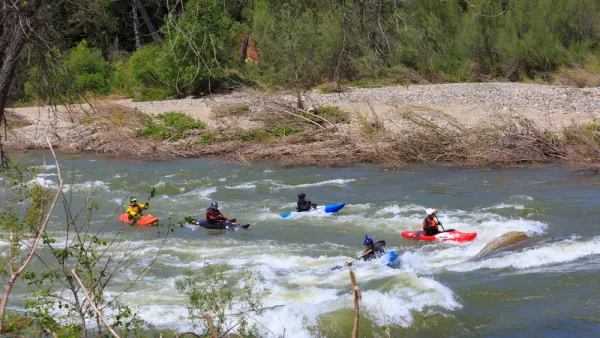
Rhetoric Over Public Lands Heating Up in Washington, D.C.
As the Outdoor Industry Association gathered for its annual advocacy trip to Washington, D.C., the industry is marshaling its resources for an expected political battle with the Trump Administration.
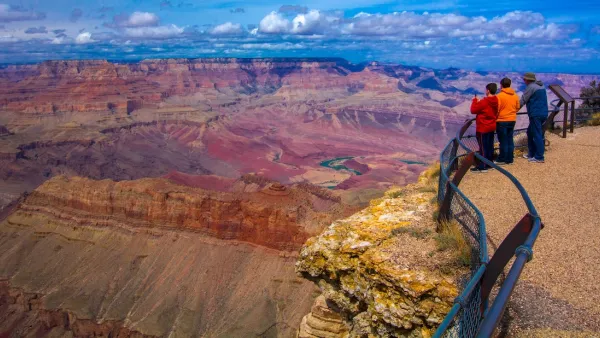
DOJ Says Trump Has Power to Roll Back National Monuments
The opinion sheds light on how the administration may justify its effort to eliminate protected public lands.
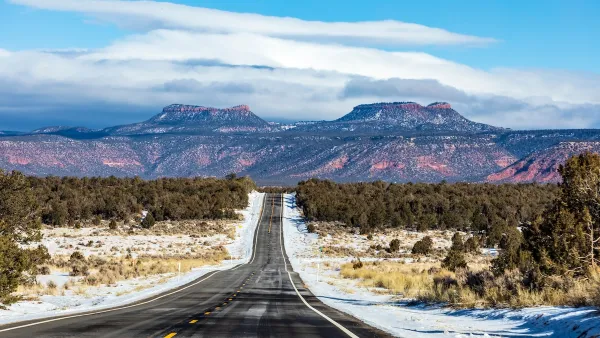
National Monuments Under Threat From Mining Under New Executive Order
An executive order from the Department of the Interior could gut protections for public lands established under the Antiquities Act.

Planetizen Federal Action Tracker
A weekly monitor of how Trump’s orders and actions are impacting planners and planning in America.

The state-sanctioned urbicide of Austin
People don’t kill cities. Freeways do.

US to reduce Colorado River water deliveries to Mexico
A new Colorado Treaty amendment reduces Mexico’s Colorado River water allocation by 250,000 acre feet.

Mamdani overhauls NYC's Vision Zero plan with 100 new policy goals
The overhaul aims to reduce traffic deaths and make streets safer for pedestrians, cyclists and drivers through lower speed limits, new safety infrastructure and more.

Amtrak not solely to blame for New Jersey commuter rail's unreliability, report finds
A new study from the Garden State Initiative found that NJ Transit’s budget grew 20% across a 4 year period, but reliability declined significantly over the same period.

EPA erases limits on planet-warming pollution from power plants
Under Monday’s plan, power plants would still have some limits on how much mercury, arsenic and other contaminants they can emit.

FREE Course: Walkable City 1: Why Walkability?
After describing his path towards focusing on walkability as the essence of good planning, Jeff Speck marches through his five principal reasons for making more walkable places.
Reinventing Malls: Planning Alchemy—Turning Gray Fields Into Gold
The course focuses on the opportunities and imperatives that shape reinvention of mall sites.

Eagle County Government
Harvard University Graduate School of Design
Nashville Planning Department
The Architects Foundation
University of Cincinnati Online
The Pocatello Development Authority
The Urban Renewal Agency of the City of Pocatello
Journal of the American Planning Association