The opinion sheds light on how the administration may justify its effort to eliminate protected public lands.


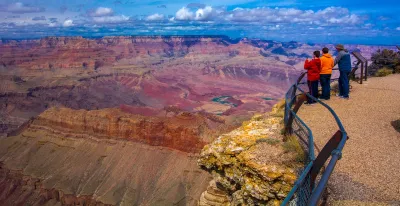
The U.S. Department of Justice issued an opinion stating that the President can review and eliminate national monuments in favor of mining and resource extraction, reports Wyatt Myskow in Inside Climate News.
According to Myskow, “Tuesday’s opinion, which stems from a White House request after it attempted to eliminate two monuments earlier this year, has no influence on case law that has upheld the protection of national monuments, but it does offer insight into how the Trump administration is likely to justify dismantling protected areas in court.”
The opinion argues that using the Antiquities Act to protect land goes against the best interests of local communities. According to the opinion, “Presidents have used that power to withhold vast swaths of the American land and seascape from potentially beneficial economic use by designating over 100 national monuments, the largest of which spans 582,578 square miles or 373 million acres.”
The power to eliminate national monuments has traditionally rested with Congress, who has never used it. “Attacking national monuments to make way for development has been a priority of both the first and second Trump administrations. Many of the targeted monuments hold access to minerals like uranium, coal and copper and in some cases, prevented some mines from expanding operations.”
FULL STORY: Department of Justice Gives Trump Go-Ahead to Eliminate National Monuments

New Executive Order Renews Attack on Public Lands
An order issued late last week pushes for increased mineral extraction on federally owned public lands.

BLM To Rescind Public Lands Rule
The change will downgrade conservation, once again putting federal land at risk for mining and other extractive uses.
National Monuments Under Threat From Mining Under New Executive Order
An executive order from the Department of the Interior could gut protections for public lands established under the Antiquities Act.

Planetizen Federal Action Tracker
A weekly monitor of how Trump’s orders and actions are impacting planners and planning in America.

The state-sanctioned urbicide of Austin
People don’t kill cities. Freeways do.

US to reduce Colorado River water deliveries to Mexico
A new Colorado Treaty amendment reduces Mexico’s Colorado River water allocation by 250,000 acre feet.

5 New England states march closer to 800 megawatt wind energy project
Securing federal approval for the project may be complicated under the Trump administration, which has historically been hostile towards domestic wind power.

Baltimore to break ground on $50 million Transit Priority Project
The project will bring faster bus trips, safer streets and better bike connections to Baltimore.

Airbnb launches $250 million 'last-dollar financing' housing accelerator, makes first investment in Austin
The company will put $6.4 million towards affordable housing development in Texas’ capital.

FREE Course: Walkable City 1: Why Walkability?
After describing his path towards focusing on walkability as the essence of good planning, Jeff Speck marches through his five principal reasons for making more walkable places.
Reinventing Malls: Planning Alchemy—Turning Gray Fields Into Gold
The course focuses on the opportunities and imperatives that shape reinvention of mall sites.

Eagle County Government
Harvard University Graduate School of Design
Nashville Planning Department
The Architects Foundation
University of Cincinnati Online
The Pocatello Development Authority
The Urban Renewal Agency of the City of Pocatello
Journal of the American Planning Association