Very preliminary studies are underway in Colorado about what it would take to build a 360-mile Hyperloop system in the Denver region.


Tamara Chuang reports on the progress of a feasibility study for a Hyperloop system proposed for the Denver area.
The feasibility study is part of the ongoing "Global Challenge" put on by Hyperloop One. The "Rocky Mountain Hyperloop" team was one of ten global finalists announced in September 2017, as reported on by Chuang at that time.
Now Chuang checks in with the status of the feasibility study, finding the team settling on a station location at Denver International Airport and seeking public comment. "There is much to be done, not to mention finding financing for the 360-mile route connecting DIA to Pueblo, Fort Collins and Vail," writes Chaung. "The state’s initial report put that cost at $24 billion and estimated it could ultimately handle 45 million trips in 2040 and generate $2 billion a year in revenues."
The Rocky Mountain Hyperloop team has backing from the Colorado Department of Transportation and includes employees of Denver-based companies.
Read the full story: Hyperloop’s first stop: DIA, as Colorado enters final leg to study feasibility of $24B transportation project
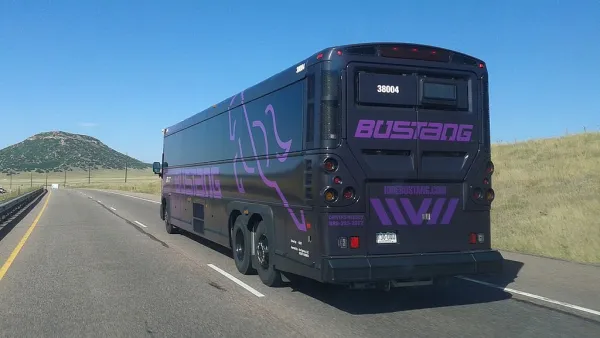
As Colorado Grows, Buses Become More Important for Regional Transportation
Bustang regional bus service is growing fast as people look to navigate a growing state.
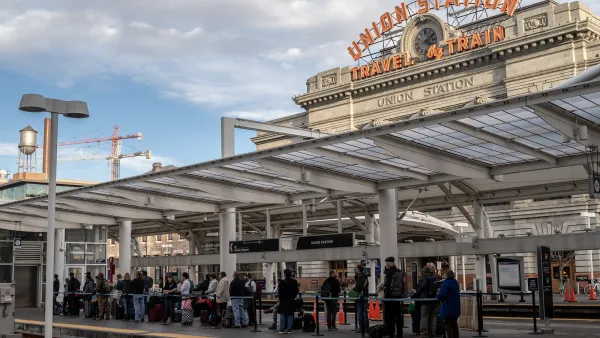
Colorado announces new train between Denver and Fort Collins
The plan requires an agreement with BNSF, which owns the tracks, and Amtrak, which will likely operate the service.
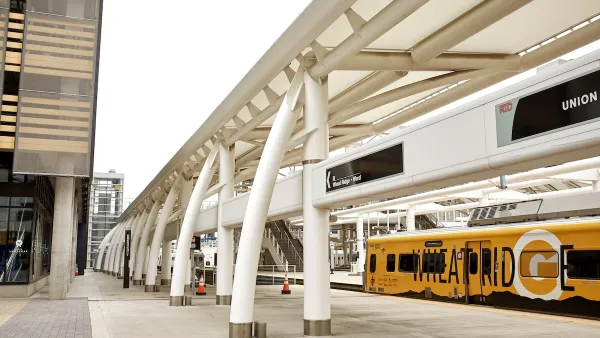
Colorado Officials Plan Denver-Fort Collins Rail Service by 2029
About $40 million a year in state funding from new transportation fees could be the key to getting a short passenger rail line from Denver to Fort Collins up and running in the next four years, Colorado officials said last week.

Planetizen Federal Action Tracker
A weekly monitor of how Trump’s orders and actions are impacting planners and planning in America.

California plans to bury El Niño’s downpour
If the state plays its cards right, it may be able to store a billion acre-feet of El Niño’s water in aquifers.

Desperate measures: Advocates weigh draining Lake Powell to fill Colorado River
Draining the reservoir could reduce evaporation losses by a couple hundred thousand acre-feet.

Eastern Nebraska is running out of electricity
Data centers and electrification are straining eastern Nebraska’s grid, throttling economic development.

Seattle passes record-breaking transit services expansion
Proposition 1 will double the city’s transit tax to add 95,000 more bus trips and preserve 180,000 bus trips annually.

Post election, Texas is no longer Musk’s 'AI oasis'
Elon Musk dolled out $446 million on the 2026 midterms, the most ever spent by a non-canidate.

FREE Course: Walkable City 1: Why Walkability?
After describing his path towards focusing on walkability as the essence of good planning, Jeff Speck marches through his five principal reasons for making more walkable places.
Reinventing Malls: Planning Alchemy—Turning Gray Fields Into Gold
The course focuses on the opportunities and imperatives that shape reinvention of mall sites.

City of Rosemead
Rutgers University, Edward J. Bloustein School of Planning and Public Policy
One Hundred Miles
Hunter College, City University of New York (CUNY)
The Architects Foundation
University of Cincinnati Online
City of Cambridge
Montrose County
The Pocatello Development Authority