An institutional mandate isn't enough to make a design vision a reality. Portland is working on bringing its standards and guidelines in line with its ambition for protected bike lanes.


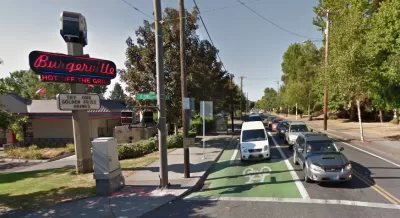
The Portland Bureau of Transportation (PBOT) is working on an official Portland Protected Bicycle Lane Design Guide that will provide clear guidance on protected bike lanes in the city.
Jonathan Maus reports that the guide will be the first of its kind for protected bike lanes in the city, and its significance goes even further than its lack of precedence.
PBOT Bicycle Program Manager Roger Geller recently told a public audience that "the guide came about in large part because outgoing PBOT Director Leah Treat issued an internal agency directive in 2015 that called on staff to make protected bike lanes the default whenever possible."
When it comes to building bike lanes in Portland, protected lanes are the preference. "We’re going to start with a protected bike lane and you better have a really good reason why can’t do it," Geller is quoted as saying in the article.
Maus got a preview of the guide at the same event, and he provides details about what he learned. For instance: "The bulk of the guide lays out different street cross-sections and suggests seven basic designs. This is meant to help city staff determine what’s possible given nearly any street configuration they come across — from a 76-foot wide, two way road to a 44-foot one-way road." The final produce will include an online tool that allows "plug-and-play" design and engineering functionality.
FULL STORY: A sneak peek at Portland’s new protected bike lane design guide

Portland and Multnomah County Push for Lower Speed Limits on Bridges
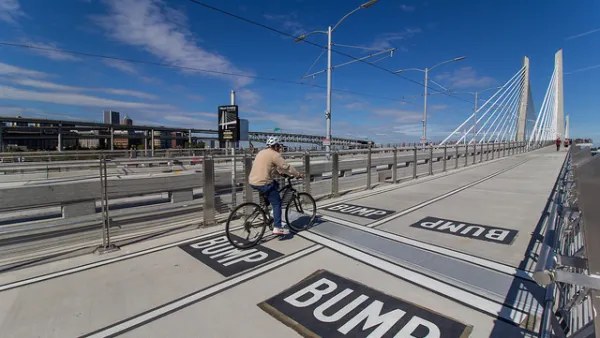
The Portland Bureau of Transportation and Multnomah County agree on a 30 mph speed limit on five downtown bridges, but the state's department of transportation denied the change on two key spans.
A Thorough, Mixed Review for a New Protected Bike Lane in Seattle
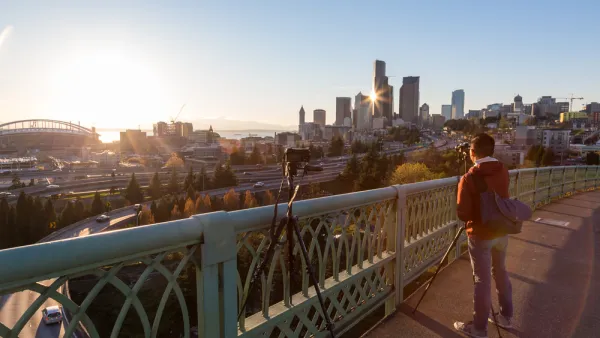
So many highly anticipated bike facilities finally deliver only to fall short of real game changing status. Seattle provides the latest example of the phenomenon in the wild.
Bike Lane Debate Continues in San Antonio
As a project to re-engineer Broadway in San Antonio continues, questions about where to put bike lanes persist.

Planetizen Federal Action Tracker
A weekly monitor of how Trump’s orders and actions are impacting planners and planning in America.

The state-sanctioned urbicide of Austin
People don’t kill cities. Freeways do.

US to reduce Colorado River water deliveries to Mexico
A new Colorado Treaty amendment reduces Mexico’s Colorado River water allocation by 250,000 acre feet.

Mamdani overhauls NYC's Vision Zero plan with 100 new policy goals
The overhaul aims to reduce traffic deaths and make streets safer for pedestrians, cyclists and drivers through lower speed limits, new safety infrastructure and more.

Amtrak not solely to blame for New Jersey commuter rail's unreliability, report finds
A new study from the Garden State Initiative found that NJ Transit’s budget grew 20% across a 4 year period, but reliability declined significantly over the same period.

EPA erases limits on planet-warming pollution from power plants
Under Monday’s plan, power plants would still have some limits on how much mercury, arsenic and other contaminants they can emit.

FREE Course: Walkable City 1: Why Walkability?
After describing his path towards focusing on walkability as the essence of good planning, Jeff Speck marches through his five principal reasons for making more walkable places.
Reinventing Malls: Planning Alchemy—Turning Gray Fields Into Gold
The course focuses on the opportunities and imperatives that shape reinvention of mall sites.

Eagle County Government
Harvard University Graduate School of Design
Nashville Planning Department
The Architects Foundation
University of Cincinnati Online
The Pocatello Development Authority
The Urban Renewal Agency of the City of Pocatello
Journal of the American Planning Association