Three case studies of robotics technology integrated into the design and management of urban settings offers a glimpse of a potential future.


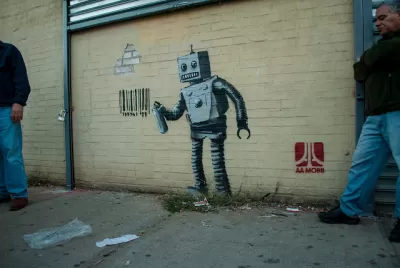
Mateja Kovacic writes to describe a "fourth industrial revolution"—i.e., the spread or robots throughout urban areas. "This fourth industrial revolution driven by robots is shaping urban spaces and urban life in response to opportunities and challenges in economic, social, political and healthcare domains," writes Kovacic. "Our cities are becoming too big for humans to manage."
According to Kovacic, cities are starting to look to robotic solutions to some of the most pressing issues in cities: "Whether through autonomous cars, automated pharmacists, service robots in local stores, or autonomous drones delivering Amazon parcels, cities are being automated at a steady pace."
As case studies, Kovacic examines three case studies from around the world:
- Tokyo, where the Robot Revolution Realisation Council was established in 2014, with the stated goals of economic reinvigoration, cultural branding, and international demonstration. The 2020 Olympics will feature high-profile demonstrations of robotic technology.
- Singapore, where the government is "experimenting with robots with a different objective: as physical extensions of existing systems to improve management and control of the city."
- Dubai, where smart city technology and robotics pursue the goal of creating the happiest city on earth.
Read the full story: Robot Cities: Three Urban Prototypes That Could Revolutionise Our Lives

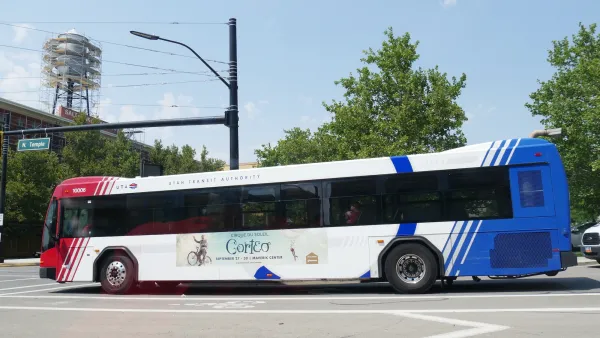
Salt Lake City debuts new bus rapid transit line
The third BRT line in the Utah Transit Authority system connects destinations from Taylorsville to the West Valley.

AI for Planners Explained: Urban Digital Twins
When AI stops talking and starts showing.

The Superstar Metro Argument... And Why It Fails
One argument against solving the housing shortage in large, expensive cities is that growth in those cities will drain people and wealth from declining areas. Data does not agree.

Planetizen Federal Action Tracker
A weekly monitor of how Trump’s orders and actions are impacting planners and planning in America.

Colorado’s Largest Data Center Could Rise Next to Homes — Without a Public Hearing
The proposed campus would consume 11 times the power of Denver International Airport; as it has across the country, opposition mounts.

Amtrak, CN end decades-long dispute with eight-year agreement
The new operating agreement establishes an updated framework for the companies to work together, including processes to resolve disputes.

'This is going to be painful:’ Virginia stares down $1.7 billion funding gap for highway maintenance
The state may address the deficit by shifting $290 million from its construction budget to maintenance projects.

Judges permit Denver to divert 77,000 acre feet from the Colorado River for reservoir expansion
Overuse and climate change have caused the Colorado River’s water levels to plummet.

Amtrak, CN end decades-long dispute with eight-year agreement
The new operating agreement establishes an updated framework for the companies to work together, including processes to resolve disputes.

FREE Course: Walkable City 1: Why Walkability?
After describing his path towards focusing on walkability as the essence of good planning, Jeff Speck marches through his five principal reasons for making more walkable places.
Reinventing Malls: Planning Alchemy—Turning Gray Fields Into Gold
The course focuses on the opportunities and imperatives that shape reinvention of mall sites.

KFH Group Inc.
Greater Baltimore Committee
Eagle County Government
The Architects Foundation
University of Cincinnati Online
The Pocatello Development Authority
The Urban Renewal Agency of the City of Pocatello