An overlooked feature of the federal omnibus bill approved earlier this year: a return to the Clearview font for highway traffic signs.


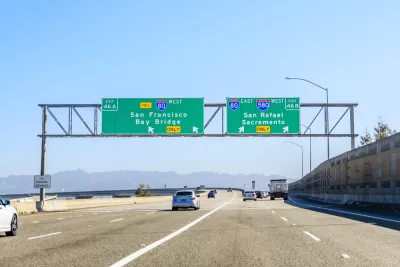
Joy Powell reports: "A font designed for easy reading on state highway traffic signs has been reinstated following the passage of the federal omnibus bill, according to the American Traffic Safety Services Association."
The bill effectively directs the Federal Highway Administration to "issue interim approval for the Clearview font." The rule change effectively rescinds a change announced in 2016, which Planetizen reported at the time had "ruffled feathers."
While this article was reported in early April, the news about Clearview's comeback made traction this week thanks to a tweet from 2016 that has been recirculating on social media and also helpfully illustrates the differences between Clearview and the short-lived Highway Gothic.
I LOVE A GOOD FONT WAR.
"Feds killing off Clearview, going back to Highway Gothic" https://t.co/pjJ5rvSPOX pic.twitter.com/9skAAnqPxb— pourmecoffee (@pourmecoffee) February 5, 2016
FULL STORY: Font designed for easier readability on roadway signs is reinstated, two years after FHWA prohibited it

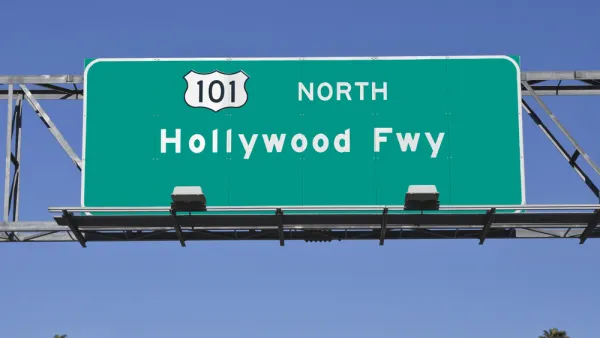
FHWA Ruffles Feathers With Font Change for Highway Signs
After adopting the Clearview font in 2004, ending the Highway Gothic in use since the 1960s, the U.S. Federal Highway Administration reversed course in January and will again require the older font. This small change matter a great deal.
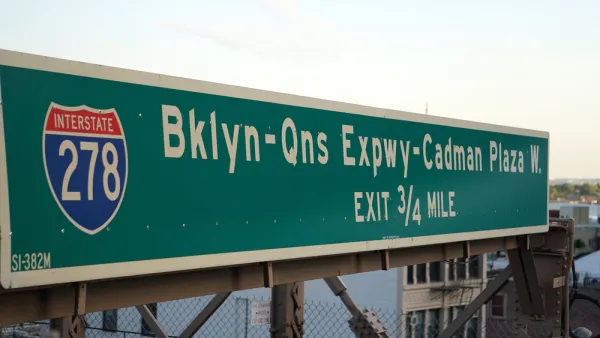
Highway Sign Typefaces, Explained
The latest Vox explainer video tackles the eminently fascinating topic of highway sign fonts.
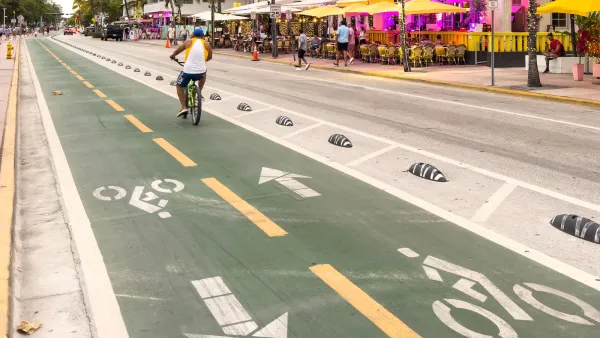
FHWA removes bike lanes and speed cameras from list of traffic safety measures
The agency did not announce its intention to eliminate five proven safety measures from its list of suggested interventions.

Planetizen Federal Action Tracker
A weekly monitor of how Trump’s orders and actions are impacting planners and planning in America.

The state-sanctioned urbicide of Austin
People don’t kill cities. Freeways do.

US to reduce Colorado River water deliveries to Mexico
A new Colorado Treaty amendment reduces Mexico’s Colorado River water allocation by 250,000 acre feet.

5 New England states march closer to 800 megawatt wind energy project
Securing federal approval for the project may be complicated under the Trump administration, which has historically been hostile towards domestic wind power.

Baltimore to break ground on $50 million Transit Priority Project
The project will bring faster bus trips, safer streets and better bike connections to Baltimore.

Airbnb launches $250 million 'last-dollar financing' housing accelerator, makes first investment in Austin
The company will put $6.4 million towards affordable housing development in Texas’ capital.

FREE Course: Walkable City 1: Why Walkability?
After describing his path towards focusing on walkability as the essence of good planning, Jeff Speck marches through his five principal reasons for making more walkable places.
Reinventing Malls: Planning Alchemy—Turning Gray Fields Into Gold
The course focuses on the opportunities and imperatives that shape reinvention of mall sites.

Eagle County Government
Harvard University Graduate School of Design
Nashville Planning Department
The Architects Foundation
University of Cincinnati Online
The Pocatello Development Authority
The Urban Renewal Agency of the City of Pocatello
Journal of the American Planning Association