Efstathios Valiotis of Alma Realty argues that the New York real estate industry has made strides to curb emissions and been a leader in fighting climate change in the city.


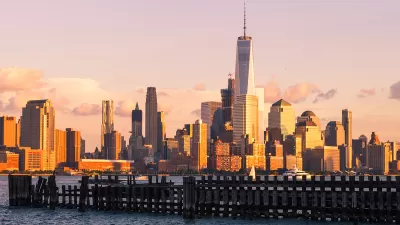
While the MTA continues to face severe issues and New York's mayor rejects calls for congestion pricing, Efstathios Valiotis of Alma Realty argues that real estate provides a bright spot in the city's fight with climate change. "Builders of skyscrapers and developers who preserve and modernize existing buildings to meet the city's vast housing needs make decisions that collectively have an enormous impact," Valiotis writes.
Mayor Bill de Blasio highlighted curbing emissions from buildings in his long-term sustainability plan, recently releasing a controversial video touting his building efficiency regulations.
Buildings are the biggest source of emissions, so we're setting strict standards on energy efficiency. Smarter boilers, heaters, and windows will use less energy, and smarter buildings will be the equivalent of taking 900,000 cars off the road. pic.twitter.com/8QxMo1gpB9
— Bill de Blasio (@NYCMayor) April 22, 2018
Valiotis points out that the real estate community is already making strides to curb its emissions. More efficient HVAC systems, better insulation, LED lighting, and other updates have shrunk the climate footprint of buildings in New York. "Emissions from buildings citywide in 2015 were 18% lower than in 2005, an unmistakable sign that conservancy and efficiency measures are working," Valiotis writes.
Read the full story: City's real estate industry must lead way on climate change— and it is

To Reduce Carbon Emissions, Focus on Existing Buildings
Architects are uniquely positioned to reduce global warming, argues the CEO of Urban Green Council—but first they need to rethink their role.
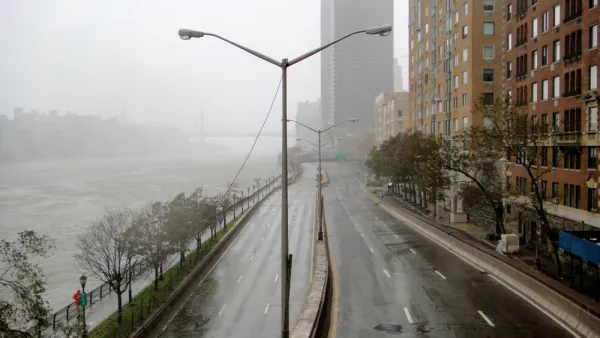
Flood Barrier Approved for Manhattan's East Side
A plan to build a flood barrier between Manhattan and the East River overcame some last minute controversy on its way to approval this month.
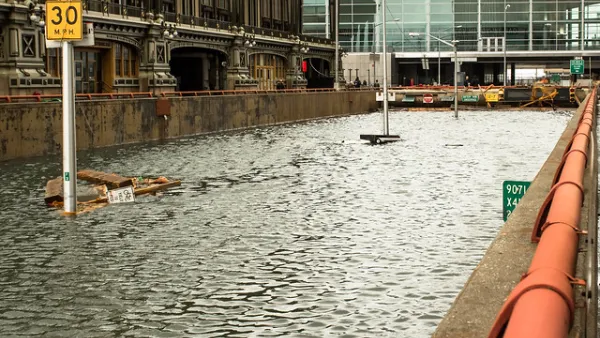
Satirizing Mayors Who Campaign for President During a Flood
The Onion took some shots at presidential hopeful and New York City Mayor Bill de Blasio after summer rain showers flooded streets and sent water cascading into the city's subway system.

Planetizen Federal Action Tracker
A weekly monitor of how Trump’s orders and actions are impacting planners and planning in America.

The state-sanctioned urbicide of Austin
People don’t kill cities. Freeways do.

US to reduce Colorado River water deliveries to Mexico
A new Colorado Treaty amendment reduces Mexico’s Colorado River water allocation by 250,000 acre feet.

Nation's most wind-powered state turns to coal as data centers increase energy demand
For the first time in decades, Iowa has increased its generation of coal power.

NYC cools commuters with city's first rain garden above a bus stop
New York City officials say the plants in the rain garden can absorb 16 gallons of rainwater during heavy storms.

Brightline West’s future may rely on $6 billion federal loan
The company has until Nov. 2 to make a $400 million equity investment into its proposed high-speed rail line.

FREE Course: Walkable City 1: Why Walkability?
After describing his path towards focusing on walkability as the essence of good planning, Jeff Speck marches through his five principal reasons for making more walkable places.
Reinventing Malls: Planning Alchemy—Turning Gray Fields Into Gold
The course focuses on the opportunities and imperatives that shape reinvention of mall sites.

Greater Baltimore Committee
Eagle County Government
Harvard University Graduate School of Design
The Architects Foundation
University of Cincinnati Online
The Pocatello Development Authority
The Urban Renewal Agency of the City of Pocatello
Journal of the American Planning Association