Leonia, New Jersey made it illegal for non-residents to drive on 60 public roads in an effort to stop Waze users from cutting through their community.


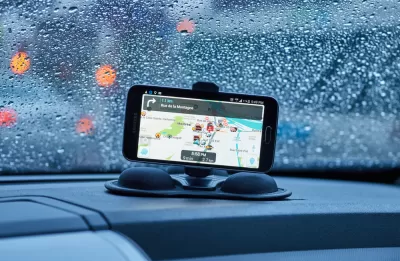
Waze and other navigation applications were sending lots of commuters through the New Jersey town of Leonia, creating previously uncommon congestion for the town so, "… it shut off 60 of its public roads during rush hour to non-local drivers," John Surico reports for CityLab.
The policy did calm traffic in the streets, but some worry the city went too far. Small businesses complain about losing customers, parents who take their children to school in the city say they get stopped, and residents complain about the hassle of trying to host out of town visitors in a city where out-of-town cars are not allowed. Still, the new traffic law has accomplished its goal. "Many residents said the ordinance’s most passionate proponents were young parents, who had felt that the town’s roads had become unsafe thanks to the extra traffic," Surico writes.
There may be other strategies to deal with traffic applications diverting drivers. Some towns restrict traffic during rush hours or have instituted restrictions on certain right turns.
FULL STORY: What Happens When a City Bans Non-Resident Drivers?

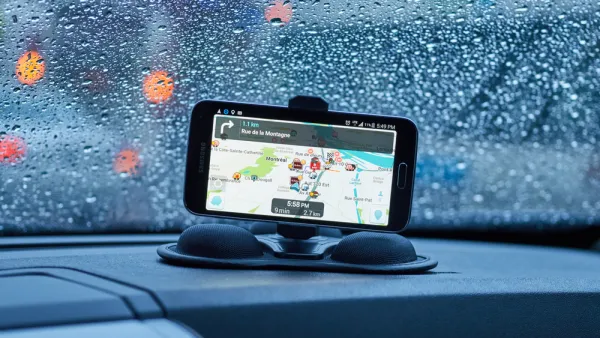
Flooded With Navigation App Users, a Town Closes Its Streets
Navigation apps like Waze often reroute drivers onto residential streets that would be quiet otherwise. With some residents unable to leave their driveways, the New Jersey borough of Leonia has taken an extreme measure against the problem.
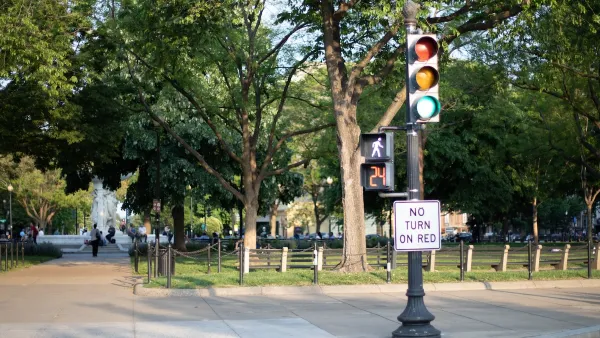
Why Right Turns on Red Are Bad for Traffic Safety
The practice creates dangerous conditions for pedestrians, cyclists, and anyone crossing in front of turning vehicles.
Banning Right Turns on Red: Lessons From Atlanta
How road safety activists passed a law that could make roads much safer.

Planetizen Federal Action Tracker
A weekly monitor of how Trump’s orders and actions are impacting planners and planning in America.

The state-sanctioned urbicide of Austin
People don’t kill cities. Freeways do.

US to reduce Colorado River water deliveries to Mexico
A new Colorado Treaty amendment reduces Mexico’s Colorado River water allocation by 250,000 acre feet.

5 New England states march closer to 800 megawatt wind energy project
Securing federal approval for the project may be complicated under the Trump administration, which has historically been hostile towards domestic wind power.

Baltimore to break ground on $50 million Transit Priority Project
The project will bring faster bus trips, safer streets and better bike connections to Baltimore.

Airbnb launches $250 million 'last-dollar financing' housing accelerator, makes first investment in Austin
The company will put $6.4 million towards affordable housing development in Texas’ capital.

FREE Course: Walkable City 1: Why Walkability?
After describing his path towards focusing on walkability as the essence of good planning, Jeff Speck marches through his five principal reasons for making more walkable places.
Reinventing Malls: Planning Alchemy—Turning Gray Fields Into Gold
The course focuses on the opportunities and imperatives that shape reinvention of mall sites.

Eagle County Government
Harvard University Graduate School of Design
Nashville Planning Department
The Architects Foundation
University of Cincinnati Online
The Pocatello Development Authority
The Urban Renewal Agency of the City of Pocatello
Journal of the American Planning Association