A new program based in the Germantown neighborhood in Philadelphia aims to encourage community ownership of urban re-investment.


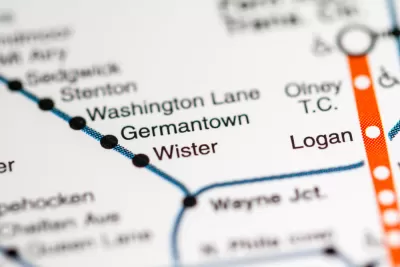
Jill Harkins reports on Jumpstart Germantown, a Philadelphia-based organization that provides training, mentoring, and financial backing to local residents in an "effort to remove blight from and revitalize the Germantown neighborhood without the traditional outcomes of gentrification: the pushing out of long-time residents as a result of skyrocketing housing costs."
"Jumpstart Germantown has graduated 235 people—60 more will graduate in April—and has more than 300 people on its wait list," according to Harkins. In addition to training, the program includes a mentorship program and financial support. Here's how the financial program works:
Participants also have the option of applying for a loan through Jumpstart. Borrowers must put up 15 percent of the project cost, and Jumpstart lends the remaining 85 percent. While the interest rate on the loans is higher than a loan from a traditional bank, no credit check is required for a buy and sell project and loans are approved quickly to allow borrowers to compete with wealthier developers with cash on hand. Jumpstart has closed on 70 loans in the past two and a half years, each ranging from $40,000 to $500,000 and totaling more than $7,000,000. The income generated from the loan half of the program has paid for the training costs, and Weinstein says it has become an essentially break-even operation.
The article provides a lot more details about the goals and methods of the program, as well as insight into some of the program's successes.
Read the full story: The Opposite of Gentrification

Community Opposition and a Rezoning Controversy in Philadelphia
The local councilmember is seeking a rezoning from commercial to residential in the Kensington neighborhood of Philadelphia, but local community members say the development will be priced out of their range.
Past Civil Unrest Sets the Table for Today's Gentrification
The story is similar in Washington, D.C., Philadelphia, Los Angeles, Miami, Cincinnati, and Boston: scenes of widespread destruction—the fires, looting, and property damage of civil unrest—sow the seeds for redevelopment and gentrification.
Gentler Gentrification in Philly's Germantown
Germantown has acquired many more wealthy residents without displacing many of its long-term residents or losing its diversity.

Planetizen Federal Action Tracker
A weekly monitor of how Trump’s orders and actions are impacting planners and planning in America.

California plans to bury El Niño’s downpour
If the state plays its cards right, it may be able to store a billion acre-feet of El Niño’s water in aquifers.

Desperate measures: Advocates weigh draining Lake Powell to fill Colorado River
Draining the reservoir could reduce evaporation losses by a couple hundred thousand acre-feet.

Chicago Avenue bridge construction delays enrages city leaders
The bridge has been closed since 2025. The city originally aimed to re-open it in December, and now expects to finish construction in 2027.

NYC bus network redesign speeds up Queens buses
Rush routes have seen a 4.6% speed increase after the redesign.

California High-Speed Rail Authority picks trainset manufacturer
The California High-Speed Rail Authority aims to start servicing passengers by 2033.

FREE Course: Walkable City 1: Why Walkability?
After describing his path towards focusing on walkability as the essence of good planning, Jeff Speck marches through his five principal reasons for making more walkable places.
Reinventing Malls: Planning Alchemy—Turning Gray Fields Into Gold
The course focuses on the opportunities and imperatives that shape reinvention of mall sites.

City of Rosemead
Rutgers University, Edward J. Bloustein School of Planning and Public Policy
One Hundred Miles
Hunter College, City University of New York (CUNY)
The Architects Foundation
University of Cincinnati Online
City of Cambridge
Montrose County
The Pocatello Development Authority