The affluent county finally authorized a concrete plan to address a housing crisis, but forceful opposition from residents put them 'back to Square One.'


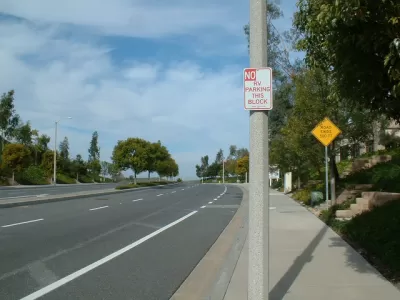
A week after Orange County devised and announced its "most concrete effort yet to find housing for the unsheltered," the Board of Supervisors voted unanimously to take it back.
The plan, which involved installing three temporary camps for the homeless on county land in three different cities, was quickly and forcefully opposed by residents of those cities.
As the cost of living continues to rise across the country, so does the number of people without homes and the number of informal settlements. Different cities are responding to those settlements in different ways: Tacoma, for example, tried to move everyone into one big camp, while Spokane installed boulders as a deterrent. Los Angeles may be setting up trailers on city property, while Las Vegas, with the eight-largest homeless population in the country, is in the process of buying the land underneath a large informal settlement in order to make it permanent.
The events In Orange County were put into motion several months ago, when the county official began the process of removing about 1,000 homeless individuals who were living in camps along the Santa Ana River. A few weeks later, in response to a lawsuit, a federal judge ordered them to stop the evictions unless or until the county could provide somewhere else for those people could live for a minimum of 30 days.
Shortly after, the evictions began again, but this time the riverbed residents were moved into county motel rooms paid for by vouchers.
As the 30 days expired, county officials agreed to extend motel vouchers, but only on a case-by-case basis; around the same time, Orange County authorized $20 million towards permanent housing for the homeless, and then $70 million for permanent housing and also towards establishing three temporary camps in three different cities on land already owned by the county.
According to the Los Angeles Times, affluent Orange County "faces special challenges because it has a relatively sparse infrastructure of services and support for homeless people;" it's unclear what will happen now that the most recent vote by the Board of Supervisors "throws the county's efforts to address the region's homelessness crisis back to Square One."
Read the full story: O.C. pushes homeless off the street but can't find anywhere to shelter them

California Getting Way More New Jobs Than New Housing
Even with tons of building permits already issued this year, the outlook for the state’s affordability crisis is pretty grim.

L.A.'s Anti-Density Advocate Still Hopes to Make Planners 'Uncomfortable'
One of the main forces behind Measure S spills her thoughts on Hollywood, homelessness and what’s wrong with planning in Los Angeles.
Study: LA’s Homelessness Program Displaced 5 People for Every One it Helped
Researchers say a city program designed to help people access housing and services “does not live up to its name” and has caused more harm than good.

Planetizen Federal Action Tracker
A weekly monitor of how Trump’s orders and actions are impacting planners and planning in America.

California plans to bury El Niño’s downpour
If the state plays its cards right, it may be able to store a billion acre-feet of El Niño’s water in aquifers.

Desperate measures: Advocates weigh draining Lake Powell to fill Colorado River
Draining the reservoir could reduce evaporation losses by a couple hundred thousand acre-feet.

Housing is the top priority of Seattle’s sole new councilmember
Jenks campaigned on building 1,000 new units of affordable housing.

New tax cuts may slash $1.5 billion in funding for Miami transit, public parks
Amendment 3 will save Miami-Dade homeowners $2,700 in 2028.

Arizona, Wisconsin, Pennsylvania hope to finally advance climate goals post-midterms
The three states have spent years under Republican or divided control.

FREE Course: Walkable City 1: Why Walkability?
After describing his path towards focusing on walkability as the essence of good planning, Jeff Speck marches through his five principal reasons for making more walkable places.
Reinventing Malls: Planning Alchemy—Turning Gray Fields Into Gold
The course focuses on the opportunities and imperatives that shape reinvention of mall sites.

City of Rosemead
Rutgers University, Edward J. Bloustein School of Planning and Public Policy
One Hundred Miles
University of Michigan School for Environment and Sustainability (SEAS)
Hunter College, City University of New York (CUNY)
The Architects Foundation
City of Cambridge
Montrose County
The Pocatello Development Authority