Widening highways won't reduce congestion—that's the conclusion of a report paid for by the state agency proposing several highway widening projects in Oregon.


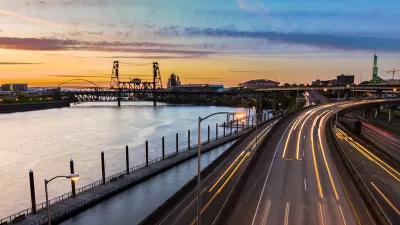
A new report (pdf) by Montreal-based engineering firm WSP has bad news for anyone who advocates for highway widening as a cure for congestion.
Dirk VanderHart shares news of the report by WSP, which was under contract with the Oregon Department of Transportation (ODOT) to analyze the effects of proposed highway widening projects in the Portland area. According to the report, "none of the dozen highway-widening projects that are currently being planned in and around Portland by state officials would be enough in coming years to stem the increasing congestion choking Portland highways."
VanderHart notes that is a surprising finding for a report commissioned by the Oregon Department of Transportation—"a relentless champion of highway-widening projects." In fact, it sounds a lot more like the talking points of the vocal opposition to the plan to widen I-5 in the Rose Quarter of Portland.
Read the full story: A New Report Shows Highway Widening Won't Solve Portland's Congestion Woes
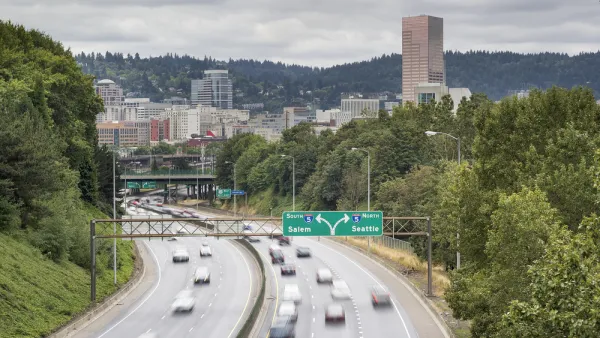
Feds Toss the Environmental Assessment for Portland Controversial Freeway Widening Project
It's back to the drawing board for the I-5 Rose Quarter Improvement Project.
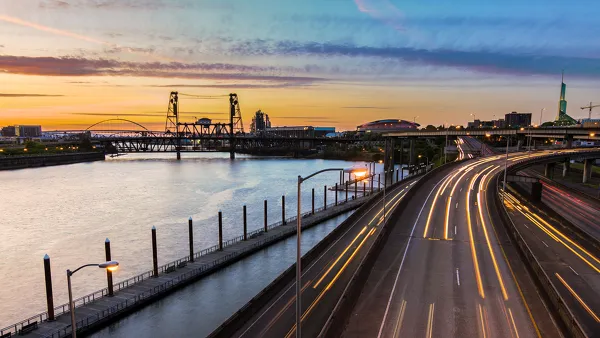
Environmental Assessment for I-5 Improvement Project in Portland Promises Air, Traffic, Safety Benefits
The environmental assessment for the I-5 Rose Quarter Improvement Project, released on February 15, 2019, promises to be controversial.
Plan to Widen I-5 in Portland Loses Critical Local Support
The I-5 Rose Quarter project has proven controversial throughout the study and planning process, and now it's losing key local political support.

Planetizen Federal Action Tracker
A weekly monitor of how Trump’s orders and actions are impacting planners and planning in America.

Washington state to charge fee to drivers with fuel-efficient cars
Revenue from the fee will go towards supporting the state’s highways.

Illinois considers spending $1 billion in taxpayer money on data center
A quantum computing campus and data center are currently under construction in Chicago.

‘Demolition of our heritage:’ Some US tribes speak out against BAAJA
A coalition of indigenous groups in the United States are concerned about provisions in the bill that may weaken their ability to halt large energy projects.

How LA’s new mayor plans to tackle affordable housing crisis
Mayor-elect Nithya Raman has proposed overhauling the city’s permitting process.

Interactive map reveals Pennsylvania's abandoned oil, gas wells — many on residential property
It is difficult for residents to know if a well is near their home, or if it poses a threat to them.

FREE Course: Walkable City 1: Why Walkability?
After describing his path towards focusing on walkability as the essence of good planning, Jeff Speck marches through his five principal reasons for making more walkable places.
Reinventing Malls: Planning Alchemy—Turning Gray Fields Into Gold
The course focuses on the opportunities and imperatives that shape reinvention of mall sites.

City of Charlotte
City of Rosemead
Rutgers University, Edward J. Bloustein School of Planning and Public Policy
University of Michigan School for Environment and Sustainability (SEAS)
Hunter College, City University of New York (CUNY)
The Architects Foundation
University District Partnership