Fifty years of the Fair Housing Act hasn't been enough to stop banks and mortgage lenders from discriminating against people of color. Some bad actors are worse than others, though the whole industry in the aggregate is hardly free from indictment.


The Center for Investigative Reporting's "Reveal" platform released a bombshell report this week that finds evidence of mortgage lenders denying home loans to people of color at higher rates than for white people.
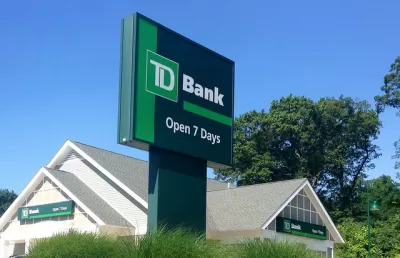
According to an article sharing news of the study, nearly two-thirds of mortgage lenders rejected people of color at higher rates, but there were a few extreme examples. The article lists the worst offenders as TD Bank and Capital One. "African American and Latino borrowers are more likely to get turned down by TD Bank than by any other major mortgage lender," according to the article. "The bank turned down 54 percent of black homebuyers and 45 percent of Latino homebuyers, more than three times the industry averages," write Aaron Glantz, Emmanuel Martinez, and Jennifer Gollan.
The article notes the rise of mortgage lenders since the Great Recession—unlike banks, mortgage lenders "are not required to follow Community Reinvestment Act rules to lend to low-income borrowers and in blighted communities." That lack of regulation creates lenders like Ruoff Home Mortgage, which "made 92 percent of its 5,300 conventional home loans to whites in 2015 and 2016" despite operating in a city with a large African-American community. The article includes more examples of banks taking advantage of loopholes to avoid loaning to people of color or to avoid the appearance of discrimination.
In addition to the article calling out specific banks and mortgage lenders for discriminatory practices, Glantz and Martinez also author the full report, titled "Kept Out." The report includes interactive infographics, testimonials, more explanation of discriminatory practices among banks and lenders, and a case study from Philadelphia.
FULL STORY: 8 lenders that aren’t serving people of color for home loans

Racial Bias Still Rampant in the Mortgage Industry
New research that controls for financial factors the industry said would explain disparities shows that race still plays a major role in loan decisions.

HUD Investigating Boston for “Redlining Against White People”
The agency says the city is breaking the law by prioritizing people of color in its affordable housing strategy.

Consumer Protection Advocates Raise Alarms About Climate Insurance Discrimination That “Mimics Redlining”
As homeowners’ insurance companies and lenders increasingly factor climate risk into their business strategies, communities may see a resurgence of racial and economic exclusion that mimics redlining. But our hands aren’t tied.

Planetizen Federal Action Tracker
A weekly monitor of how Trump’s orders and actions are impacting planners and planning in America.

The state-sanctioned urbicide of Austin
People don’t kill cities. Freeways do.

US to reduce Colorado River water deliveries to Mexico
A new Colorado Treaty amendment reduces Mexico’s Colorado River water allocation by 250,000 acre feet.

5 New England states march closer to 800 megawatt wind energy project
Securing federal approval for the project may be complicated under the Trump administration, which has historically been hostile towards domestic wind power.

Baltimore to break ground on $50 million Transit Priority Project
The project will bring faster bus trips, safer streets and better bike connections to Baltimore.

Airbnb launches $250 million 'last-dollar financing' housing accelerator, makes first investment in Austin
The company will put $6.4 million towards affordable housing development in Texas’ capital.

FREE Course: Walkable City 1: Why Walkability?
After describing his path towards focusing on walkability as the essence of good planning, Jeff Speck marches through his five principal reasons for making more walkable places.
Reinventing Malls: Planning Alchemy—Turning Gray Fields Into Gold
The course focuses on the opportunities and imperatives that shape reinvention of mall sites.

Eagle County Government
Harvard University Graduate School of Design
Nashville Planning Department
The Architects Foundation
University of Cincinnati Online
The Pocatello Development Authority
The Urban Renewal Agency of the City of Pocatello
Journal of the American Planning Association