In Seattle, where bikes can be rented for as little as $2, rental fees don't cover most of the costs associated with bik share.


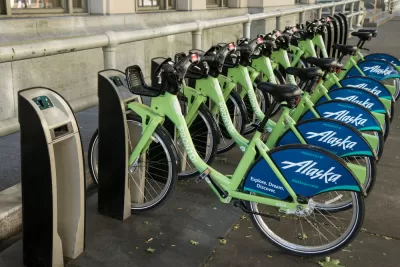
There are several options for bikeshare in Seattle, but it's unlikely that any are making profits yet. "When I rent a bike, I’m one of probably two to three people who will rent the bike in a day. That means the bike I rent will bring in a few dollars a day for the bike sharing company," writes Joshua McNichols for KOUW. This especially true of rentals in the market that are sometimes as cheap as $2.
Still these services have their eyes on other sources of revenue. "Investors are pouring money into bike share companies," McNichols reports. Limebike has raised 62 million and Ofo has 1.3 billion in investment from Alibaba. These investors see potential revenue streams in city money that might pay to support these services in their cities and ad revenue that could be placed on the bikes or the apps used to get those bikes. If these other revenue streams don't emerge, this service for sustainable transit might not be a sustainable business model.
FULL STORY: How do Seattle's bike share companies make money?

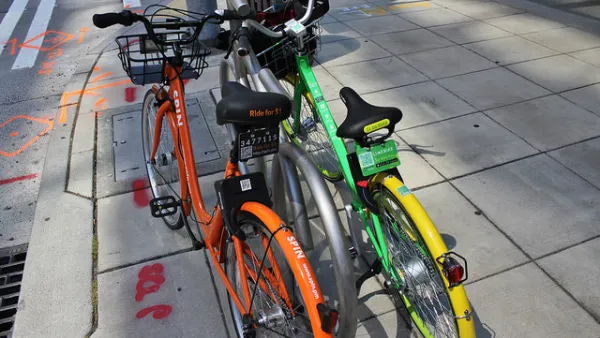
Seattle Commits to Dockless Bike Share
After the failure of its municipal bike share system Pronto!, Seattle was one of the first to regulate the operation of dockless bke share companies in the city. Now it's one-year pilot program is permanent.

Nearly 60,000 Seahawks Fans Took Shared Bikes, Scooters to Super Bowl Parade
Lime bike and scooter trips rivaled travel on some of the city’s most massive roads and bridges.
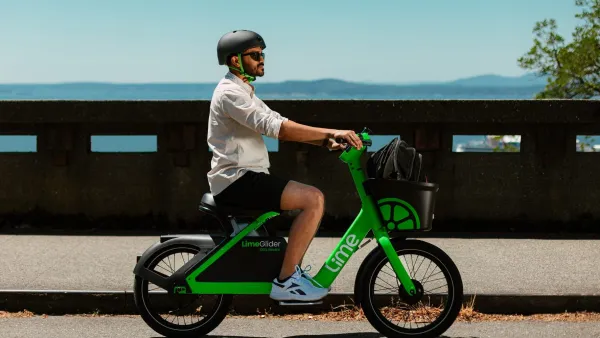
Seattle Lime Bike and Scooter Rides Jumped 61% in 2025 After Introduction of ‘LimeGlider’
Lime added a half-bike, half-scooter hybrid dubbed the LimeGlider to its Seattle fleet in May.

Planetizen Federal Action Tracker
A weekly monitor of how Trump’s orders and actions are impacting planners and planning in America.

The state-sanctioned urbicide of Austin
People don’t kill cities. Freeways do.

US to reduce Colorado River water deliveries to Mexico
A new Colorado Treaty amendment reduces Mexico’s Colorado River water allocation by 250,000 acre feet.

5 New England states march closer to 800 megawatt wind energy project
Securing federal approval for the project may be complicated under the Trump administration, which has historically been hostile towards domestic wind power.

Baltimore to break ground on $50 million Transit Priority Project
The project will bring faster bus trips, safer streets and better bike connections to Baltimore.

Airbnb launches $250 million 'last-dollar financing' housing accelerator, makes first investment in Austin
The company will put $6.4 million towards affordable housing development in Texas’ capital.

FREE Course: Walkable City 1: Why Walkability?
After describing his path towards focusing on walkability as the essence of good planning, Jeff Speck marches through his five principal reasons for making more walkable places.
Reinventing Malls: Planning Alchemy—Turning Gray Fields Into Gold
The course focuses on the opportunities and imperatives that shape reinvention of mall sites.

Eagle County Government
Harvard University Graduate School of Design
Nashville Planning Department
The Architects Foundation
University of Cincinnati Online
The Pocatello Development Authority
The Urban Renewal Agency of the City of Pocatello
Journal of the American Planning Association