The new study, published by the Urban Politics and Governance research group at McGill University, comes with a major disclaimer: it was funded by the Hotel Trades Council, AFL-CIO, among other.


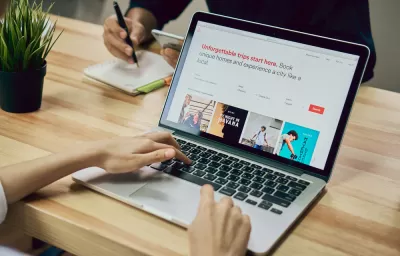
Sally Goldenberg reports on a new report titled "The High Cost of Short-Term Rentals in New York City," which finds that Airbnb "exacerbates income inequality, benefits white hosts who own homes in predominantly black and Hispanic neighborhoods, and renders thousands of apartments unavailable in a city starved for housing."
More specifically, the study "concludes that Airbnb hosts are responsible for removing between 7,000 and 13,500 apartments from the city's long-term rental market, driving up rents by contributing to a housing shortage and threatening to gentrify neighborhoods that have historically been affordable to non-white residents."
A team from McGill University's School of Urban Planning performed all the analysis and crafted all the findings and conclusions of the report, with funding from the Hotel Trades Council, AFL-CIO, as well as New York-based housing and tenant advocacy organizations like New York Communities For Change, Housing Conservation Coordinators, Goddard Riverside Law Project, St. Nick’s Alliance, Cooper Square Committee, Mobilization for Justice (formerly MFY Legal Services), West Side Neighborhood Association, and the Hell’s Kitchen Neighborhood Association.
Inside Airbnb followed up on the news of the new study, placing it in a chronology it launched a year ago, when it published a study titled "Faces of Airbnb: NYC, Airbnb as a Racial Gentrification Tool." Murray Cox of Inside Airbnb writes that post, offering an explanation of that study's findings and a chronology of the ongoing controversy and debate over the effects of Airbnb.
The McGill University study isn't the only news worthy development in scientific study into the effects of short-term rental companies, though the following crop of news originates from the West Coast as a result of regulatory changes. As we reported earlier this month, the city of San Francisco's short-term rental market has been completely upended after new regulations took effect in recent months. A new study by the Bay Area Council Economic Institute [pdf] explains the recent policy changes and examines their impacts.
FULL STORY: Airbnb promotes income disparity, curbs rental market, union-backed study finds


Study Analyses the Airbnb Effect in the New York City Housing Market
Less "sharing economy" and more normal economy for New York City in New York City, according to the findings of a recent study.

Stakeouts and 'Private Eyes': Monitoring Short-Term Rentals for Tenants' Rights
The constantly moving legal lines between regulators and short-term rental companies like Airbnb have taken on some distinctly noir activities.
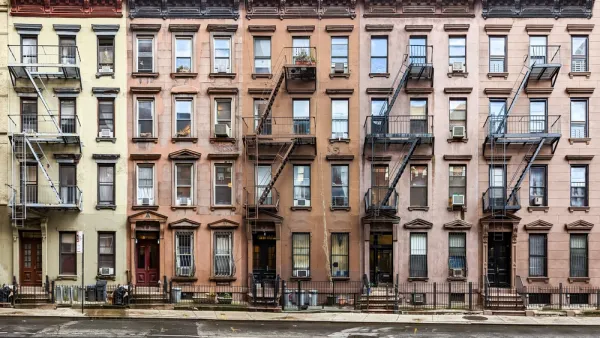
NYC Issues Over $16 Million in Short-Term Rental Fines
So far, the strict new regulations governing Airbnb and other short-term rentals have not made a significant impact on the rental housing market.

Planetizen Federal Action Tracker
A weekly monitor of how Trump’s orders and actions are impacting planners and planning in America.

The state-sanctioned urbicide of Austin
People don’t kill cities. Freeways do.

US to reduce Colorado River water deliveries to Mexico
A new Colorado Treaty amendment reduces Mexico’s Colorado River water allocation by 250,000 acre feet.

5 New England states march closer to 800 megawatt wind energy project
Securing federal approval for the project may be complicated under the Trump administration, which has historically been hostile towards domestic wind power.

Baltimore to break ground on $50 million Transit Priority Project
The project will bring faster bus trips, safer streets and better bike connections to Baltimore.

Airbnb launches $250 million 'last-dollar financing' housing accelerator, makes first investment in Austin
The company will put $6.4 million towards affordable housing development in Texas’ capital.

FREE Course: Walkable City 1: Why Walkability?
After describing his path towards focusing on walkability as the essence of good planning, Jeff Speck marches through his five principal reasons for making more walkable places.
Reinventing Malls: Planning Alchemy—Turning Gray Fields Into Gold
The course focuses on the opportunities and imperatives that shape reinvention of mall sites.

Eagle County Government
Harvard University Graduate School of Design
Nashville Planning Department
The Architects Foundation
University of Cincinnati Online
The Pocatello Development Authority
The Urban Renewal Agency of the City of Pocatello
Journal of the American Planning Association