Less "sharing economy" and more normal economy for New York City in New York City, according to the findings of a recent study.


Alastair Boone shares news of a recent report [pdf] by David Wachsmuth, a professor of Urban Planning at McGill University, that "zeroes in on New York City in an effort to answer the question of exactly what home sharing is doing to the city."
By home sharing, Boone mostly refers to Airbnb, which has been the subject of many previous studies into the impact of short-term rentals on housing markets and the larger economy. Wachsmuth's study focuses on New York City as the third largest and oldest short-term rental market in the world as a case study for the consequences other communities might expect to encounter as short-term rentals gain a larger footprint.
The study did, in fact, find evidence to support the idea that Airbnb "has indeed raised rents, removed housing from the rental market, and fueled gentrification," according to Boone. The study also found evidence that many Airbnb hosts are operating in defiance of the Airbnb's "one host, one home" policy is introduced in New York City in 2016. Commercial operators are responsible for many of the negative effects from short-term rentals in New York City, and they're illegal, according to the article.
FULL STORY: What Airbnb Did to New York City


Study Finds More Reasons to Worry About Airbnb's Effect in the Housing Market
The new study, published by the Urban Politics and Governance research group at McGill University, comes with a major disclaimer: it was funded by the Hotel Trades Council, AFL-CIO, among other.

AirBnbs Now Outnumber Available Apartments in New York
With more short-term rentals on the market than apartments, New York City’s housing market is more competitive than ever.
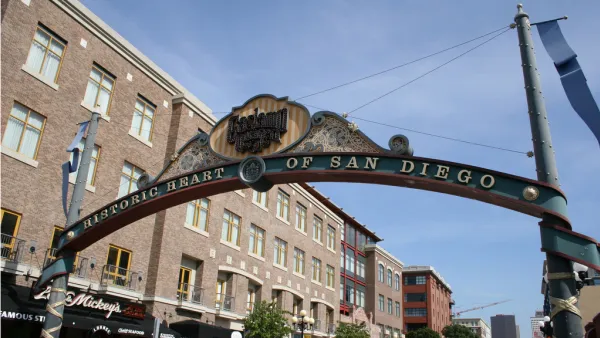
San Diego Considers Cutting Short-Term Rentals by Half
In a bid to address concerns about vacation rentals in residential neighborhoods, the San Diego Planning Commission recommends cutting the number of short-term rentals in the city in half.

Planetizen Federal Action Tracker
A weekly monitor of how Trump’s orders and actions are impacting planners and planning in America.

The state-sanctioned urbicide of Austin
People don’t kill cities. Freeways do.

US to reduce Colorado River water deliveries to Mexico
A new Colorado Treaty amendment reduces Mexico’s Colorado River water allocation by 250,000 acre feet.

5 New England states march closer to 800 megawatt wind energy project
Securing federal approval for the project may be complicated under the Trump administration, which has historically been hostile towards domestic wind power.

Baltimore to break ground on $50 million Transit Priority Project
The project will bring faster bus trips, safer streets and better bike connections to Baltimore.

Airbnb launches $250 million 'last-dollar financing' housing accelerator, makes first investment in Austin
The company will put $6.4 million towards affordable housing development in Texas’ capital.

FREE Course: Walkable City 1: Why Walkability?
After describing his path towards focusing on walkability as the essence of good planning, Jeff Speck marches through his five principal reasons for making more walkable places.
Reinventing Malls: Planning Alchemy—Turning Gray Fields Into Gold
The course focuses on the opportunities and imperatives that shape reinvention of mall sites.

Eagle County Government
Harvard University Graduate School of Design
Nashville Planning Department
The Architects Foundation
University of Cincinnati Online
The Pocatello Development Authority
The Urban Renewal Agency of the City of Pocatello
Journal of the American Planning Association