New registration requirements have proven an effective disincentive for thousands of short-term rental hosts in San Francisco.


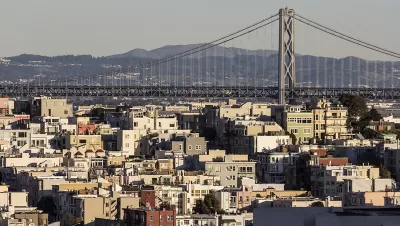
"Thousands of San Francisco hosts on Airbnb and rival home-stay sites have stopped renting their homes and rooms to tourists," reports Carolyn Said. The big drop off in short-term rental hosts is due to a recent deadline for people to register or be kicked off of sites like Airbnb and HomeAway.
After a recent court battle between the city and short-term rental companies, a May settlement "required the sites to register all hosts in phases starting in September," and the sites were required to kick off unregistered hosts by January 16, 2018. The companies will "face fines of up to $1,000 a day per listing and criminal penalties if they help arrange bookings of unregistered listings," according to Said.
"The city said 2,168 hosts had met its requirements to offer temporary rentals as of Thursday — representing a fraction of the 8,453 Airbnb listings the city observed in early August," reports Said. The article includes more details about how the drop-off in hosts is affecting business in the local market, and explains the reasons for the drop-off (i.e., why some hosts can't register under the new rules).
FULL STORY: Airbnb loses thousands of hosts in SF as registration rules kick in

New Research on Airbnb's Impact on the San Francisco Housing Market
The San Francisco Chronicle published a large, magazine-style feature detailing the impacts of Airbnb on the city's housing market.
San Francisco Rebooting its Airbnb Regulation Efforts
Despite approving legislation to regulate short-term rentals in October 2014, San Francisco must go back to the drawing board to find legislation that works. Stay tuned.

Airbnb Market in ‘Collapse,’ Analyst Says
Recent analysis shows Airbnb revenues in steep decline in some large U.S. markets. The consequences of such a decline could send shockwaves through the entire residential real estate market.

Planetizen Federal Action Tracker
A weekly monitor of how Trump’s orders and actions are impacting planners and planning in America.

The state-sanctioned urbicide of Austin
People don’t kill cities. Freeways do.

US to reduce Colorado River water deliveries to Mexico
A new Colorado Treaty amendment reduces Mexico’s Colorado River water allocation by 250,000 acre feet.

5 New England states march closer to 800 megawatt wind energy project
Securing federal approval for the project may be complicated under the Trump administration, which has historically been hostile towards domestic wind power.

Baltimore to break ground on $50 million Transit Priority Project
The project will bring faster bus trips, safer streets and better bike connections to Baltimore.

Airbnb launches $250 million 'last-dollar financing' housing accelerator, makes first investment in Austin
The company will put $6.4 million towards affordable housing development in Texas’ capital.

FREE Course: Walkable City 1: Why Walkability?
After describing his path towards focusing on walkability as the essence of good planning, Jeff Speck marches through his five principal reasons for making more walkable places.
Reinventing Malls: Planning Alchemy—Turning Gray Fields Into Gold
The course focuses on the opportunities and imperatives that shape reinvention of mall sites.

Eagle County Government
Harvard University Graduate School of Design
Nashville Planning Department
The Architects Foundation
University of Cincinnati Online
The Pocatello Development Authority
The Urban Renewal Agency of the City of Pocatello
Journal of the American Planning Association