Over 1,600 new subway cars may be ordered, a minimum of 200 with open gangways, by the Metropolitan Transportation Authority. The first 500 will be purchased from the Japanese company, Kawasaki, to be assembled in Yonkers and Lincoln, Nebraska.


"The first cars, which will be manufactured under a contract between the Metropolitan Transportation Authority and the Japanese company, Kawasaki, are scheduled to be delivered in July 2020," reports Sarah Maslin Nir for The New York Times on Jan. 19.
The MTA voted Monday to approve the order, reports Matt Olberding of the Lincoln (Nebraska) Journal Star on Jan. 22. A final vote is expected Wednesday.
Kawasaki's Lincoln rail car plant is poised to receive the largest subway car order in its history, the economic effects of which "could be felt for years to come," a local company official said.
The contract is phased, and could "ultimately pay Kawasaki more than $3.7 billion with the financing being provided by the Federal Transit Administration," adds Nir.
At the outset, the authority has committed about $1.45 billion to buy over 500 cars with an agreement to take steps to purchase more if the initial group performs well, for a total of 1,612 cars.
The new cars, designated as R211, will gradually replace the authority’s fleet of over 750 R46 cars which were built between 1975 and 1978....
The award is a blow to the Canadian aerospace and train manufacturer, Bombardier, which was hired to build the city’s last fleet of new cars, but delivered them two years behind schedule," adds Nir.
Open gangway cars
Trains composed of open gangway cars, used in many of the world's busiest subways except those in the U.S., bear resemblance to articulated buses. There are no doors between the cars, enabling passengers to move freely within the train. In addition, they hold more passengers. 200 of these cars will comprise 20 trains, as "[t]hey are built in five-car units; a train will consist of two linked sets, for a total of 10 cars," explains Nir.
If the first group proves successful, then the authority plans to obtain more, even perhaps, the entire rest of the order.
Only one subway in North America uses them — Toronto. Perhaps it is no coincidence that Andy Byford, the new president of New York City Transit, which operates the subway and buses, was the former chief executive of the Toronto Transit Commission.
Riders Alliance, an advocacy group, welcomed the introduction of open gangway cars, but with reservations as new cars won't solve the subway's chronic woes, highlighted when the governor declared a state of emergency last summer.
A slew of new trains does not get at the root causes of the subway’s ills, including the crumbling infrastructure, outdated signaling systems that have to be replaced as well as new ways to pay for it all, said campaign manager Rebecca Bailin.
Also see report on the subway order in Curbed New York.
FULL STORY: New York Set to Acquire the Next Generation of Subway Cars

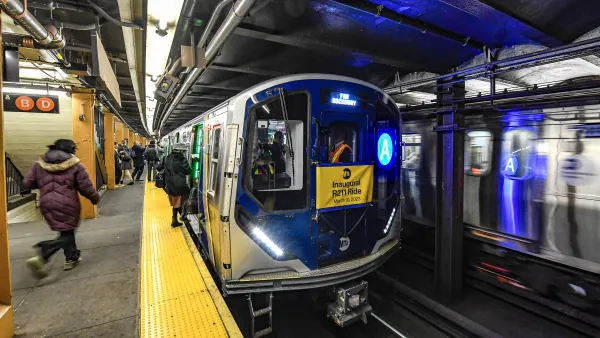
Fancy New Subway Cars Join the New York Subway System
New York has been planning on adding these new subway cars for years, finally achieving their goal in March 2023. More than a thousand of the new R211 trains will be running in New York within two years if all goes according to plan.
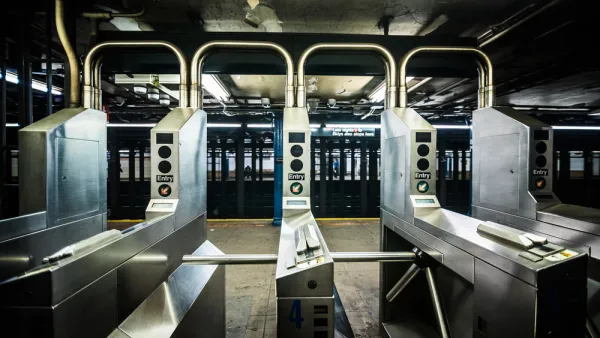
Means-Based, Transit-Fare Discounts Take a Leap Forward in the Big Apple
The 2019 New York City budget includes $106 million to subsidize half the transit fare for qualified residents for six months. The city joins the ranks of Seattle, Toronto, and the Bay Area that offer income-based discounts for transit fares.
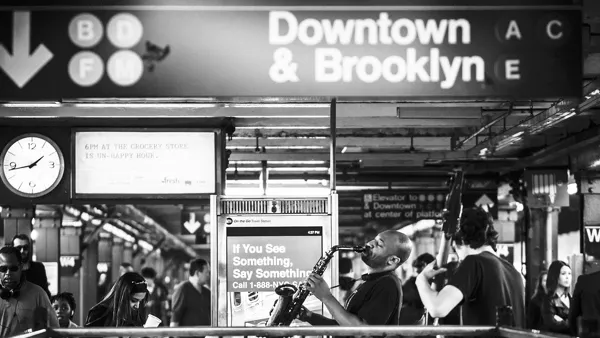
Breaking News: $19 Billion MTA Repair Program Proposed
A sweeping new subway improvement plan is on the table in New York City. The "Fast Forward" plan will modernize the subway's signal system, improve wheelchair accessibility, and "restructure the inner workings of the department."

Planetizen Federal Action Tracker
A weekly monitor of how Trump’s orders and actions are impacting planners and planning in America.

The state-sanctioned urbicide of Austin
People don’t kill cities. Freeways do.

US to reduce Colorado River water deliveries to Mexico
A new Colorado Treaty amendment reduces Mexico’s Colorado River water allocation by 250,000 acre feet.

Mamdani overhauls NYC's Vision Zero plan with 100 new policy goals
The overhaul aims to reduce traffic deaths and make streets safer for pedestrians, cyclists and drivers through lower speed limits, new safety infrastructure and more.

Amtrak not solely to blame for New Jersey commuter rail's unreliability, report finds
A new study from the Garden State Initiative found that NJ Transit’s budget grew 20% across a 4 year period, but reliability declined significantly over the same period.

EPA erases limits on planet-warming pollution from power plants
Under Monday’s plan, power plants would still have some limits on how much mercury, arsenic and other contaminants they can emit.

FREE Course: Walkable City 1: Why Walkability?
After describing his path towards focusing on walkability as the essence of good planning, Jeff Speck marches through his five principal reasons for making more walkable places.
Reinventing Malls: Planning Alchemy—Turning Gray Fields Into Gold
The course focuses on the opportunities and imperatives that shape reinvention of mall sites.

Eagle County Government
Harvard University Graduate School of Design
Nashville Planning Department
The Architects Foundation
University of Cincinnati Online
The Pocatello Development Authority
The Urban Renewal Agency of the City of Pocatello
Journal of the American Planning Association