Many cities say they've adopted Vision Zero, but the numbers show they aren't actually getting any safer.



Dozens of cities have adopted "Vision Zero" campaigns, but according to reporting from Angie Schmitt, few are actually reducing traffic fatalities. 2016 was the second year in a row that American traffic fatalities went up, and cities with Vision Zero plans like Los Angeles, Denver, and Fort Lauderdale contributed to that trend.
Schmitt argues that to successfully implement these plans cities need to: set goals, be transparent with their progress, and name the departments responsible for improving safety. Too many cities like Los Angeles (where some traffic slowing measures have already been removed) changed their baselines when the city became yet more dangerous.
Read the full story: Is Your City Committed to Vision Zero, or Just Paying Lip Service?


St. Louis Zeroing in on Safe Streets
The city is creating its first Department of Transportation and using hundreds of millions in federal funding to launch road safety projects.
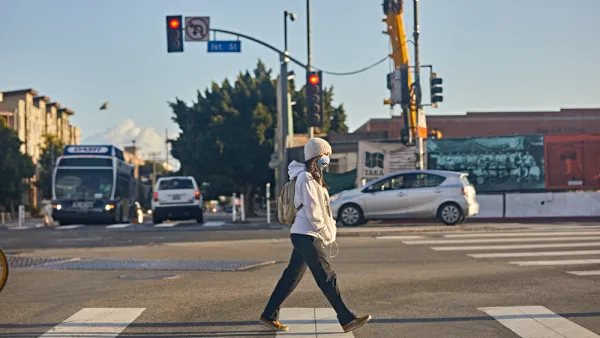
Proposed Ballot Measure Would Require L.A. To Enforce Own Mobility Plan
The city's 2015 mobility plan was hailed as one of the nation's most ambitious, but progress toward its goals has been less than impressive.

Big Cities Make Pedestrian Safety a Priority
New data released Dec. 19 by NHTSA shows increased safety for those traveling by car, but pedestrian fatalities are 15% higher than in 2009. Plans by San Francisco, Los Angeles, New York, and Chicago to increase ped safety are described by the WSJ.

Planetizen Federal Action Tracker
A weekly monitor of how Trump’s orders and actions are impacting planners and planning in America.

Amtrak, CN end decades-long dispute with eight-year agreement
The new operating agreement establishes an updated framework for the companies to work together, including processes to resolve disputes.

Northwest rail fans eager for Sept. 30 debut of Amtrak’s Airo fleet
Get ready for that new train smell and more seats. But they won’t go faster or run more frequently on the Cascades route in Washington and Oregon.

Brightline Florida files for bankruptcy
The transit company is over $5 billion in debt.

St. Louis Metro to test if single-car trains can reduce operating costs, maintain rider satisfaction
The pilot program will run from October to spring 2027, and begin with one single-car train operating on Metrolink’s Red and Blue lines.

Pennsylvania is building data centers in abandoned mines
Housing data centers in mines provides an alternative to destroying local forests and may spare residents from data centers’ noise and air pollution.

FREE Course: Walkable City 1: Why Walkability?
After describing his path towards focusing on walkability as the essence of good planning, Jeff Speck marches through his five principal reasons for making more walkable places.
Reinventing Malls: Planning Alchemy—Turning Gray Fields Into Gold
The course focuses on the opportunities and imperatives that shape reinvention of mall sites.

City of Thousand Oaks
City of Wisconsin Rapids
Harvard University Graduate School of Design
The Architects Foundation
University of Cincinnati Online
The Pocatello Development Authority
The Urban Renewal Agency of the City of Pocatello