Most of the 150 volunteers who participated in the 4-month program were pleased. Simulated invoices charged for vehicle-miles traveled after gas taxes paid were credited. Three technologies, including one with GPS, were available to record mileage.


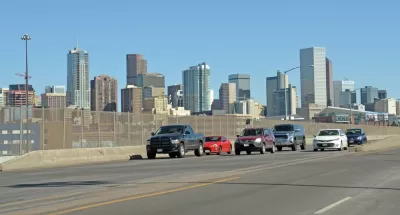
"Several issues emerged from the broadly positive results, including privacy concerns stemming from the program’s use of GPS, the challenge of collecting revenue from out-of-state motorists traveling through Colorado and the appearance of punishing drivers of electric or fuel-sipping vehicles," reports John Aguilar for The Denver Post on Dec. 12.
In order to get closer to making a pitch for implementation, we have to answer more questions,” said Tim Kirby, a planning manager with the Colorado Department of Transportation. “We’re at the beginning stages of research.”
The final report, released by CDOT on Dec. 12, is available with separate links for the executive summary, fact sheet, and other documents on the Road Usage Charge (RUC) homepage. The pilot began in December 2016 and ran through April of this year.
The good news is that the initial feedback from the study was generally positive
"It comes closest to having the people who are actively impacting the system compensating for that use,” said Kathy Gilliland, a Greeley resident and pilot program participant who reported her mileage to CDOT using a GPS-enabled device plugged into her 1999 Toyota Camry. “It was outstanding — you plugged it in and just forgot about it.”
Participants could also opt for a dongle without GPS to plug into their onboard diagnostic (OBD) system, or opt to "snap a picture of their odometer and submit it online," as The Denver Post's editor, Chuck Plunkett, did. "The Tinfoil Hat Solution worked like a dream, but it was work," wrote Plunket on Dec. 15. "The other two versions did most of the work for you."
CDOT launched the program to investigate a sustainable source of road funding. The 22-cents per gallon state gas tax, unchanged since 1991, is not adjusted for inflation, unlike many state gas taxes. As vehicle fuel efficiency increases due to increasing fuel economy and emission standards, and sales of electric vehicles (EVs) that pay no or little gas taxes, increase as expected in the future, many state departments of transportation foresee huge revenue shortfalls.
“We’re looking at our revenue situation, and we’re falling off a cliff," said CDOT's Kirby.
CDOT estimates that it will see a $1 billion-a-year budgetary shortfall for the next 10 years, largely because an expected decline in gas taxes.
"Our nation’s system for funding its roads is dumb and only getting dumber," opined Plunket.
"Our maddeningly stubborn reliance on a tired old gasoline tax is failing and can’t be fixed. Embrace the RUC."
Also released this month was the final report for the 9-month California Road Charge Pilot Program involving 5,000 participants. Unlike the CDOT program, the pilot resulted from legislation. Next steps include investigating revenue collection using point-of-sale technology at gas pumps and EV chargers.
Hat tip to American Road & Transportation Builders Association (ARTBA).
Read the full story: As gas taxes fall short of funding Colorado’s roads, CDOT gets good reviews on test of mileage-based system but concerns remain
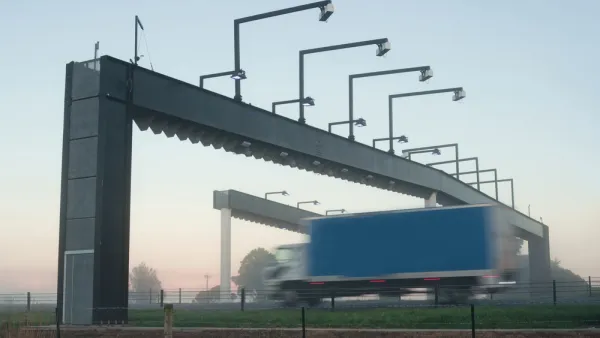
Is Privacy Overrated as a Concern for Mileage Fees?
'Big Brother' has long been voiced as a criticism of charging motorists by the mile driven, but in the ongoing Oregon road usage charge program, more than 75 percent of volunteer enrollees opted for a recording technology with GPS.
Road Usage Charge at Least 10 Years Away
Pilot programs are not the real thing, warned Michael Lewis, executive director of the Colorado Department of Transportation, testifying at a House transportation subcommittee on March 7. Colorado completed a successful four-month pilot last April.
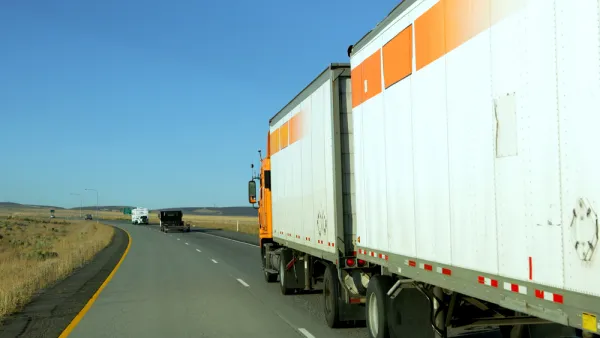
Movement Toward Mileage Fee Gains Momentum in U.K. with Truck Fee
British trucker calls for a level playing field with 'continental trucks' that may pay no diesel duty is one impetus for the vehicle miles traveled fee that would also consider emissions. The Transport Department stresses it would not apply to cars.

Planetizen Federal Action Tracker
A weekly monitor of how Trump’s orders and actions are impacting planners and planning in America.

Washington state to charge fee to drivers with fuel-efficient cars
Revenue from the fee will go towards supporting the state’s highways.

Illinois considers spending $1 billion in taxpayer money on data center
A quantum computing campus and data center are currently under construction in Chicago.

Did data centers change how voters cast their ballots?
Texas, Ohio, and Georgia all flipped party control. But in rural counties, the effect of local data centers was mixed.

Amtrak invests in eight new Airo trainsets
The new trainsets will begin serving passengers in 2031.

HUD to end aid for mixed-immigration-status households
The new rule is projected to impact 80,000 people, nearly half of whom are children.

FREE Course: Walkable City 1: Why Walkability?
After describing his path towards focusing on walkability as the essence of good planning, Jeff Speck marches through his five principal reasons for making more walkable places.
Reinventing Malls: Planning Alchemy—Turning Gray Fields Into Gold
The course focuses on the opportunities and imperatives that shape reinvention of mall sites.

City of Charlotte
City of Rosemead
Rutgers University, Edward J. Bloustein School of Planning and Public Policy
University of Michigan School for Environment and Sustainability (SEAS)
Hunter College, City University of New York (CUNY)
The Architects Foundation
University District Partnership