The controversy regarding the federal protection of public lands in the American west is heading into new territory as President Trump tests the limits of presidential powers.


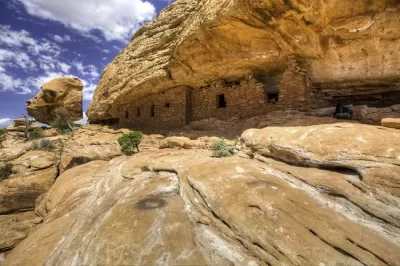
Josh Dawsey and Juliet Eilperin report: "President Trump on Monday drastically scaled back two national monuments established in Utah by his Democratic predecessors, the largest reduction of public lands protection in U.S. history."
The decision will reduce "the Bears Ears and Grand Staircase-Escalante national monuments by more than 1.1 million acres and more than 800,000 acres, respectively," according to the article.
The decision was met with praise from conservative lawmakers and industry organizations such as the National Cattlemen’s Beef Association, as detailed by Dawsey and Eilperin. Several tribal representatives and conservation organizations followed the news with promises to challenge the decision in court.
The decision "also plunges the Trump administration into uncharted legal territory since no president has sought to modify monuments established under the 1906 Antiquities Act in more than half a century," according to the article.
For more on the decision, see an article by Kate Wheeling, which notes that the decision might not be as popular among Americans living in the West as President Trump expects.
FULL STORY: Trump shrinks two huge national monuments in Utah, drawing praise and protests

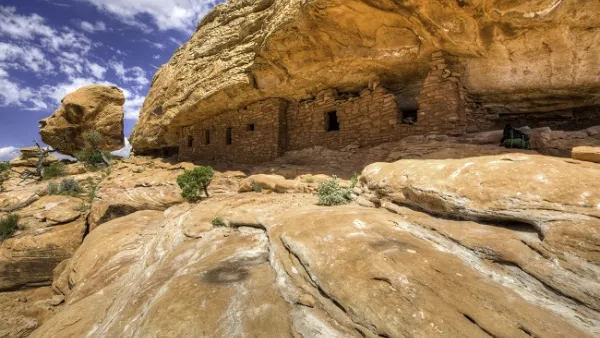
Antiquities Act Executive Order Calls for Review of Large Designations
The Executive Order does not roll back the Antiquities Act nor rescind any designations made by presidents Clinton, George W. Bush, or Obama, but does call for their review if over 100,000 acres. President Trump feels that the act has been misused.
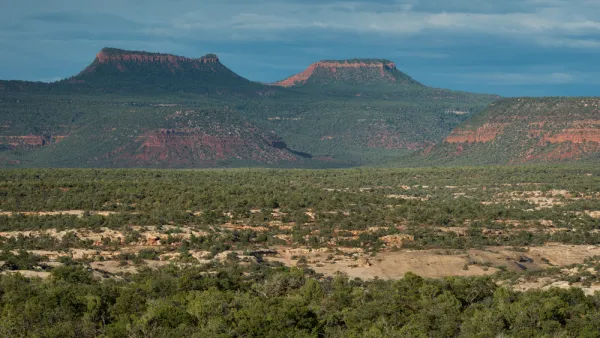
Interior Secretary Wants to Reduce Bears Ears National Monument
Interior Secretary Ryan Zinke, in an early decision to come of a nationwide review of national monument designations, recommends that President Trump reduce the size of Bears Ears National Monument.
Why Zinke Gave Florida a Break on Drilling
After announcing the coast of almost all states would be open for oil and gas production, the Secretary of the Interior changed his mind on one after meeting with Trump’s favored candidate for Senate.

Planetizen Federal Action Tracker
A weekly monitor of how Trump’s orders and actions are impacting planners and planning in America.

The state-sanctioned urbicide of Austin
People don’t kill cities. Freeways do.

US to reduce Colorado River water deliveries to Mexico
A new Colorado Treaty amendment reduces Mexico’s Colorado River water allocation by 250,000 acre feet.

Mamdani overhauls NYC's Vision Zero plan with 100 new policy goals
The overhaul aims to reduce traffic deaths and make streets safer for pedestrians, cyclists and drivers through lower speed limits, new safety infrastructure and more.

Amtrak not solely to blame for New Jersey commuter rail's unreliability, report finds
A new study from the Garden State Initiative found that NJ Transit’s budget grew 20% across a 4 year period, but reliability declined significantly over the same period.

EPA erases limits on planet-warming pollution from power plants
Under Monday’s plan, power plants would still have some limits on how much mercury, arsenic and other contaminants they can emit.

FREE Course: Walkable City 1: Why Walkability?
After describing his path towards focusing on walkability as the essence of good planning, Jeff Speck marches through his five principal reasons for making more walkable places.
Reinventing Malls: Planning Alchemy—Turning Gray Fields Into Gold
The course focuses on the opportunities and imperatives that shape reinvention of mall sites.

Eagle County Government
Harvard University Graduate School of Design
Nashville Planning Department
The Architects Foundation
University of Cincinnati Online
The Pocatello Development Authority
The Urban Renewal Agency of the City of Pocatello
Journal of the American Planning Association